
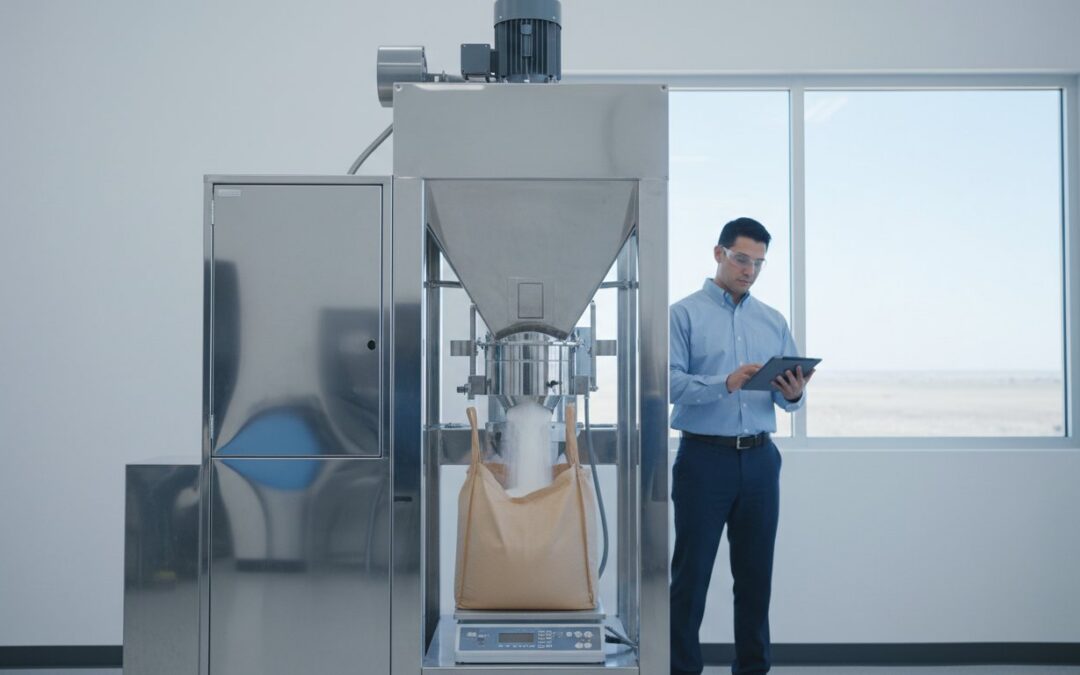
Your production line’s profitability doesn’t depend on how much product you move, but on how much you give away for free. If your current bulk powder filler isn’t maintaining a +/- 0.5% weight accuracy, you’re likely losing 50 pounds of product for every 10,000 pounds packaged. That’s not just a rounding error; it’s a direct hit to your bottom line that compounds every single shift.
We’ve partnered with manufacturers since 1978 and we know that managing fine particulates is a constant battle against dust and clumping. You’ve likely dealt with 20% more downtime than necessary because of bridging or hygiene issues that compromise your facility’s safety. This guide will show you how to master the technical requirements of powder filling to eliminate dust and ensure repeatable accuracy. We’ll help you select machinery engineered to last 30 years, not just five.
You’ll learn the specific engineering standards for moisture control, vibration integration, and dust collection that turn a standard production line into a high-performance operation.
Key Takeaways
-
Understand the economic impact of filling inaccuracies and how precision engineering eliminates costly product giveaway in high-volume packaging lines.
-
Explore the core mechanical delivery systems and load cell technologies that ensure consistent weight accuracy and industrial reliability.
-
Learn how to solve common material flow issues like bridging and ratholing to keep your bulk powder filler operating at peak efficiency without dust contamination.
-
Identify the essential selection criteria for procurement teams to prioritize long-term durability and performance over short-term price points.
-
Discover the "Bagger Professor" philosophy of consultative engineering and contact us today to partner with experts who have been building reliability since 1978.
Table of Contents
What is a Bulk Powder Filler and Why is Accuracy Critical?
A bulk powder filler is a heavy-duty industrial system engineered to package large volumes of dry, flowing materials into Flexible Intermediate Bulk Containers (FIBCs) or large-format bags. These machines serve as the backbone of high-capacity production lines by transforming raw material streams into shippable units. Since 1978, Choice Bagging Equipment has refined these systems to ensure they handle the specific bulk densities and flow characteristics of diverse powders. To understand the mechanics of these systems, many engineers reference filler packaging machines, which include the specialized auger and vibratory feeders necessary for managing fine particulates without degradation.
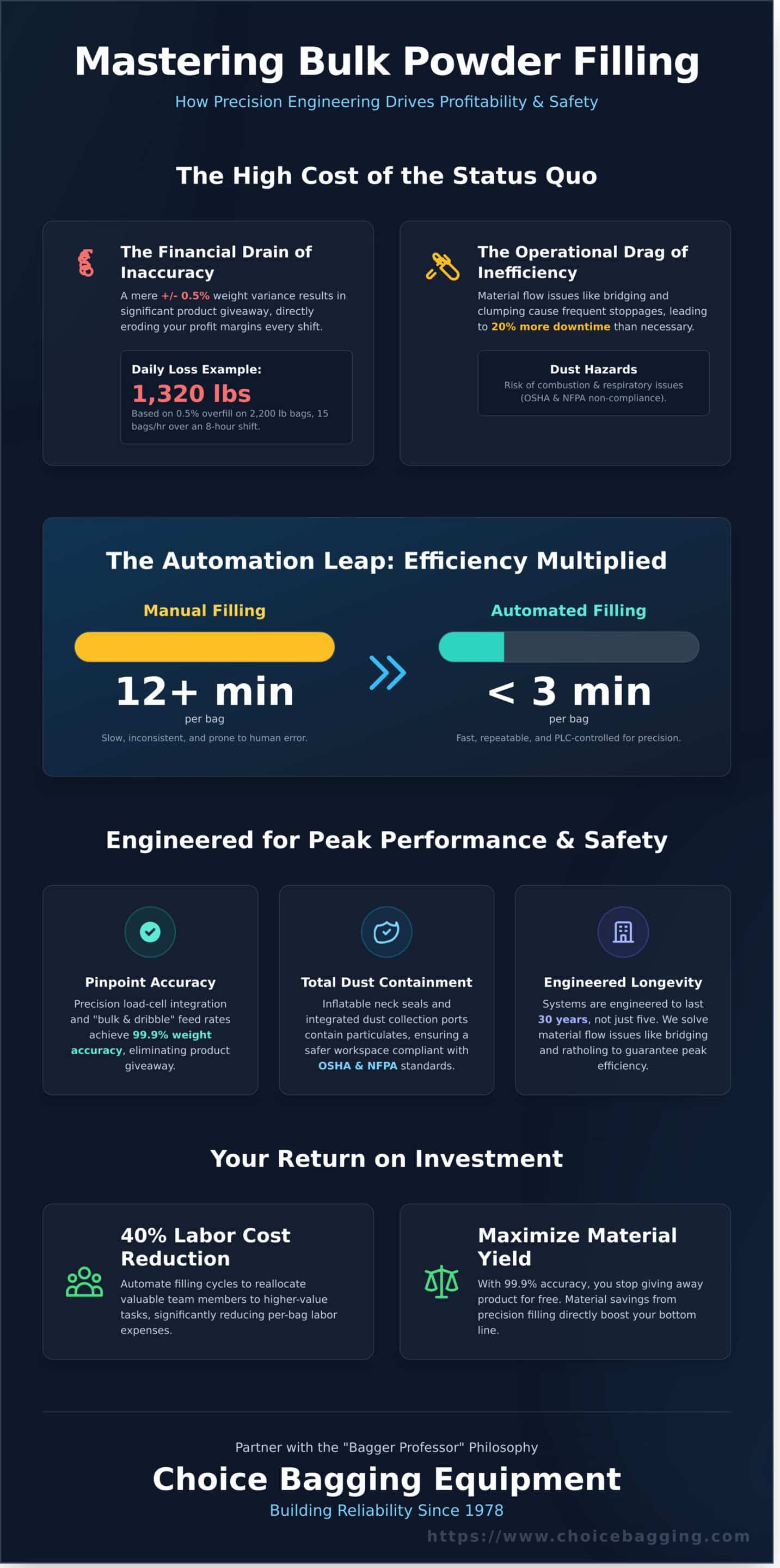
Accuracy in these systems isn’t just a technical specification; it’s a financial imperative. Inaccurate filling cycles lead to product giveaway, which directly erodes your bottom line. If a system overfills a 2,200-pound bulk bag by just 0.5%, you lose 11 pounds of product per cycle. For a facility processing 15 bags per hour over a standard 8-hour shift, that equals 1,320 pounds of lost inventory daily. Precision load-cell integration ensures that every bag meets the target weight within a fraction of a percent, protecting your margins from avoidable waste.
To better understand how these systems optimize your facility, watch this helpful video:
Safety and compliance are equally vital. Handling fine powders often generates airborne dust that poses respiratory risks and combustible hazards. OSHA regulation 1910.22 and NFPA 652 standards mandate strict dust control in the workplace. Modern bulk powder filler designs incorporate inflatable neck seals and integrated dust collection ports to keep particulates contained. This prevents the accumulation of explosive dust on overhead surfaces and ensures a cleaner, safer environment for your operators.
Transitioning from manual scoop-filling to automated, PLC-controlled systems represents a massive leap in efficiency. Manual processes are slow and prone to human error, often taking 12 minutes or more to fill and weigh a single large bag. An automated bulk powder filler utilizes programmable logic controllers to manage the fill cycle, reducing that time to under 3 minutes while maintaining consistent density and weight. We’re also your partner in this transition, providing the technical expertise to integrate these systems into your existing workflow. If you’re ready to upgrade your process, contact us today to speak with a specialist.
Industrial Applications for Powder Filling
Different industries demand specific machine configurations to handle their unique material properties. In chemical and mineral processing, systems must withstand abrasives like silica and fine particulates that can migrate into standard bearings. Food-grade applications require 304 or 316 stainless steel construction and wash-down capabilities to meet USDA and FDA sanitation standards. Agricultural operations rely on these fillers for high-speed handling of seeds, fertilizers, and soil amendments, where throughput is the primary driver during peak seasonal demands.
The ROI of Automated Bulk Filling
The return on investment for an automated bulk powder filler is realized through two primary channels: labor reduction and material savings. By replacing manual labor with high-speed automated cycles, facilities can reallocate workers to higher-value tasks, often seeing a 40% reduction in per-bag labor costs. Material savings are achieved through load-cell integration that provides real-time feedback to the PLC, allowing for "bulk and dribble" feed rates that hit weight targets with 99.9% accuracy. A bulk powder filler is a high-capacity industrial system designed to automate the discharge of dry particulates into large-format bags while utilizing integrated weighing technology to minimize product waste and maximize production throughput.
Core Technologies: How Modern Bulk Powder Fillers Operate
Selecting the right bulk powder filler requires a deep understanding of the mechanical forces at play. Modern systems are no longer just simple hoppers. They’re precision instruments engineered for 24/7 reliability. Since 1978, Choice Bagging Equipment has prioritized mechanical simplicity to ensure our machines outlast the competition by decades. The process begins with the delivery system, where the physical properties of your powder dictate the mechanical approach.
Load cells act as the brain of the machine. These high-precision sensors measure the weight of the product in real-time, sending data to a weighing controller at speeds of up to 1,000 samples per second. This technology allows the system to achieve an accuracy of +/- 0.25% in most industrial applications. By using advanced algorithms, the controller predicts the "material in flight"-the powder that has left the feeder but hasn’t yet hit the bag-to shut off the flow at the exact target weight.
Operators must choose between gross weigh and net weigh sequences based on their throughput goals. In a gross weigh system, the machine weighs the product directly inside the bag. This setup is compact and cost-effective for lines running 1 to 4 bags per minute. Net weigh systems pre-weigh the material in an internal hopper before discharging it into the bag. This method increases speed by 25% or more because the system weighs the next dose while the operator is still hanging the current bag. If you need to maximize your output, you should request a quote for a customized net weigh configuration.
Auger vs. Vibratory vs. Gravity Fillers
Auger fillers utilize a rotating screw to move non-free-flowing powders that tend to clump or bridge. These are essential for materials that require a physical "push" through the spout. Vibratory fillers use a vibrating tray to "walk" fragile materials forward, which reduces particle degradation by 15% compared to mechanical conveyors. Gravity fillers represent the simplest solution, using the product’s own mass to fill bags with free-flowing granules or pellets. We help you choose the best bagging technology based on your specific material density.
Valve Bag vs. Open Mouth Powder Filling
Dust containment is a primary concern for any powder processing facility. Valve bag fillers provide a superior solution by using a closed system where the bag is slipped onto a fill spout. This design significantly reduces airborne particles and helps mitigate Combustible Dust Explosion Hazards, keeping your facility in compliance with safety standards. Conversely, open mouth bagging machines offer versatility for operations that frequently change bag sizes or product types. While valve bags often use sonic sealing or internal tucking for closures, open mouth bags are typically sewn or heat-sealed depending on the moisture protection required.
Engineering matters for long-term ROI. Choice Bagging Equipment builds every bulk powder filler in the USA, using heavy-duty steel and industrial-grade components. This commitment to domestic manufacturing means parts are readily available and the machines are built to last 20 to 30 years in harsh environments. We don’t just sell equipment; we’re your partner in ensuring your production line never stops moving.
Solving the #1 Powder Problem: Dust and Material Flow
Since 1978, Choice Bagging Equipment has specialized in overcoming the physical hurdles inherent in dry material handling. A common mistake in facility planning is assuming that every material will move through a bulk powder filler with the same fluidity as water. This is rarely the case. Powders possess unique physical properties that create internal friction and cohesion. According to technical studies on powder flow characterization from the University of Surrey, understanding these dynamic behaviors is essential for maintaining consistent throughput. Without proper engineering, you risk frequent downtime and inconsistent weights that eat into your profit margins.
Two specific phenomena, bridging and ratholing, account for nearly 85% of unplanned stoppages in powder packaging lines. These issues often result in operators losing 25 minutes of production time per shift just to manually clear blockages. Our designs prioritize hopper geometry and specific surface finishes that prevent these disruptions from the start. Understanding these flow patterns is the first step toward efficiency:
-
Bridging: This happens when particles interlock to form a stable arch over the discharge outlet, completely blocking flow.
-
Ratholing: This occurs when only the material directly above the outlet discharges, leaving a stagnant "donut" of product stuck to the hopper walls.
Dust control is a matter of safety and regulatory compliance. Integrated dust collection ports are mandatory to meet NFPA 652 standards for combustible dust management. If you’re handling fine powders under 45 microns, you may require fluidization. This process introduces low-pressure air into the product mass to reduce bulk density and allow the material to flow more like a liquid. It’s a proven method to ensure your bulk powder filler maintains high-speed performance even with the most difficult materials. This technology transforms a problematic fine powder into a manageable, consistent stream.
Advanced Dust Mitigation Strategies
We utilize inflatable spout seals to create a 100% dust-tight connection between the machine and the bag. This prevents fine particulates from escaping into the ambient air during the fill cycle. Managing displaced air is equally critical. As powder enters the bag, the air inside must be vented safely. Once the fill is complete, integrating automated bag sealing ensures the product remains contained and protected from moisture.
Ensuring Consistent Material Flow
To keep product moving, we employ mechanical agitators and bin activators that break up clumps. Particle size distribution and moisture levels, even a 1.5% increase in moisture, can drastically change behavior. We offer testing to analyze your product and predict flow with 98% accuracy. If you’re ready to optimize your line, contact us now for a professional consultation.
Selection Criteria: Choosing the Right System for Your Facility
Selecting a bulk powder filler requires a fundamental shift from looking at short-term capital savings to prioritizing long-term operational stability. Since 1978, Choice Bagging Equipment has specialized in systems built to last decades. We’ve observed that facilities choosing the lowest bidder often face 18% higher annual downtime due to component fatigue. Your procurement and engineering teams should treat this purchase as a 20-year partnership. Start by auditing your physical floor space and overhead clearance. A machine with an 8-foot wide footprint won’t function if you only have 6 feet of clearance between structural pillars. Measure your ceiling height twice; high-capacity systems often require 15 feet of vertical space to accommodate surge bins and dust filtration units.
Maintenance is the silent killer of profitability. We design our equipment with minimal moving parts to ensure unmatched reliability. If a critical part fails on a Tuesday morning, you can’t afford to wait 14 days for a shipment from overseas. Choosing a domestic manufacturer means replacement parts are usually available within 24 hours. This level of support protects your production schedule and keeps your facility running at peak efficiency. Reliability isn’t just a marketing term; it’s a measurable metric that determines your plant’s success over the next two decades. Don’t settle for a system that requires a specialized technician for every minor adjustment.
Throughput and Accuracy Requirements
Define your production goals for 2026 and the five years following. If your current demand is 6 bags per minute (BPM) but your business plan projects 25% growth, don’t buy a system capped at 7 BPM. There’s a technical tradeoff between extreme speed and extreme accuracy. A 0.5% product giveaway on a 50lb bag might seem negligible. However, if you’re filling 500,000 bags a year, that’s 125,000 lbs of lost revenue. Calculate your total cost of ownership by combining the initial price with five years of maintenance and giveaway costs to see the true value of a high-performance bulk powder filler.
Integration with End-of-Line Automation
Your filler shouldn’t exist in a vacuum. Efficient lines feed directly into robotic palletizing systems to eliminate manual handling and save approximately $65,000 in labor costs per shift annually. This integration requires precision bag handling conveyors that maintain consistent orientation for the robot’s end-of-arm tool. Future-proof your facility by insisting on PLC controls with robust data logging. This allows your team to track every weight and cycle, identifying bottlenecks before they cause a shutdown. If you’re ready to upgrade your production capabilities, you can view our full range of bagging solutions today. For personalized engineering advice, contact our experts to start your consultation.
Why Choice Bagging Equipment is Your Bulk Powder Partner
Selecting a bulk powder filler is a decision that impacts your bottom line for decades. At Choice Bagging Equipment, we understand that reliability isn’t a luxury; it’s a requirement for your facility. Since 1978, we’ve manufactured industrial bagging solutions that stand up to the most demanding environments. Our 46-year history represents thousands of successful installations across dozens of industries. We don’t just sell you a piece of hardware. We offer the "Bagger Professor" philosophy of consultative engineering. This means we dive deep into your specific production goals, floor space constraints, and material characteristics to ensure the equipment fits your workflow perfectly.
Our commitment to quality starts with our "Made in the USA" manufacturing process. We use heavy-duty construction and high-grade materials to ensure every machine can handle 24/7 operation. Many of our machines installed in the 1980s are still in active production today, proving that our engineering stands the test of time. We focus on simplicity and durability, using minimal moving parts to reduce the likelihood of mechanical failure. When you invest in our equipment, you’re getting a machine built to last 30 years or more.
We provide comprehensive support services that go far beyond the initial sale. Our goal is to ensure your bulk powder filler operates at peak efficiency from day one. We offer:
-
On-site commissioning and operator training to ensure your team is proficient.
-
A dedicated parts department that stocks components for machines built decades ago.
-
Rapid response technical support to minimize any potential downtime.
-
95% of standard replacement parts ship within 24 hours of your order.
Custom Engineering for Unique Powder Challenges
Every powder behaves differently. A 500-micron chemical powder flows differently than a 10-micron food ingredient. We analyze your specific material density and flow characteristics before recommending a solution. We’ve designed custom bulk bag fillers for corrosive mining environments where standard equipment would fail within 12 months. Our "Invest Confidently" guarantee ensures the machine we build meets the exact throughput and accuracy specs we promised. We build long-term partnerships, not just machines.
Ready to Optimize Your Powder Line?
If your current line is hitting bottlenecks, it’s time for a change. You can use our diagnostic tools or speak directly with an engineer to identify where you’re losing money. For companies with seasonal spikes or short-term contracts, our bagging equipment rental program provides a low-risk way to increase capacity without a permanent capital expenditure. Contact Choice Bagging Equipment today for a custom application review and let’s get your production line moving with a precision bulk powder filler.
Optimize Your Production with Engineered Precision
Achieving repeatable accuracy isn’t just a goal; it’s a fundamental requirement for a profitable industrial operation. A high-performance bulk powder filler eliminates the costly product giveaway that erodes your margins and compromises batch integrity. Since 1978, Choice Bagging Equipment has manufactured reliable bagging solutions that tackle the toughest dust and flow challenges. Our heavy-duty, "Made in the USA" construction ensures your facility maintains peak efficiency without the headache of constant downtime.
Success in powder handling requires a partner who understands that every material behaves differently. We provide expert support and seamless production line integration to ensure your equipment performs exactly as promised from day one. You don’t have to navigate complex engineering decisions alone. Our team is ready to help you select a system built to last for decades of rigorous use.
Don’t settle for "good enough" when you can invest in proven performance. Request a Custom Quote for Your Bulk Powder Project today to see how we can optimize your bagging process. We’re ready to help you build a more efficient, accurate, and reliable production line.
Frequently Asked Questions
What is the difference between a gross weigh and net weigh bulk powder filler?
Gross weigh fillers weigh the product directly inside the bag as it fills, while net weigh fillers pre-weigh material in a separate hopper before discharging it. Gross weigh systems are more compact and cost-effective for many operations. Net weigh systems increase throughput by 25% because the scale refills while the operator swaps bags. This dual-tasking capability significantly reduces cycle times in high-volume production environments.
How do I prevent dust from escaping during the bulk bag filling process?
You prevent dust by using an inflatable spout seal and a dedicated dust collection port. The inflatable seal creates a 100% airtight bond with the bag neck to stop leaks. We’ve refined these systems since 1978 to keep facilities clean. Adding a vacuum-shrouded fill head captures 99% of fugitive dust, ensuring your operators stay safe and your floors stay clear of debris.
Can one machine handle both fine powders and granular materials?
A single bulk powder filler can process both fine powders and granules if it uses a dual-feed system. You’ll use an auger for 40-micron powders and a gravity slide for 4-millimeter granules. Changing these settings takes 15 minutes or less on modern machines. This flexibility allows you to package diverse products without investing in multiple separate lines, maximizing your floor space and capital.
How often does a bulk powder filling machine require maintenance?
Most industrial machines require a deep maintenance check every 2,500 hours of operation. This involves lubricating bearings and checking the calibration of the load cells. Because we build for durability, your daily maintenance is just a 10-minute visual check. Many of our machines remain in active service for 25 years or more when users follow these simple, scheduled preventative steps.
What is the typical accuracy range for an industrial bulk bag filler?
A high-quality bulk powder filler delivers an accuracy of +/- 0.5% to 1.0% of the total bag weight. For a standard 2,205-pound bulk bag, this means a variance of less than 2 pounds. We achieve this precision using high-speed load cells and two-stage fill cycles. This accuracy saves you money by eliminating product overfill and ensuring your customers receive exactly what they paid for.
Do you offer equipment that meets food-grade or sanitary standards?
We provide equipment that fully complies with USDA and FDA sanitary requirements for food and pharmaceutical use. These machines feature 316 stainless steel construction and 180-grit polished finishes on all contact parts. We eliminate internal threads and crevices to prevent material buildup. If you need a machine that meets 3-A standards, contact us today to review our sanitary equipment specifications.
How do I know if my powder requires an auger filler or a gravity filler?
You need an auger filler if your material is cohesive or doesn’t flow easily under its own weight. Gravity fillers are reserved for free-flowing products like plastic resin or dry sand. Our Bagger Professor tool helps you determine the exact flow properties of your powder. Choosing the right feeder prevents 90% of common bagging issues like bridging or inconsistent fill weights in your production line.
What are the benefits of a ‘Made in the USA’ bagging machine?
Investing in American-made equipment gives you access to heavy-duty 0.5-inch steel frames and domestic technical support. You’ll avoid the 8-week shipping delays associated with overseas parts. Since 1978, we’ve focused on building machines that last 30 years rather than 5. This local partnership means our engineers are available for on-site consultations to ensure your bagging operation runs with unmatched reliability and performance.
Recent Comments