
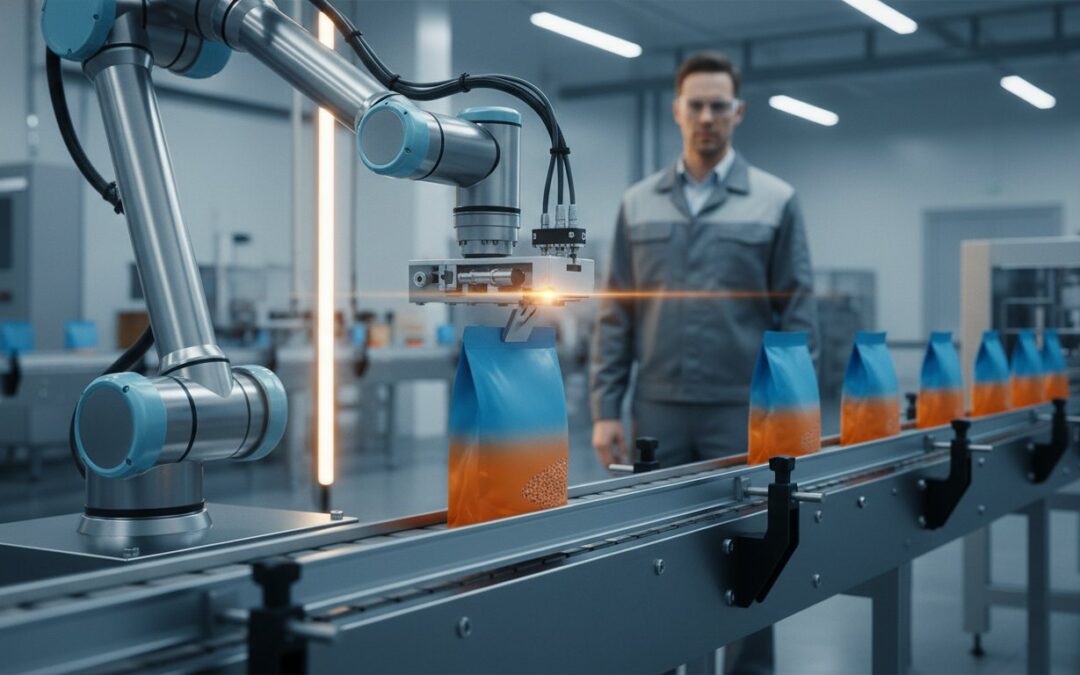
Navigating the world of industrial packaging equipment can be a complex task. The terminology is often confusing, and with so many options available, the fear of investing in a machine that doesn’t fit your product or production goals is a valid concern. Making the wrong choice can be a costly mistake, impacting both efficiency and your bottom line. That is why a clear understanding of the modern pouch packing machine and its capabilities is a critical first step for any growing operation.
As your partner in production since 1978, we believe an informed decision is the foundation of long-term performance and reliability. This guide is engineered to eliminate uncertainty. We will break down the key differences between various types of pouch machines and other industrial bagging equipment, helping you determine if a system for premade pouches or one that forms bags from rollstock is the right fit. You will gain the clarity needed to confidently select the right solution and make an investment that drives your business forward.
What is a Pouch Packing Machine? Defining the Technology
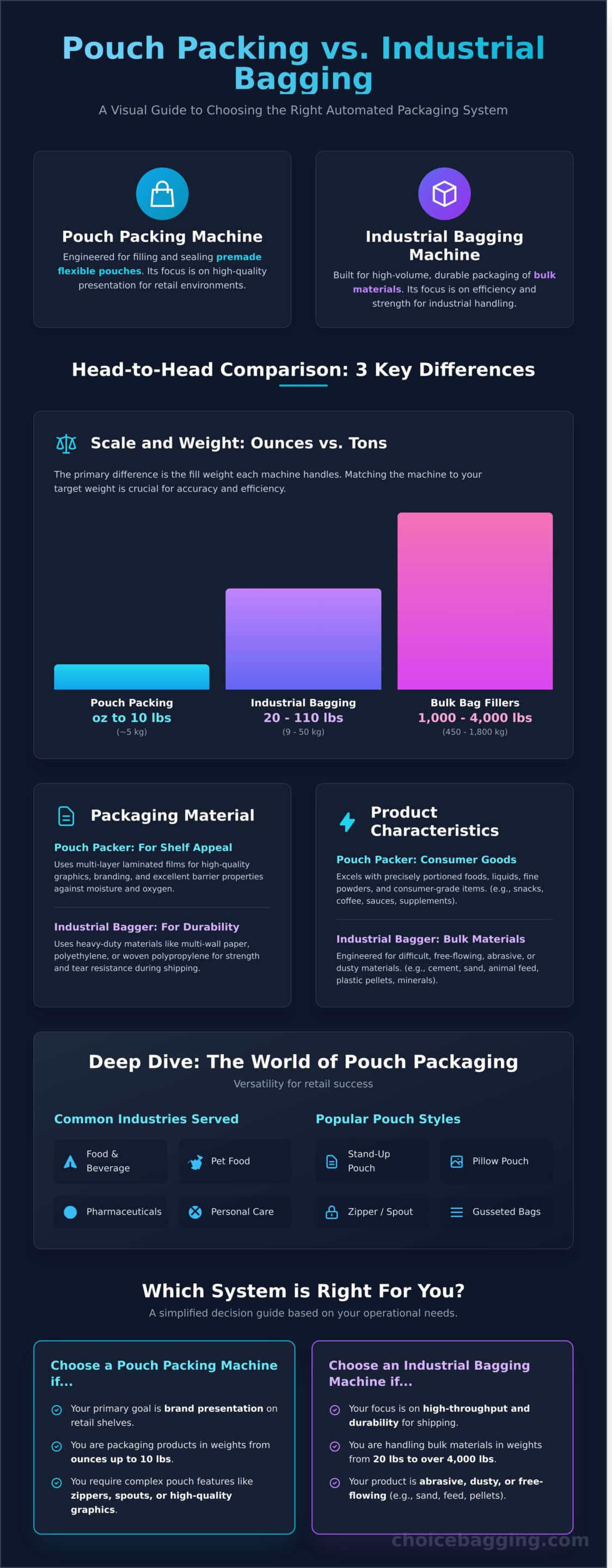
A pouch packing machine is an automated system engineered for a specific, high-value function: filling and sealing premade flexible pouches. Its primary role is to take pre-formed bags and precisely dispense a product into them before creating a secure, high-integrity seal. This focus on finished pouches ensures exceptional presentation quality, making them ideal for products destined for competitive retail environments.
This technology stands in contrast to equipment that creates packaging from raw materials. Unlike a Vertical form fill sealing machine (VFFS), which forms, fills, and seals a bag from a continuous roll of film in one fluid motion, a pouch packing machine works exclusively with pouches that are already constructed. This allows for more complex pouch features, higher-quality graphics, and consistent sizing, which are critical for brand perception on the shelf. These systems are built for reliability and efficiency, handling a wide range of products including powders, granules, liquids, and solid items with dependable performance.
Common Pouch Types and Styles
The versatility of pouch packaging is evident in the variety of available styles, each designed for specific product and market needs:
- Stand-Up Pouches (SUP/Doypack): Highly popular for their ability to stand upright on retail shelves, offering excellent brand visibility.
- Pillow Pouches: A simple and cost-effective solution, commonly used for snacks, single-serve items, and hardware.
- Zipper and Spout Pouches: Designed for consumer convenience, these pouches offer reusability and easy dispensing for liquids, sauces, and granular products.
- Gusseted Bags: Featuring expandable sides or bottoms, these provide greater volume for bulkier products like coffee beans and pet food.
Industries Served by Pouch Packaging
The precision and presentation quality of this equipment make it a cornerstone technology in numerous consumer-facing industries:
- Food & Beverage: From snacks, coffee, and spices to sauces, soups, and frozen foods.
- Pet Food: Packaging for dry kibble, semi-moist treats, and wet food products.
- Pharmaceuticals & Nutraceuticals: Used for powders, capsules, tablets, and gummies requiring secure, measured doses.
- Personal Care & Cosmetics: Ideal for single-use samples, lotions, soaps, and other health and beauty products.
Pouch Packing vs. Industrial Bagging: A Head-to-Head Comparison
While both a pouch packing machine and an industrial bagging machine automate the filling process, they serve fundamentally different purposes. The core distinction lies in their application: one is engineered for retail-ready packaging, while the other is built for industrial bulk handling. Understanding this difference is critical for sourcing the right equipment, as navigating packaging machinery market trends can be challenging without the correct terminology.
To help you identify which category your needs fall into, we’ve compared these systems across three key operational factors. This direct comparison will clarify which machine delivers the performance and reliability your operation demands.
Scale and Weight: Ounces vs. Pounds
The most immediate difference is the fill weight each machine is designed to handle. Matching the machine to your target weight is crucial for achieving accuracy and operational efficiency.
- Pouch Packing Machines are designed for precision at low weights, typically handling products from a few ounces up to 10 lbs (approx. 5 kg).
- Industrial Bagging Machines are built for performance with heavier loads, reliably filling open-mouth bags from 20 to 110 lbs (9 to 50 kg).
- Bulk Bag Fillers represent the largest scale, handling super sacks weighing from 1,000 to 4,000 lbs (450 to 1,800 kg).
Packaging Material & Durability
The packaging material reflects the product’s journey. Is it heading to a retail shelf or a rugged job site? A pouch packing machine uses materials focused on marketing, while an industrial bagger uses materials built for durability.
Pouches are typically made from multi-layer laminated films that provide excellent barrier properties and a high-quality surface for branding. Their primary goal is shelf appeal. In contrast, industrial bags are made from heavy-duty materials like multi-wall paper, polyethylene, or woven polypropylene, prioritized for strength and resistance to tearing during shipping and handling.
Product Type and Characteristics
The product itself often dictates the best machine type. A standard pouch packing machine excels with consumer-grade products like snack foods, coffee grounds, liquids, and fine powders that require precise, smaller-portion packaging. These systems are not built to handle the abrasive or dense nature of industrial materials.
Industrial baggers are engineered to manage difficult, free-flowing bulk materials such as cement, sand, animal feed, plastic pellets, and minerals. Specialized systems, like valve baggers, offer superior performance for dusty or aerated products that are otherwise challenging to package cleanly and efficiently.
When an Industrial Bagging Machine is the Right Choice
While a pouch packing machine excels at preparing smaller, retail-ready products, industrial-scale operations require equipment built for entirely different challenges: volume, durability, and demanding environments. If your process involves bulk materials measured in pounds or tons, you have moved beyond the scope of pouch packaging. The broader world of packaging machinery includes heavy-duty systems engineered for high-throughput and unmatched reliability.
At Choice Bagging Equipment, we specialize in these robust solutions. Since 1978, we have engineered industrial bagging machines that solve specific production problems related to product type, bag size, and operational efficiency. The key is identifying the right machine for your unique application.
You Need a Valve Bag Filler If…
This equipment is the definitive solution for managing fine and aerated products with precision and cleanliness. A valve bag filler is the right choice when:
- You are packaging fine, dusty powders like cement, stucco, or flour.
- A clean filling process with minimal product loss is a top priority.
- Your goal is a compact, square bag that palletizes neatly and securely.
- Air displacement and achieving precise target weight are critical concerns.
You Need an Open Mouth Bag Filler If…
For operations that demand speed and flexibility, the open mouth bagger offers unparalleled versatility. This is the ideal system when:
- You are bagging free-flowing materials like seeds, animal feed, salt, or grains.
- You need the versatility to handle different bag materials (poly, paper, poly-woven) and sizes.
- Your bags require sewing or heat sealing after being filled.
- High throughput and the potential for full automation are key production goals.
You Need a Bulk Bag (FIBC) Filler If…
When your product is measured by the ton, not the bag, a bulk bag filler is essential for efficient and safe handling. Consider this solution if:
- You are packaging extremely large volumes of product (500 to 4,000 lbs.).
- Your product is sold wholesale in large containers like totes or super sacks.
- Reducing the labor required for handling hundreds of small bags is a primary objective.
- You need to fill large containers with products like aggregates, resins, or seeds.
The distinction between an industrial bagger and a pouch packing machine is one of scale, durability, and application. If these industrial challenges resonate with your operation, we invite you to explore the reliable, American-made solutions at choicebagging.com to find the right fit for your production line.
How to Select the Right Equipment Partner
Choosing between a pouch packing machine and a bagging machine involves more than just comparing specifications. The manufacturer you select is a critical component of your long-term operational success. A machine is a one-time purchase, but the relationship with your equipment provider is an ongoing partnership that ensures your production line remains efficient and profitable for years to come. Investing in a machine means investing in the company that stands behind it.
When you evaluate potential suppliers, look beyond the initial price tag and consider the total value they bring to your operation. A reliable partner provides not just durable hardware, but the expertise and support necessary to maximize your return on investment.
Key Qualities of a Trusted Manufacturer
A premier equipment partner is defined by a proven track record and an unwavering commitment to quality. To ensure you’re making a sound investment, look for a supplier with the following credentials:
- Decades of Proven Engineering: Experience matters. A manufacturer like Choice Bagging Equipment, established Since 1978, has decades of field data and engineering expertise to build machines that perform reliably under demanding conditions.
- Focus on Durability: The best equipment is built for longevity, not just features. Prioritize manufacturers who use high-quality components and focus on robust, simple designs that minimize downtime.
- Domestic Manufacturing: A commitment to being Made in the USA often translates to superior quality control, easier access to replacement parts, and responsive service.
- Expert Consultation: A true partner doesn’t just sell you a machine; they provide a consultation to ensure you get the right solution for your specific product and process, whether it’s a high-speed bagging system or a specialized pouch packing machine.
Beyond the Sale: Support and Integration
The true test of a manufacturer begins after the equipment is delivered. Your partner should be fully invested in your success, offering comprehensive support to keep your operations running smoothly. This includes readily available technical support from experts who know the equipment inside and out, as well as field service technicians for on-site assistance.
Furthermore, a valuable partner will assist with integrating your new equipment into your existing production line, ensuring a seamless transition. They should also offer flexible programs, such as equipment rentals or future upgrade paths, to adapt to your company’s growth. When you’re ready to invest with confidence, Consult our experts to find your perfect bagging solution.
Find Your Ideal Packaging Partner and Equipment
Selecting the right bagging equipment is a critical decision for your operational efficiency. As we’ve explored, understanding the distinction between different systems and identifying a reliable equipment partner are the foundational steps toward success. Whether your application requires a high-speed pouch packing machine or a heavy-duty industrial bagger, the goal remains the same: to secure a solution that delivers unmatched performance and long-term value for your business.
Since 1978, Choice Bagging Equipment has been committed to engineering that value into every machine we build. As your dedicated bagging partners, we provide durable, high-quality equipment that is proudly Made in the USA, backed by expert support you can count on. We don’t just sell machines; we build partnerships grounded in reliability and performance.
Ready to eliminate the guesswork and find the perfect fit for your production line? Unsure which machine you need? Use our Bagger Professor tool to find out! Invest confidently and let us help you build a more efficient and productive future.
Frequently Asked Questions About Packing and Bagging Machines
What is the main difference between a VFFS machine and a pouch packing machine?
The primary distinction lies in bag creation. A Vertical Form Fill Seal (VFFS) machine forms, fills, and seals a bag from a continuous roll of film in one integrated process. In contrast, a typical pouch packing machine is designed to work with pre-made pouches. It automates the process of opening, filling, and sealing these existing bags. VFFS systems offer high speeds for uniform products, while pouch machines provide flexibility for various pre-made bag styles.
Can an industrial bagging machine be used for food-grade products?
Yes, absolutely. However, the machine must be specifically engineered for sanitary applications. Food-grade bagging machines are constructed from high-quality stainless steel and feature designs that allow for easy and thorough cleaning to prevent contamination and meet strict industry standards. When investing in equipment for food products, ensuring it meets these hygienic requirements is critical for safety and compliance. We build our food-grade systems to meet these exacting performance demands.
What is the typical cost difference between a pouch filler and a valve bag filler?
Generally, a valve bag filler represents a higher initial capital investment. These machines are robustly built for high-volume, industrial applications handling larger bags, often from 20 to 100 lbs. Pouch fillers, particularly semi-automatic models, typically have a lower entry cost. However, it is important to consider the long-term cost of consumables, as pre-made pouches can be more expensive per unit than the material used for valve bags, impacting overall operational expenses.
How do I determine the right type of bagging machine for my powdered product?
The ideal machine depends on your product’s flow characteristics, required accuracy, bag type, and production goals. For fine, non-free-flowing powders requiring high precision in smaller packages, an auger-style pouch packing machine is often the most reliable solution. For larger, industrial-sized open mouth or valve bags, a dedicated bagger is more efficient. A consultation with our experts will ensure you select the equipment that delivers maximum performance and reliability for your specific application.
Do you offer automation solutions like palletizers for your bagging machines?
Yes, we provide complete, end-to-end packaging solutions. Our role as your partner extends beyond the bagging machine itself. We engineer and integrate full-line automation, including bag conditioning conveyors, checkweighers, and high-performance robotic palletizers. These systems are designed to work seamlessly with our baggers to maximize your plant’s efficiency, reduce labor costs, and ensure consistent, reliable throughput from filling to the final palletized load.
What’s more important: filling speed (bags per minute) or accuracy?
The priority depends entirely on your product’s value and your operational goals. For high-value products, accuracy is paramount to minimize product giveaway and protect profit margins. Even a small overfill per bag results in significant loss over time. For lower-cost, high-volume bulk products, maximizing throughput with higher filling speeds may be the primary objective. The most effective solution provides a calculated balance of both speed and accuracy to achieve optimal efficiency and profitability.
Recent Comments