
Form, Fill, Seal Machines
Form-Fill-Seal (FFS) bagging machines integrate three steps-forming a package from roll stock (form), filling it with product (fill), and sealing it (seal)-into one automated process. This approach reduces manual handling, improves throughput consistency, and lowers the total cost of packaging per unit. FFS machines are modular and configurable for a wide range of product types, package styles, and production speeds.
What Is a Form, Fill, and Seal Machine (FFS Machine)?
Form-Fill-Seal (FFS) machines automate bag/pouch production by forming packaging from roll stock, filling with product, and sealing in a single continuous process.
Two primary formats:
- Vertical FFS (VFFS): film formed into vertical tubes; ideal for powders, granules, snacks, and small parts.
- Horizontal FFS (HFFS): film formed/loaded horizontally; ideal for pre-formed pouches, multi-lane products, trays, and delicate/rigid items.
- Typical speed ranges (industry norms): VFFS ~30-120 bags/min (1,800-7,200 bags/hr) depending on bag size and product; HFFS ~10-150 bags/min (600-9,000 bags/hr) depending on machine type and format.\
- Material and waste advantages: optimized film layouts and precision dosing reduce film use and giveaway; industry reports commonly cite film/material savings of 5-30% versus older equipment or traditional packaging methods (actual savings vary by product and package design).
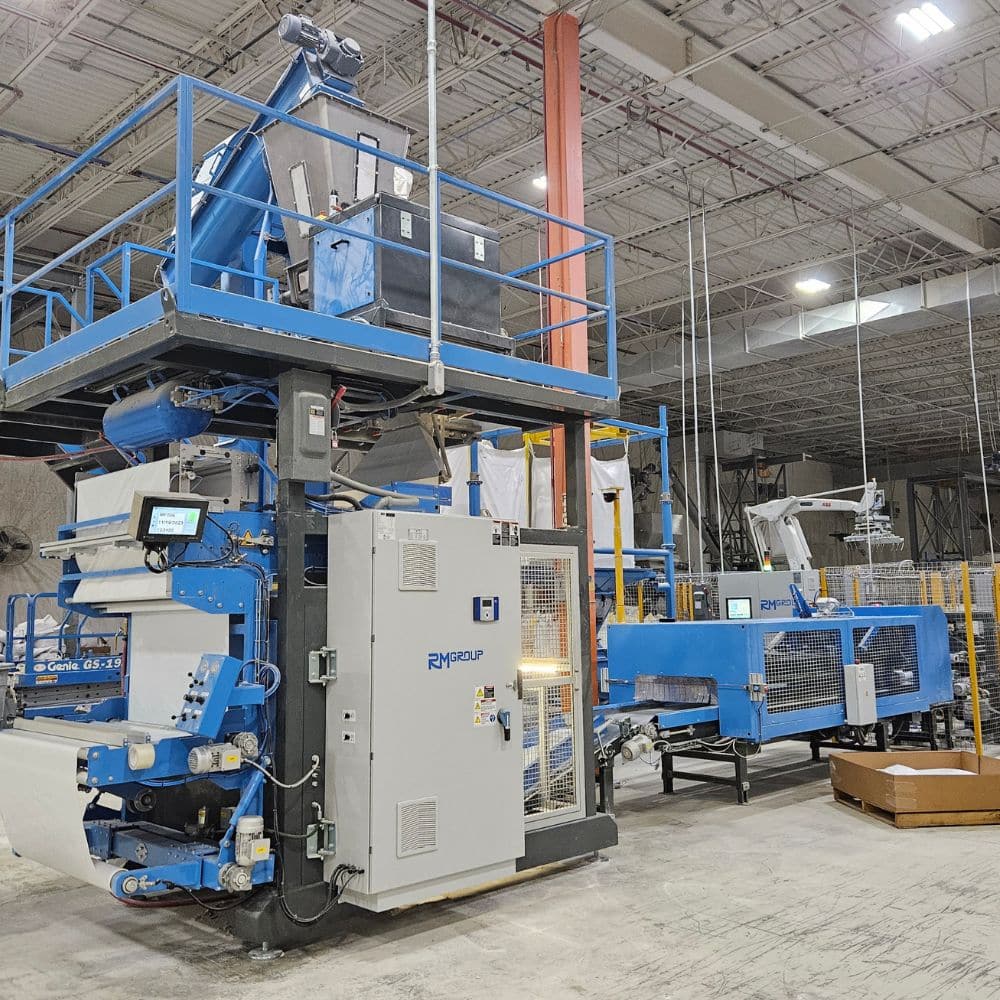
A Form, Fill, and Seal Machine is an automated packaging system designed to perform three essential functions in a single continuous operation. Using a flat roll of flexible film or a flat sheet of packaging material as a starting product, the machine:
- Forms the material into a bag or pouch shape
- Fills the bag that has been shaped with the intended product
- Seals the bag shut to have a finished package ready for delivery
This seamless combination of three processes can be accomplished in one machine without the need for pre-made bags, reduces material waste and labor requirements, and results in efficient production lines. FFS machines are applicable to almost all industries where bulk or unit packaging is required; thus, FFS machines are considered one of the most versatile items on any production floor. The types of FFS machines are VFFS (Vertical Form, Fill, and Seal) machines, as well as HFFS (Horizontal Form, Fill, and Seal) machines. They both serve the same basic purpose but diverge greatly in orientation, design, and the kinds of products they work with optimally.
VFFS machines – Vertical Form, Fill, and Seal
How VFFS Machines Work
As their name suggests, VFFS machines operate on a vertical axis. A roll of flat packaging film is placed over a forming collar or tube, producing a cylindrical tube. The edges of the film are sealed together along the back for a vertical seal. The machine then makes a bottom seal, and product is dropped or metered into the open top of the bag from above. Once the correct amount of product is inside, the machine does the top seal which takes on the same role as the bottom seal on the next bag, and the final bag is cut and discharged. VFFS machines excel in free-flowing, granular, and powdered products, and as gravitational force is involved in the filling, vertical orientation is ideal for the process due to the vertical stance. Product is simply dropped or auger-fed into the bag from above, making for a clean, quick, and efficient process.
Typical Products Packaged on VFFS:
VFFS is one of the most common packaging systems in food as well as in other industries. These products are generally packaged on FFS machines:
- Snack foods including potato chips, pretzels, popcorn, and crackers
- Ground coffee and tea as well as whole-bean
- Frozen vegetables, fruits, and seafood
- Grains, rice, and pasta
- Pet food and treats
- Candy, nuts, and dried fruits
- Powdered products like protein supplements, spices, flour, and sugar
- Seeds and fertilizers
- Hardware items like screws, bolts, and small components
- Pharmaceutical powders and granules
Bag Styles Produced by VFFS Machines
One of the advantages of VFFS technology is the variety of bag styles which it can manufacture. Based on machine configuration and film type, VFFS machines are capable of manufacturing:
- Pillow bags – the most common style, simple and inexpensive
- Gusseted bags — with side or bottom gussets for more volume
- Quad-seal bags – having a structured, retail-friendly appearance
- Flat-bottom bags — aka box pouches — great for shelf display
- Stand-up pouches – with and without resealable zippers
Materials for VFFS packaging include film. Many flexible film materials can be used in the VFFS machines, ranging from polyethylene (PE), polypropylene (PP), laminated films, metalized films, or compostable or biodegradable films. The selection of film is based on the requirement for moisture resistance, oxygen barrier properties, light protection, and shelf life.

Horizontal Form, Fill, and Seal (HFFS) Machines
How HFFS Machines Work
Horizontal Form, Fill, and Seal machines operate on a horizontal plane. Instead of using gravity to fill bags from the top, HFFS machines move products and packaging material along a horizontal conveyor system. HFFS machines come in two main types: flow wrappers and pouch-style HFFS machines. In flow wrappers, a product is placed on a horizontal conveyor and film wraps around it as it advances. On the bottom, it creates a fin seal and on each end it crimped seals, providing a product wrapped in tightly. In a pouch-style HFFS machine, film is formed into pouches horizontally, filled from the side or top, and then sealed. These machines usually come in wider shape of pouch style materials and product types and can be used to make more complex pouch types where not dropped or gravity based. Why Choose Horizontal FFS? HFFS machines shine when the products are irregular in shape, fragile, or not free-flowing. Because the product moves in a straight line instead of being placed into a bag, there is much less chance that it will make damage or break. Therefore it is HFFS machines of choice especially used towards products for which gentle handling cannot be done or in which different orientations must be applied. Product Packaged on HFFS Machines.
Horizontal FFS is perfect for a wide variety of goods, from, but not limited to the:
- Fresh produce like cucumbers, corn, and broccoli crowns. Bread loaves, rolls, and pastries as bakery products.
- Candy bars, chocolate food, bars, and candies.
- Cheese blocks and slices.
- Fresh and processed meats.
- Medical devices and sterile products.
- Diapers, sanitary items and hygiene supplies.
- Soap bar or personal care item.
- These are industrial components and hardware.
- Wipes and pre moisturized products
Bag and Wrap Styles Made by HFFS Machines. HFFS systems are capable of creating a range of packaging products such as:
- Flow wraps – seal wrapped on specific products tightly, tightly sealed.
- Three-side seal pouches – flat pouches sealed on three edges.
- Four-side seal pouches – fully sealed flat pouches typical in medical packaging.
- Doy-style stand-up pouches – with bottom gussets for stability.
- Resealable zipper pouches – great for things that need multiple places to go.
HFFS Machines: Film & Material Choices. Similar to their vertical counterparts, HFFS machines deal with a wide variety of packaging films. Common materials include oriented polypropylene (OPP), polyethylene, polyester (PET), nylon, and a variety of multi-layer laminated structures. Tyvek and foil laminates are the most commonly used laminates for medical applications to achieve sterility and regulatory compliance.
Some Highlighted Benefits of FFS Technology FFS Machines have significant advantages over manual or semi-automated packaging methods, regardless of orientation:.
- Speed & efficiency – FFS machines can process hundreds or thousands of packages per hour.
- Lower labor costs – automation removes the need for manual packaging employees.
- Quality consistency – the exact filling system makes sure that the weights are right every time and seals are consistent. Saving you your material, using rollstock film over pre-packaged bags would allow you to keep the cost for the packaging material cheaper.
- Flexibility – the ability to switch gear quickly in order for machines to operate a variety of items products and sized bags.
- Hygiene and food safety – enclosed systems reduce the risk of contamination in food and drug applications and safety of the food as well as hygiene and food safety – such enclosed systems.
The choice between VFFS and HFFS.
The choice between the vertical and horizontal FFS, that is between products, the desired kind of bag style and the production capacity – is entirely determined by your product. It is likely that if your product is free-flowing, granular or powdered, then a VFFS machine is at your best disposal. You may want to consider using an HFFS machine if your product forms a solid, fragile, or uneven shape or needs certain orientation in your package. Many manufacturers have both types of machines running on different production lines because they take advantage of the attributes of both forms to fulfill unique packaging needs. For more information contact our bagging specialists to find a manufactured solution for your bagging needs.
Frequently Asked Questions
1. Which is better for powders: VFFS or HFFS?
Answer: VFFS is most commonly used for powders because of the vertical forming tube and auger/piston filler compatibility. HFFS is used if you require pre-formed pouches or precise orientation for delicate powders in specific formats.
2. How many bags per hour can I expect?
Answer: Typical ranges: VFFS ~30-120 bags/min (1,800-7,200 bags/hr); HFFS ~10-150 bags/min (600-9,000 bags/hr). Exact throughput depends on bag size, fill weight, machine model, and product characteristics.
3. Can FFS machines reduce packaging material waste?
Answer: Yes. Modern FFS systems and optimized bag layouts can reduce film usage and reduce giveaway through precise dosing. Reported reductions versus older lines vary; manufacturers and case studies commonly cite reductions between 5-30% depending on the baseline and application.
4. What maintenance and cleaning considerations exist for food lines?
Answer: Choose stainless-steel construction, washdown-rated motors and components, quick-release tooling, and CIP-friendly design for rapid sanitation. Validate cleanability per HACCP and your regulatory requirements.
5. Are FFS machines suitable for small production runs?
Answer: Yes-many FFS lines are modular and can be run economically for small to medium runs, especially when using flexible film formats and programmatic settings for fast changeovers. Pre-made pouch systems (HFFS with pre-made pouches) can be efficient for very small runs where film set-up overhead is high.
REQUEST A QUOTE!
CHOICE BAGGING EQUIPMENT
4804 N Main St,
Taylor, TX 76574
Hours
Monday-Friday 8am-5pm
Saturday & Sunday: Closed