
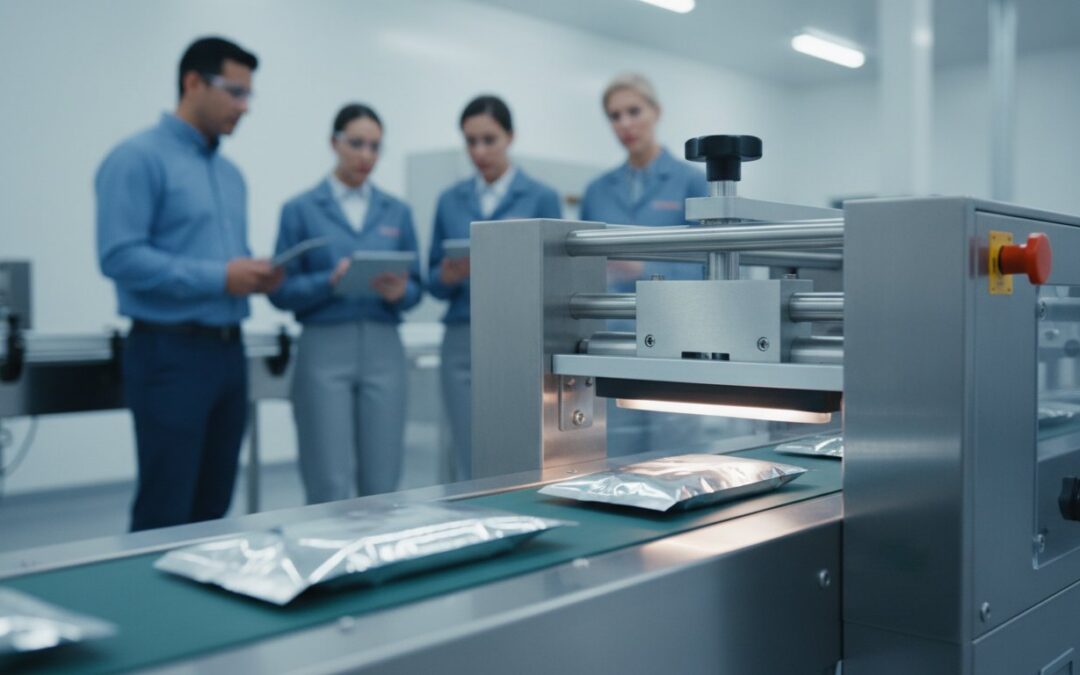
A failed seal is more than an inconvenience; it’s a direct threat to your product integrity, operational efficiency, and brand reputation. When inconsistent seals lead to spoilage and manual processes create costly production bottlenecks, the need for a dependable solution becomes critical. Choosing the right bag sealing machine is not just a purchase-it is a foundational investment in the performance and reliability of your entire packaging line.
This extensive guide is engineered to provide the clarity needed to invest confidently. We will examine the core technologies available, from versatile impulse sealers to fully automated continuous band systems designed for high-volume integration. You will gain a clear understanding of how to match the right sealing technology to your specific products and packaging materials, equipping you to select a machine that delivers secure, tamper-evident seals, reduces waste, and boosts your overall line efficiency for long-term success.
Key Takeaways
-
Understand how a secure seal is your first line of defense, protecting product integrity and preventing costly spoilage.
-
Discover the full spectrum of sealing technologies, from simple tabletop units for startups to high-speed systems for industrial production.
-
Learn to evaluate key factors like production volume, bag material, and required seal strength to select the right bag sealing machine for your application.
-
Determine when to choose a standalone sealer versus an integrated system to ensure your packaging line is built for future growth and efficiency.
Table of Contents
-
What is a Bag Sealing Machine and Why is a Secure Seal Crucial?
-
Types of Heat Sealing Machines: From Tabletop to Industrial Automation
What is a Bag Sealing Machine and Why is a Secure Seal Crucial?
In industrial packaging, a bag sealing machine is essential equipment designed to create a secure and reliable closure on a filled bag. This is typically accomplished using a precise application of heat, pressure, or a combination of both to fuse the bag’s opening. The primary function is to protect products from external contaminants, such as moisture, dust, and pests, ensuring the contents remain in pristine condition from the production line to the end-user.
To see how this technology delivers a clean, consistent seal in an automated environment, watch the video below:
A professional seal does more than just close a bag; it preserves product integrity and extends shelf life, which is critical for food, agricultural, and chemical industries. Furthermore, a high-quality, unbroken seal provides clear tamper evidence, giving consumers confidence that the product is safe and has not been compromised. This final touch reinforces brand quality and demonstrates a commitment to delivering a superior product.
The Core Benefits of a Professional Seal
Investing in a dependable sealing system provides several operational advantages that directly impact your bottom line and brand reputation.
-
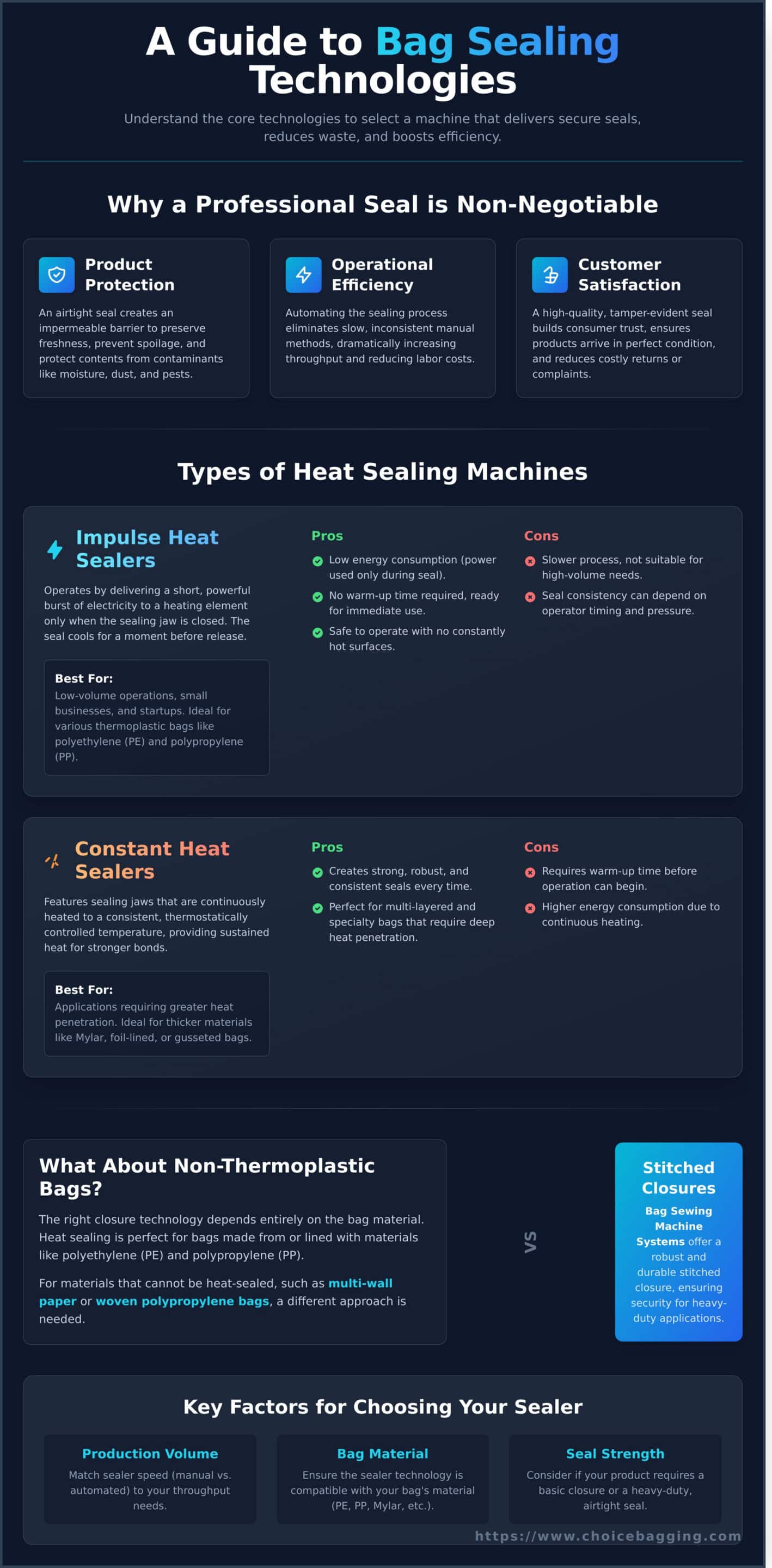
Product Protection: An airtight seal creates an impermeable barrier that is fundamental for preserving freshness, preventing spoilage, and maintaining the chemical composition of the contents.
-
Operational Efficiency: Automating the sealing process moves operations beyond slow and inconsistent manual methods like wire ties or clips, dramatically increasing throughput and reducing labor costs.
-
Customer Satisfaction: Ensuring the product arrives in perfect, factory-sealed condition builds consumer trust and reduces the likelihood of costly returns or complaints due to damage or contamination.
Heat Sealing vs. Other Closure Methods: A Quick Overview
The right closure technology depends entirely on the bag material. A heat sealer is the ideal solution for bags made from or lined with thermoplastic materials like polyethylene (PE) and polypropylene (PP). The heat melts and fuses the plastic to create a complete, airtight closure. In contrast, other materials require a different approach. For multi-wall paper or woven polypropylene bags that cannot be heat-sealed, bag sewing machine systems offer a robust and durable stitched alternative, ensuring a secure closure for heavy-duty applications.
Types of Heat Sealing Machines: From Tabletop to Industrial Automation
Selecting the right bag sealing technology is critical for operational efficiency and product integrity. The market offers a wide spectrum of solutions, from simple manual devices ideal for startups to fully automated systems designed for high-speed production lines. Understanding the core differences in how each type of bag sealing machine operates is the first step in making a confident investment. This guide breaks down the three primary heat sealing technologies to help you identify the most reliable and effective solution for your specific application.
Impulse Heat Sealers
Impulse sealers are a highly accessible entry point into professional bag sealing. They operate by delivering a short, powerful burst of electricity through a heating element only when the sealing jaw is closed. This instantaneous heat fuses the thermoplastic material, and the seal is allowed to cool for a moment before the jaw is released. This on-demand heating principle makes them exceptionally efficient and safe for tabletop use.
-
Best For: Low-volume operations, small businesses, and sealing various thermoplastic bags like polyethylene and polypropylene.
-
Pros: Low energy consumption as power is only used during the sealing cycle. No warm-up time required and safe to operate with no constantly hot surfaces.
-
Cons: Slower for high-volume needs. Seal consistency can vary depending on operator timing and pressure.
Constant Heat Sealers
For applications requiring greater heat penetration and stronger bonds, constant heat sealers provide a robust solution. Unlike impulse sealers, their sealing jaws are continuously heated to a consistent, thermostatically controlled temperature. This sustained heat is necessary to properly seal thicker materials, such as foil-lined Mylar bags, gusseted bags, or polypropylene, which require more thermal energy to create a durable seal.
-
Best For: Sealing thick, multi-layered, or specialty bags that do not respond well to impulse sealing.
-
Pros: Creates stronger, wider, and more secure seals. Generally offers faster cycle times than manual impulse sealers.
-
Cons: Requires a warm-up period before use and consumes more energy due to the constant heating.
Continuous Band Sealers
When production demands high throughput and unwavering consistency, continuous band sealers are the industry standard. These automated systems use a conveyor belt to move bags through a sealing section, where two heated bands continuously apply heat and pressure to create a flawless seal. Because they are designed for integration into full packaging lines, they must adhere to strict safety protocols, including comprehensive machine guarding requirements to protect operators. This type of bag sealing machine represents a significant step up in automation and performance.
-
Best For: High-volume, automated production environments in industries like food and beverage, pharmaceuticals, and manufacturing.
-
Pros: Extremely fast throughput with highly consistent, professional-grade seals. Easily integrates with filling and other packaging equipment.
-
Cons: Requires a larger physical footprint and represents a higher initial capital investment compared to tabletop models.
Key Factors for Choosing the Right Bag Sealing Machine
Selecting the right bag sealing machine is more than a purchase; it is a long-term investment in your production line’s reliability and performance. Moving from understanding the technology to making a selection requires a systematic evaluation of your specific operational needs. A methodical approach ensures you acquire equipment that not only meets current demands but also supports future growth, delivering consistent, high-quality seals day after day.
1. Bag Material and Specifications
The composition and construction of your bags are fundamental to the sealing process. Different materials like Polyethylene (PE), Polypropylene (PP), laminates, and foil structures have unique melting points and properties. For a deeper technical review, this guide to Understanding Heat Sealers provides excellent foundational knowledge. Bag thickness, measured in mil or gauge, directly impacts the required heat, pressure, and dwell time. Furthermore, the bag style-such as a simple pillow bag versus a gusseted bag-will dictate the type of sealer mechanism needed for a complete and secure closure.
2. Production Speed and Throughput Requirements
Your throughput requirements are a critical factor in determining the necessary level of automation. Consider your target: how many bags per minute or per hour must be sealed to meet production goals? Manual tabletop sealers are suitable for low-volume applications, while semi-automatic and fully automatic systems offer dramatically higher speeds for demanding production environments. It is wise to select a machine with capacity that slightly exceeds your current needs to accommodate future business growth without requiring a premature equipment upgrade.
3. Product Characteristics and Operating Environment
The product being packaged and the environment it’s handled in heavily influence machine design and construction. A robust sealer must be suited for its specific application. Key considerations include:
-
Product Type: Fine powders can contaminate seal areas, while corrosive materials may require specialized, resistant components.
-
Operating Environment: Dusty, wet, or washdown environments necessitate machines with appropriate Ingress Protection (IP) ratings to ensure durability and operator safety.
-
Industry Standards: Food, pharmaceutical, and chemical applications often mandate food-grade or complete stainless steel construction to meet regulatory compliance.
The sealer is a key component of a larger system, often positioned directly after an open mouth bagging machine to complete the packaging process. By carefully analyzing these variables, you can confidently select equipment that integrates seamlessly into your operations and delivers unmatched performance.
Integrating a Bag Sealer into a Complete Packaging Line
As your business grows, manual bagging and sealing processes that once worked become bottlenecks to efficiency and output. Scaling production requires moving beyond standalone equipment to a fully integrated packaging line. A high-performance bag sealing machine is a critical component of this system, but its success depends entirely on how well it works with upstream and downstream equipment.
Standalone Units vs. Fully Integrated Systems
A standalone work cell involves significant manual handling, where an operator might fill a bag, move it to a sealer, and then stack it. This is effective for start-ups or low-volume runs. In contrast, an integrated system automates this entire workflow, seamlessly connecting machines like a bag filler, conveyor, sealer, and palletizer. The decision to upgrade is typically driven by the need to increase throughput, reduce labor costs, and improve packaging consistency.
The Role of Bag Handling Conveyors
Conveyors are the essential link that transforms individual machines into a cohesive production line. Their primary role is to present the bag to the sealer at the correct height, speed, and orientation for a flawless seal. Different bag styles require specific conveyors-such as flat belt conveyors for pillow-style bags or v-trough conveyors for gusseted bags. Proper conveyance is non-negotiable for achieving the consistent, high-quality seals that protect your product and brand reputation.
Why Partner with an Equipment Integration Expert?
Designing an automated packaging line is a complex engineering challenge. Ensuring that every machine "talks" to each other requires deep expertise in system layout, machine selection, and commissioning. An experienced integration partner prevents costly mistakes, eliminates performance-killing bottlenecks, and ensures your line meets its production targets from day one. Since 1978, we have served not just as a manufacturer, but as a trusted partner in designing and implementing complete bagging systems. Explore our robust, American-made industrial bag sealing solutions built for unmatched reliability.
Secure Your Operations with a High-Performance Bag Sealer
Selecting the ideal bag sealer-from tabletop impulse models to fully automated systems-is a critical decision that directly impacts your product integrity and operational efficiency. The right machine not only creates a secure, reliable seal but also integrates seamlessly into your broader packaging line, protecting your products and your reputation.
Investing in the right bag sealing machine requires a partner dedicated to performance and durability. Since 1978, Choice Bagging Equipment has provided expert integration support, delivering reliable bagging equipment manufactured in the USA. Our machines are built to last for decades, ensuring you get a solution engineered for unmatched performance and long-term value.
Ready to enhance your packaging line? **Contact our experts today ** to discuss a solution tailored to your needs. Let us help you invest confidently in the durable, American-made equipment that will secure your operations for years to come.
Frequently Asked Questions About Bag Sealing Technology
What is the difference between an impulse sealer and a constant heat sealer?
The primary difference lies in how heat is applied. An impulse sealer uses a brief pulse of electricity to heat the sealing element only during the sealing cycle, making it ideal for standard thermoplastic materials like polyethylene. A constant heat sealer maintains a consistently hot temperature in its sealing jaws, which is necessary for sealing thicker, multi-layered, or gusseted bags, such as those made from foil or Mylar.
How do I determine the correct temperature and time settings for my bags?
Always begin with your bag supplier’s recommendations. If none are available, adopt a methodical testing process. Start with low temperature and time settings, then perform test seals on sample bags. Gradually increase the settings until you achieve a strong, clean, and complete seal without burning or distorting the bag material. Documenting the optimal settings ensures consistent, high-quality results for each production run.
Can one bag sealing machine handle multiple types and sizes of plastic bags?
Yes, versatility is a key feature of modern industrial equipment. A high-quality bag sealing machine with adjustable controls for temperature, pressure, and seal time can effectively handle a wide range of bag materials and thicknesses. The maximum bag size is determined by the length of the machine’s sealing jaw. Investing in a sealer with a broad operational range ensures it can adapt to your evolving packaging needs with unmatched reliability.
What is a ‘validatable’ bag sealer and when is it required?
A validatable bag sealer offers precise, monitorable, and repeatable control over all critical sealing parameters-temperature, pressure, and time. This level of control is non-negotiable in industries with strict regulatory standards, such as medical device, pharmaceutical, and electronics manufacturing. Validation ensures every seal meets a pre-defined, documented standard, guaranteeing product integrity, safety, and compliance with industry regulations like ISO 11607.
How much maintenance does an industrial bag sealing machine typically need?
Industrial bag sealing machines are engineered for durability and high-volume performance with minimal downtime. Routine maintenance is straightforward and primarily involves cleaning the sealing jaws and periodically replacing consumable components like PTFE tape covers and heating elements. Adhering to the manufacturer’s recommended maintenance schedule is the most effective way to ensure decades of reliable operation and consistent sealing performance.
What are the power and air requirements for an industrial bag sealer?
Power requirements typically depend on the model, with most operating on standard 120V or 220V single-phase electrical circuits. Pneumatic models, which use air pressure for consistent and powerful jaw closure, also require a connection to a compressed air line, usually supplying 80-100 PSI. It is essential to consult the specific machine’s technical specifications to confirm your facility can support its operational demands for peak efficiency and performance.
Recent Comments