
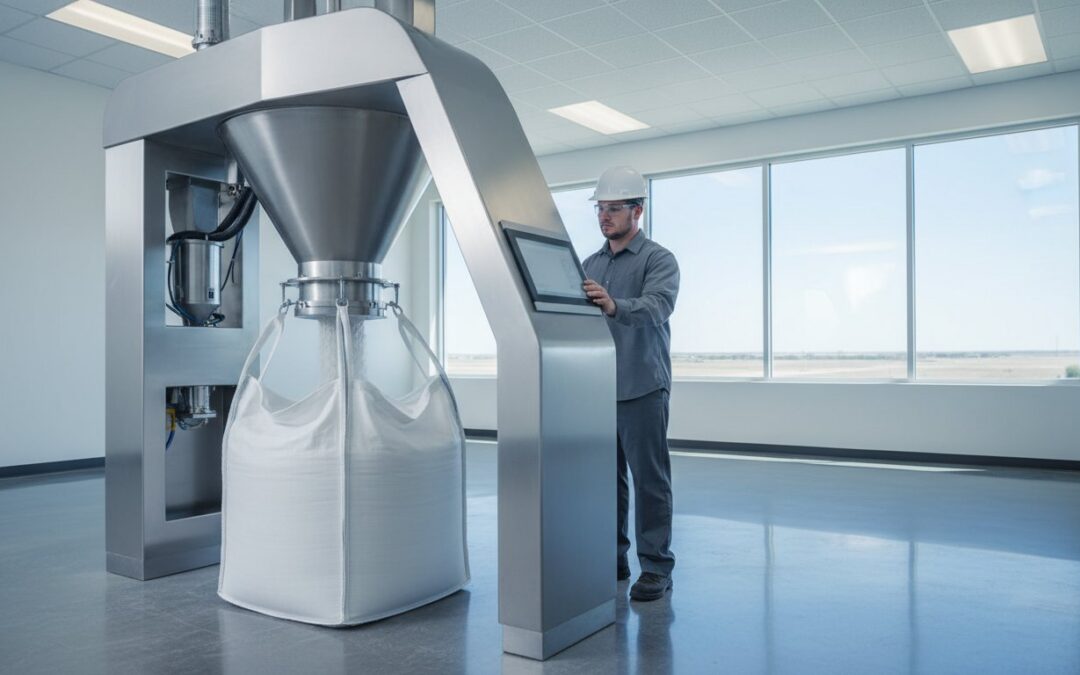
Production bottlenecks, inconsistent bag weights, and hazardous dust-these are common challenges in bulk material handling that directly impact your efficiency, safety, and bottom line. When slow, manual processes lead to costly product giveaway and unacceptable downtime, it’s clear a change is needed. Investing in the right equipment is the most effective way to overcome these obstacles. A high-performance FIBC filling machine is more than just equipment; it’s a strategic asset engineered to bring precision, speed, and unmatched reliability to your entire operation, transforming your facility from the ground up.
This comprehensive guide is designed to provide you with the expert knowledge needed to make a confident investment. We will explore the core components, operational benefits, and key features of modern FIBC fillers. You will learn how to select a system that not only solves your immediate challenges but also serves as a durable, long-term partner in your success. Prepare to optimize your bulk material handling process, increase throughput, and create a safer, more efficient work environment.
Key Takeaways
-
Grasp the essential components of a bulk bag filler and how their configuration directly impacts performance and product handling capabilities.
-
Visualize the entire filling cycle step-by-step to pinpoint opportunities for improving throughput and reducing operator intervention.
-
Discover how key features and options for an FIBC filling machine can dramatically increase bag stability, improve safety, and maximize your return on investment.
-
Learn to properly integrate your bulk bag filler by considering critical upstream and downstream processes for a seamless, fully optimized production line.
Table of Contents
-
What Is an FIBC Filling Machine and Its Role in Bulk Handling?
-
The FIBC Filling Process: A Step-by-Step Operational Walkthrough
-
Maximizing Efficiency and Safety: Critical Features and Options
What Is an FIBC Filling Machine and Its Role in Bulk Handling?
In modern bulk material handling, efficiency and safety are paramount. Central to this process is the Flexible Intermediate Bulk Container (FIBC), commonly known as a bulk bag or super sack. These large, durable containers are the industry standard for transporting dry, flowable products. The primary role of an FIBC filling machine is to accurately weigh and dispense these products into bulk bags, transforming a labor-intensive task into a streamlined, automated operation.
To see one of these high-performance systems in action, watch the video below.
These robust systems are engineered to handle a wide range of materials across critical industries, including chemicals, food ingredients, agricultural products, and minerals. By integrating precise weighing technology with a secure bag handling frame, an FIBC filler ensures that every bag is filled to the correct target weight, every time.
The Core Purpose: Moving Beyond Manual Labor
Manual filling methods, such as scooping or using a simple gate valve, present significant operational challenges. They expose workers to ergonomic injuries and harmful dust, while inconsistent weighing leads to product giveaway and inaccurate inventory. An automated FIBC filler directly addresses these issues by providing a controlled, safe, and highly repeatable process that protects both your team and your bottom line.
Key Benefits of Investing in an Automated FIBC Filler
Transitioning to an automated system delivers immediate and measurable returns on investment. The core advantages are built around performance and reliability:
-
Increased Throughput: Fill more bags per hour with significantly less labor, boosting overall plant productivity.
-
Improved Accuracy: Integrated load cells and smart controls minimize product loss and ensure you meet precise weight specifications.
-
Enhanced Worker Safety: A contained filling process dramatically reduces dust exposure and eliminates the risks associated with manual handling.
-
Consistent Bag Density: Proper filling and optional densification features create stable, safely stackable bags for transport and storage.
Anatomy of a Modern FIBC Filler: Key Components Explained
A high-performance FIBC filling machine is an integrated system of robust components working in unison to deliver accurate, safe, and efficient results. While configurations vary based on the product being handled-from fine powders to granular materials-the core anatomy remains consistent. Understanding these key systems is essential for appreciating how each one contributes directly to operational reliability and performance.
Structural Frame and Bag Support System
The foundation of any reliable bulk bag filler is its heavy-duty structural frame. Built from thick-walled steel, this frame is engineered to safely support the immense weight of a filled FIBC, often exceeding 4,000 pounds. It features adjustable bag support arms (or hooks) that can be raised or lowered to accommodate various bag heights, ensuring a secure and stable hang. This stability is crucial for operator safety and aligns with industry best practices like the FIBC Safe Handling Guidelines. Rear support posts further prevent the bag from swaying during the filling cycle, ensuring a uniform and dense fill.
The Filling Head and Inflatable Spout Seal
The filling head is the critical interface between your product supply and the bulk bag. It features a concentric tube design that allows product to flow into the bag while displaced air and dust are drawn away for a clean operation. The most vital component here is the inflatable spout seal. This durable bladder expands to create a dust-tight connection around the bag’s inlet spout, preventing product loss and eliminating airborne contaminants. Our durable Bulk Bag Fillers are designed for reliability and can be equipped with various head sizes to match any bag spout configuration.
Weighing Systems: Load Cells and Controllers
Precision is paramount in bulk packaging, and this is achieved through a sophisticated weighing system. At its core are high-accuracy load cells-specialized sensors that measure the force (weight) of the material. This data is processed by a digital weigh controller, which allows an operator to set a precise target weight. Systems are typically configured for either:
-
Gross Weighing: The bag and frame are weighed as the product fills, which is a simple and effective method for most applications.
-
Net Weighing: The product is pre-weighed in a separate hopper above the filler and then discharged into the bag, offering higher speed and accuracy for demanding production lines.

The FIBC Filling Process: A Step-by-Step Operational Walkthrough
Understanding the operational cycle of an FIBC filling machine reveals its true value in your facility. This step-by-step walkthrough demonstrates how each stage is meticulously engineered to deliver a repeatable process that prioritizes efficiency, accuracy, and operator safety. From an empty bag to a precisely filled and stable product, the entire cycle is designed for unmatched performance and reliability.
Stage 1: Bag Preparation and Hanging
The cycle begins with the operator preparing an empty FIBC. The bag’s four corner loops are hung on heavy-duty support arms, which will bear the full weight of the product. Proper bag handling at this stage is a critical safety measure, and all operators should be trained according to established industry standards, such as the FIBCA safe handling guidelines. The operator then places the bag’s fill spout over the filling head, and an inflatable seal expands to create a secure, dust-tight connection, preventing product loss and maintaining a clean work environment.
Stage 2: Inflation, Filling, and Densification
Once the bag is secured, the automated sequence commences. A powerful fan inflates the bag liner and body, removing any folds or creases to ensure it can be filled to its maximum capacity. The system controller then signals the infeed device to begin dispensing material at a high flow rate. Simultaneously, a densification system-typically a vibrating platform-compacts the material as it fills. This crucial step removes air from the product, creating a stable, square bag that is safer to handle, stack, and transport.
Stage 3: Final Weighing, Disconnection, and Take-Away
As the bag approaches its target weight, the controller automatically shifts to a slower "dribble" fill rate. This allows the system to perform a final, highly accurate top-off, ensuring consistent and precise weights for every bag. Once the exact weight is reached, the fill spout seal deflates, and the support arms automatically release the bag loops. The filled, stable bag is then ready for immediate removal by a forklift or an integrated powered conveyor, clearing the station for the next filling cycle to begin.
Maximizing Efficiency and Safety: Critical Features and Options
While the basic framework of any FIBC filling machine includes a frame, fill head, and scale, true operational value is unlocked through advanced features. These options are not just upgrades; they are engineered solutions to specific challenges involving product waste, operator safety, and production speed. Understanding these critical options allows you to specify a system that delivers maximum performance and a stronger return on investment.
Advanced Dust Control and Containment
For fine or hazardous powders, managing dust is non-negotiable. As product fills the bag, it displaces air, carrying fine particles with it. An effective system uses an inflatable spout seal and a dedicated dust collection port to capture this fugitive dust. For superior containment, an integrated dust collector creates negative pressure within the fill head, actively drawing dust away from the operator and ensuring a clean, safe, and compliant work environment. For applications using bags with liners, an automated liner inflation system ensures the liner is fully open for a clean, complete fill.
Bag Densification Methods for Product Compaction
Loosely filled bags are unstable, unsafe to transport, and inefficient for shipping. Bag densification systems solve this by compacting material during the fill cycle. The most common method is a vibrating deck, which uses controlled vibration to settle the product, removing air pockets. This results in a stable, square bag that is safer to handle and allows you to fit significantly more product into each FIBC, reducing both bag and freight costs. Other methods, like bag stroking, are available for materials that do not respond well to vibration.
Automation and Control Integration
To maximize throughput and minimize labor, automation and control integration are essential. Modern systems utilize PLC-based controls that provide precise, repeatable fill cycles and allow for seamless communication between your FIBC filling machine and other plant equipment, such as conveyors and palletizers. This level of control enables a fully integrated and efficient packaging line. Key automation options include:
-
Automatic Loop Release: Automatically unhooks the bag loops from the hanger, freeing the operator for other tasks.
-
Powered Height Adjustment: Allows for quick and effortless adjustment between different bag sizes, minimizing changeover time.
-
Automated Pallet Dispensing: Integrates with the filler to automatically place empty pallets for each fill cycle.
Specifying the right combination of these features ensures your equipment is not just a machine, but a long-term asset built for performance and reliability. To design a system tailored to your exact needs, consult with our experienced engineers today.
Integrating an FIBC Filler into Your Production Line
An FIBC filling machine is the heart of your bulk bagging operation, but its performance is only as strong as the system built around it. Achieving maximum throughput, accuracy, and safety requires a holistic view of your production line. True efficiency is not found in a single piece of equipment but in the seamless integration of every component, from the moment raw material enters the line to the second a filled pallet is ready for shipment.
Thinking beyond the filler itself prevents costly bottlenecks and ensures your investment delivers the performance you expect. A properly designed system considers both how material gets to the filler and how filled bags are handled afterward.
Upstream: Delivering Product to the Filler
A consistent and reliable material feed is critical to the performance of your filler. Any interruption or inconsistency in product flow directly impacts fill speed and weight accuracy. Common delivery methods include screw conveyors, belt conveyors, and gravity-fed hoppers from an overhead bin. Reliable Bag Handling Conveyors are engineered to ensure a steady product supply, maximizing your filler’s uptime and operational efficiency.
Downstream: Handling Filled Bags Efficiently
Once a bag is filled and weighed, it must be removed quickly and safely to make way for the next one. Manual removal with a forklift is an option, but for higher-speed operations, automated systems are essential. Roller conveyors are a dependable solution for automatically transferring filled FIBCs away from the filling station. For complete end-of-line automation, the next step often involves advanced Robotic Palletizing Systems to stack bags precisely for storage or shipment.
Partnering with an Expert for Seamless Integration
Purchasing an FIBC filling machine is only the first step. The real value comes from working with a manufacturer who understands how to design, build, and support a complete, integrated system. This partnership approach ensures that all components work in harmony, from initial consultation and design to professional installation and long-term after-sales support.
Don’t just buy a machine; invest in a complete, high-performance solution. Let our experts help you design your complete bagging system today.
Your Partner in High-Performance Bulk Bagging
As this guide has shown, selecting the right FIBC filling machine goes beyond basic specifications. A thorough understanding of its key components, the step-by-step filling process, and critical safety features is essential for maximizing operational efficiency. Proper integration is not just an option-it is the cornerstone of a high-performance bulk handling system that delivers consistent, reliable results.
At Choice Bagging Equipment, we are more than a supplier; we are your long-term partner. Since 1978, we have been manufacturing reliable bagging equipment designed for durability and performance. All our systems are proudly Made in the USA and backed by expert engineering support to ensure seamless integration into your existing production line.
Take the next step toward optimizing your bulk bagging process. Contact us today to discuss your project with an expert. We are ready to help you invest confidently in a solution built to last.
Frequently Asked Questions
What types of products can be handled by an FIBC filling machine?
Our FIBC filling machine systems are engineered for high-performance handling of a wide range of dry bulk materials. This includes fine powders like cement and flour, granules such as plastic pellets and fertilizers, and larger materials like flakes, seeds, and aggregates. The equipment is designed with the durability to manage abrasive products and can be configured with stainless steel contact surfaces for food-grade or corrosive chemical applications, ensuring operational reliability across diverse industries.
How do you control dust when filling fine powders into bulk bags?
Effective dust control is critical for safety and efficiency. We achieve this through several proven engineering methods. An inflatable fill head creates a sealed connection with the bag spout, preventing product escape. Integrated dust collection ports allow the system to be connected to a central dust collector, creating negative pressure that captures airborne particles at the source. This ensures a cleaner, safer work environment and minimizes product loss, contributing to a more efficient operation.
What is the difference between a gross weigh and a net weigh FIBC filler?
The primary difference lies in how the product is weighed. A gross weigh filler weighs the product as it fills the bag, with the bag itself resting on the scale. In a net weigh system, the product is weighed in a separate hopper above the bag first, and then the pre-weighed batch is discharged into the bag. Net weigh systems typically offer higher fill rates and can provide greater accuracy, making them ideal for high-throughput operations.
How much does an FIBC filling system typically cost?
The cost of a bulk bag filling system varies based on your specific operational requirements. Key factors influencing the investment include the level of automation, the type of weighing system (gross vs. net), required fill accuracy, and the materials of construction, such as carbon or stainless steel. Additional features like bag inflation, vibration for product densification, and integrated dust control will also affect the final price. We provide detailed consultations to engineer a system that meets your performance goals and budget.
What kind of maintenance is required for a bulk bag filler?
Our bulk bag fillers are built for durability and long-term reliability with minimal maintenance. Routine upkeep typically involves visual inspections of key components like gaskets and inflatable seals, regular cleaning to prevent product buildup, and periodic calibration of the weighing system to ensure sustained accuracy. This straightforward maintenance schedule is designed to maximize uptime and protect your investment, ensuring your equipment delivers consistent performance for years to come.
Can one machine fill different sizes of bulk bags?
Yes, versatility is a key design feature. A well-designed FIBC filling machine incorporates adjustable components to handle a range of bag sizes. Features such as a height-adjustable frame and movable bag strap hangers allow operators to quickly and easily reconfigure the station for bags of different heights and widths. This adaptability ensures that your equipment can evolve with your packaging needs, providing a more efficient and long-lasting solution for your operation.
Recent Comments