
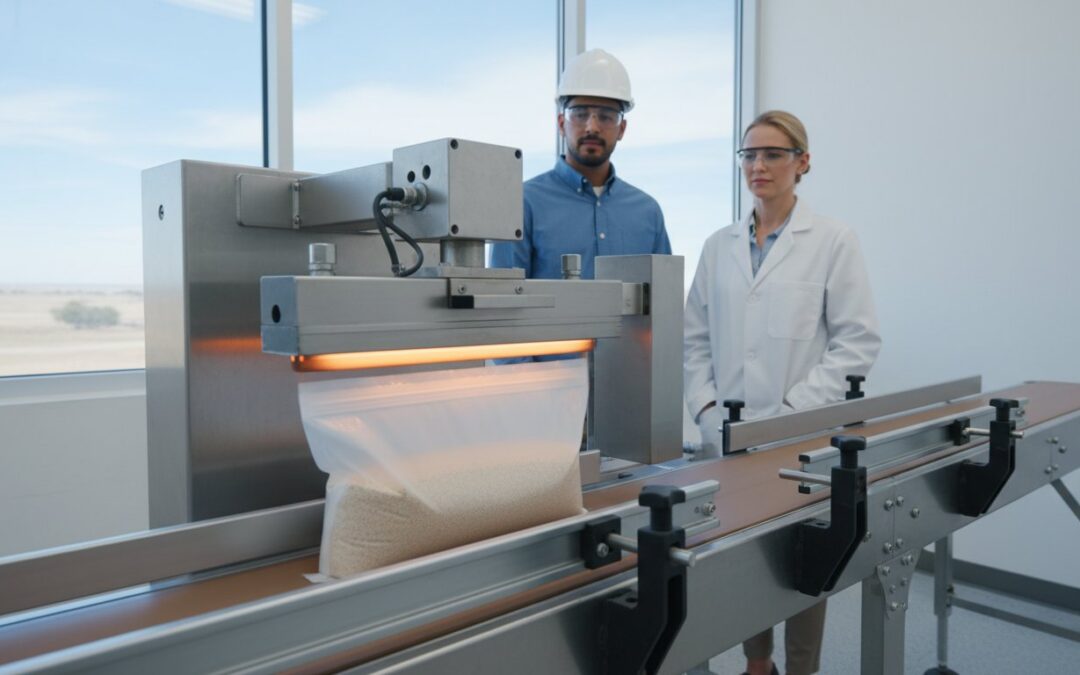
A single failed seal can lead to product spillage, customer complaints, and lost revenue. When manual sealing processes create a bottleneck in your production line, the inefficiencies multiply, directly impacting your bottom line. The solution lies in upgrading your process with high-performance equipment, but selecting the right bag sealer for plastic bags from the vast array of available technologies presents a significant challenge.
This comprehensive guide is engineered to eliminate that uncertainty. We provide the essential information you need to understand the different types of industrial heat sealers and their ideal applications for materials like PE, PP, and laminates. You will learn how to select a durable, low-maintenance machine that integrates seamlessly with your filling equipment, allowing you to achieve a strong, consistent seal on every bag, optimize your production speed, and significantly improve your operational efficiency.
Key Takeaways
- Learn how to evaluate your bag’s material and thickness to ensure you select a sealing technology that delivers a reliable, high-integrity seal every time.
- Discover the key differences between industrial heat sealing technologies to match the right machine to your specific production speed and reliability requirements.
- Follow a proven checklist to confidently select the right industrial bag sealer for plastic bags, balancing factors like operational speed, maintenance, and total cost of ownership.
- Determine whether heat sealing or sewing is the correct closure method for your application by understanding how your product and bag material dictate the ideal choice.
Beyond the Kitchen: Understanding Industrial Bag Sealers
When selecting a bag sealer for plastic bags, it’s crucial to distinguish between consumer gadgets and industrial-grade machinery. While a simple kitchen sealer is fine for occasional home use, a production environment demands a solution built for entirely different goals: uncompromising speed, unmatched reliability, and absolute seal integrity. These systems are not just accessories; they are essential components engineered for performance and durability in high-volume operations.
The core technology behind industrial sealing is a process that applies controlled heat and pressure to fuse thermoplastic materials. A professional heat sealer is designed to create a permanent, hermetic bond that is both strong and consistent across thousands of cycles. This precision is fundamental to protecting your product.
To see an example of a robust sealer in action, view the video below:
A proper seal is your first line of defense against moisture, contamination, and spoilage, directly impacting product shelf life and customer safety. In automated facilities, these sealers are rarely standalone units. Instead, they function as a critical final step in integrated packaging lines, such as open mouth bagging machines, where they work in perfect sync with fillers and conveyors to ensure maximum efficiency.
Why Simple Handheld Sealers Fail in Production Environments
Consumer-grade or light-duty sealers are simply not engineered for the demands of a production line. They inevitably fail due to a lack of speed and an inability to create consistent, repeatable seals at high volumes. Furthermore, they cannot handle the thicker, multi-layer plastic films common in industrial packaging and offer no capability for integration with conveyors or fillers. Their poor durability leads to frequent downtime, repairs, and costly replacements, disrupting your entire operation.
Core Benefits of an Industrial-Grade Sealing Solution
Investing in a true industrial bag sealer for plastic bags delivers immediate and measurable returns. The primary benefits are built around efficiency and quality, ensuring your packaging process becomes a competitive advantage.
- Drastically Increased Throughput: Automate sealing to process significantly more bags per minute, meeting high production targets with ease.
- Perfect, Repeatable Seals: Eliminate weak or failed seals, drastically reducing product waste, spoilage, and costly returns.
- Lowered Labor Costs: By integrating the sealer into an automated line, you can reallocate manual labor to more value-added tasks.
- Enhanced Product Safety and Appearance: A clean, strong, and uniform seal protects product integrity and conveys a professional quality that builds consumer trust.
Types of Heat Sealers for Plastic Bags: A Technology Breakdown
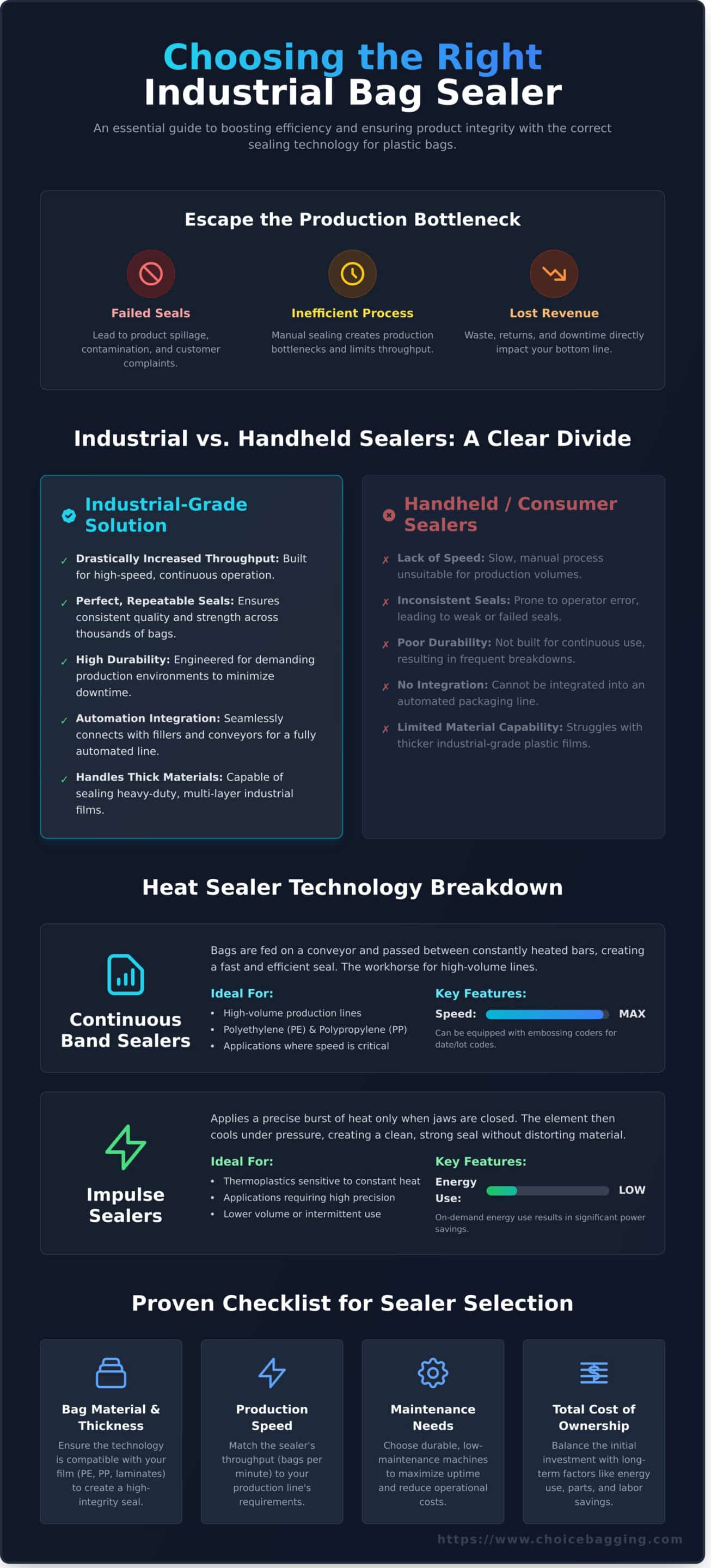
Selecting the correct heat sealer technology is fundamental to achieving reliable seals and operational efficiency. Your ideal solution depends on several critical factors, including the bag material, film thickness, and required throughput speed. The choice of plastic, especially for food-grade packaging, must often align with stringent safety protocols such as the FDA requirements for food contact, which directly influences the appropriate sealing method. Understanding the core technologies is the first step toward investing confidently in the right equipment.
Continuous Band Sealers
Continuous band sealers are built for high-volume production lines. Bags are fed onto a conveyor and passed between two constantly heated bars, creating a secure seal quickly and efficiently. This method is ideal for sealing polyethylene (PE) and polypropylene (PP) bags where speed is the primary objective. For enhanced traceability, many models can be equipped with embossing coders to stamp date and lot codes directly onto the seal.
Impulse Sealers
Unlike band sealers, an impulse sealer applies heat only for a brief moment when the sealing jaws are closed. A precise burst of electricity heats the element, which then cools under pressure to form the seal. This makes them the perfect bag sealer for plastic bags made from thermoplastics that could melt or distort with constant heat. Their on-demand energy use also results in significantly lower power consumption, making them a cost-effective choice for applications requiring precision over high speed.
Hot Air Sealers
Hot air sealers use jets of superheated air to melt the inner ply of the bag before it is pressed closed by rollers. This non-contact heating method is exceptionally effective for sealing gusseted plastic bags, as it seals the inner layer without damaging the bag’s exterior structure. It produces a strong, clean seal and is highly reliable in environments with fine powders or dust, as the forced air helps clear the seal area of contaminants.
| Sealer Type | Best For | Key Advantage | Common Materials |
|---|---|---|---|
| Continuous Band Sealer | High-volume, continuous operations | Speed and efficiency | Polyethylene (PE), Polypropylene (PP) |
| Impulse Sealer | Low to medium volume; heat-sensitive materials | Precise temperature control; energy efficient | Thermoplastics (e.g., PVC, Poly-cello) |
| Hot Air Sealer | Dusty environments; gusseted bags | Strong, clean seals without contamination | Pre-made open-mouth bags (PE, PP) |
Finally, the characteristics of your product heavily influence the sealer choice. For example, fine powders can compromise seal integrity if trapped between the plastic layers. A hot air sealer excels in these conditions by blowing contaminants out of the seal area. For heavy or liquid products, the wide, durable seal from a continuous band sealer may offer superior performance and reliability.
Key Factors in Selecting the Right Plastic Bag Sealer
Selecting the right equipment is an investment in your operational efficiency and product quality. A systematic evaluation ensures you acquire a machine that not only meets today’s needs but also supports future growth. While many factors influence this decision, the process should always begin with a thorough analysis of the bag itself. From there, you can align the machine’s capabilities with your specific production goals and quality standards.
To invest confidently, use this buyer’s checklist to guide your decision-making process and ensure you choose a high-performance, reliable machine.
Analysis of Your Bag Material and Specifications
The performance of any bag sealer for plastic bags is dictated by the bag it must seal. Different film structures require precise control over heat, pressure, and time. Identify your film type-such as Polyethylene (PE), Polypropylene (PP), or more complex laminated and co-extruded films-and its thickness (mil). Thicker films require more heat and longer dwell times, while certain bag styles, like gusseted bags or stand-up pouches, may demand specialized sealing jaws for a complete, secure closure.
Production Rate and Environment
Your operational needs are paramount. First, calculate your target production rate in bags per minute (BPM) or per hour to determine if a manual, semi-automated, or fully automated system is appropriate. Next, assess the operating environment. A machine destined for a dusty agricultural facility has different construction requirements than one in a sanitary, washdown food processing plant. Finally, consider your available floor space and how the sealer will integrate into your existing production line.
Seal Integrity and Quality Requirements
Define the purpose of the seal. Is it a simple closure, or must it be airtight and watertight to protect sensitive contents? For industries like food, pharmaceuticals, and medical devices, seal integrity is non-negotiable and must meet strict regulatory standards. Modern systems offer superior control and validation, and recent advancements in heat sealer technology highlight the importance of repeatable, verifiable processes. Features like integrated cooling bars and precise temperature controllers are essential for creating the strong, clean seals required for high-value products.
Ultimately, the best bag sealer for your operation is one that delivers consistent, reliable performance day after day. While initial price is a consideration, long-term value is found in durability, minimal downtime, and the availability of expert support. As your partner in packaging, we are committed to helping you find a solution built to last. For a detailed consultation on your specific application, contact our team today.
Heat Sealing vs. Sewing: Choosing the Best Bag Closure
When selecting a closure method for open-mouth bags, the two primary industrial options are heat sealing and sewing. The correct choice is not a matter of preference but is dictated entirely by your bag material and the nature of the product you are packaging. The fundamental distinction is simple: heat sealing is for plastic, while sewing is for paper or woven materials.
Understanding which method aligns with your operational needs is critical for ensuring product integrity, preventing loss, and achieving reliable performance on your packaging line. Below, we outline the specific applications for each closure type.
When to Choose Heat Sealing
Heat sealing is the required method for any polyethylene (poly) or plastic-lined bag that demands a completely secure, sift-proof, and often airtight closure. A quality bag sealer for plastic bags fuses the material together, creating an unbroken barrier. This is essential when product purity, moisture protection, and containment of fine powders are top priorities.
- Common Industries: Food ingredients, chemicals, powdered milk, pet food, and fertilizers.
- Primary Benefit: Creates a hermetic seal that protects against contamination, humidity, and leakage.
To ensure maximum product protection and line efficiency, see our range of robust industrial bag sealing equipment.
When to Choose Bag Sewing
Bag sewing is the standard for multi-wall paper bags and woven polypropylene bags that do not have a plastic liner. This method provides a strong, cost-effective closure that is durable enough for heavy or coarse products. It is the ideal choice when an airtight seal is unnecessary or when the product requires the bag to “breathe.”
- Common Industries: Animal feed, seed, grain, concrete mix, and minerals.
- Primary Benefit: Offers a simple, high-strength closure suitable for rugged materials.
For dependable, high-speed closing of paper or woven bags, learn about our automated bag sewing machine systems.
Can You Use Both? Pinch Bottom Bag Closures
For applications requiring the sift-proof security of a heat seal on a paper bag, the pinch bottom bag offers a hybrid solution. These multi-wall paper bags are manufactured with a pre-applied hot melt adhesive along the top. The bag is fed through a specialized closing system that reactivates the adhesive with hot air, folding and sealing the top to create a tight, clean, and leak-proof closure without any sewing involved.
Secure Your Operations with the Right Bag Sealer
Choosing the correct industrial sealer is a critical decision that directly impacts your operational efficiency and product integrity. As we’ve explored, understanding the differences between sealer technologies and weighing key factors like production speed and bag material are essential first steps. This knowledge ensures you select the right bag sealer for plastic bags that provides the durable, professional seal your products require for secure packaging and transport.
At Choice Bagging Equipment, we have been manufacturing reliable bagging equipment right here in the USA since 1978. We believe in building partnerships, not just selling machines. Our commitment to quality is backed by expert integration and comprehensive field service support, ensuring your equipment delivers unmatched performance and durability for years to come.
Don’t leave this critical decision to chance. Consult with our experts to find the perfect bag sealer for your needs. Invest with confidence and let our team help you find the ideal sealing solution to move your business forward.
Frequently Asked Questions
What is the difference between an impulse sealer and a direct heat sealer?
An impulse sealer applies a brief pulse of heat only when the sealing jaw is activated, making it energy-efficient and ideal for thermoplastic materials like polyethylene. A direct heat sealer maintains a constant high temperature in its sealing bars. This method provides the consistent, powerful heat penetration required for sealing thicker materials, multi-layer laminated foils, and gusseted bags, ensuring high-performance seals on challenging applications where impulse sealers would be insufficient.
How fast can an industrial bag sealer operate?
Sealing speed is determined by the sealer model, bag material, and overall production line integration. For high-volume operations, our continuous band sealers can achieve speeds of up to 750 inches per minute, delivering exceptional throughput. To ensure optimal performance, we partner with you to analyze your specific requirements and recommend a system engineered to meet your production targets without ever compromising the quality and integrity of the seal.
What kind of maintenance is required for a production line heat sealer?
Our heat sealers are engineered for maximum durability and minimal downtime. Routine maintenance is simple and consists of periodically inspecting and replacing common wear parts, such as Teflon sealing bands and heating elements. Following this straightforward schedule guarantees consistent, high-quality seal performance and extends the operational life of your equipment. We provide complete support and maintain a full inventory of replacement parts to ensure your line runs with unmatched reliability.
Can your bag sealers handle products that create a lot of dust during filling?
Yes. We have extensive experience with dusty products like powders and fine granules. For these challenging applications, we offer specialized equipment with features like integrated dust extraction hoods or unique jaw designs that maintain a clean seal area. A clean seal is critical for package integrity. Our team provides expert consultation to match you with a robust bag sealer for plastic bags built for dependable performance in the most demanding industrial environments.
Do you provide sealers suitable for food-grade or USDA-spec applications?
Absolutely. We manufacture a complete line of sealers designed to meet stringent sanitary standards, including USDA and FDA specifications. These machines are typically constructed from stainless steel and other food-grade materials, featuring designs that facilitate easy cleaning and prevent contamination. You can invest confidently knowing our equipment delivers the compliance, safety, and reliability required for food, pharmaceutical, and medical packaging operations. We build our equipment to the highest quality standards.
How do I ensure a strong, reliable seal every time with my plastic bags?
A strong, repeatable seal is achieved by precisely controlling three critical variables: temperature, pressure, and dwell time. Our equipment provides simple, accurate controls for all three factors, allowing you to establish and maintain the perfect settings for your specific film. Selecting the correct bag sealer for plastic bags is the crucial first step. From there, proper calibration and routine maintenance will ensure you achieve unmatched performance and a reliable seal on every bag.
Recent Comments