
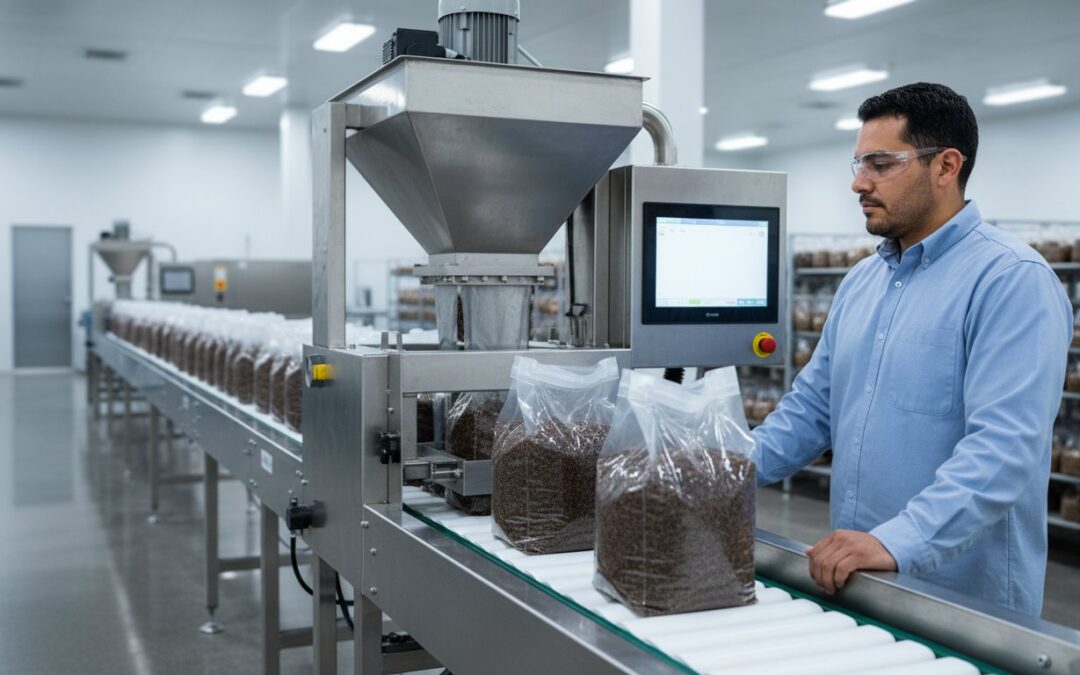
For many commercial mushroom growers, the bagging process is a significant operational bottleneck. The physical strain of manual labor, the inconsistency of bag weights and compaction, and the constant risk of substrate contamination can directly limit your farm’s output and profitability. A high-performance mushroom cultivation bag filling line bagging machine doesn’t just speed up production; it introduces a level of precision and consistency that manual methods simply cannot match, transforming a major challenge into a competitive advantage.
This comprehensive guide provides the clarity you need to invest confidently. We will explore the critical factors for selecting and implementing the right automated system to handle your specific substrate mix, from sawdust to straw. You will learn how to identify a durable, American-made machine that boosts productivity, reduces labor costs, and becomes a reliable asset for your farm’s growth. Prepare to find a solution that ensures uniform results and allows you to reallocate your team to higher-value tasks.
Key Takeaways
- Learn how automating your bagging process overcomes key challenges of manual labor, including inconsistent weights, slow speeds, and contamination risks.
- Discover which substrate properties-such as moisture, density, and particle size-are critical for selecting a high-performance bagging machine.
- Understand that a successful mushroom cultivation bag filling line bagging machine requires proper system integration and layout to achieve peak efficiency.
- Find out why partnering with a US-based manufacturer provides direct access to engineering expertise, ensuring your equipment meets your specific operational needs.
From Manual Labor to Automated Efficiency: The Modern Mushroom Bagging Process
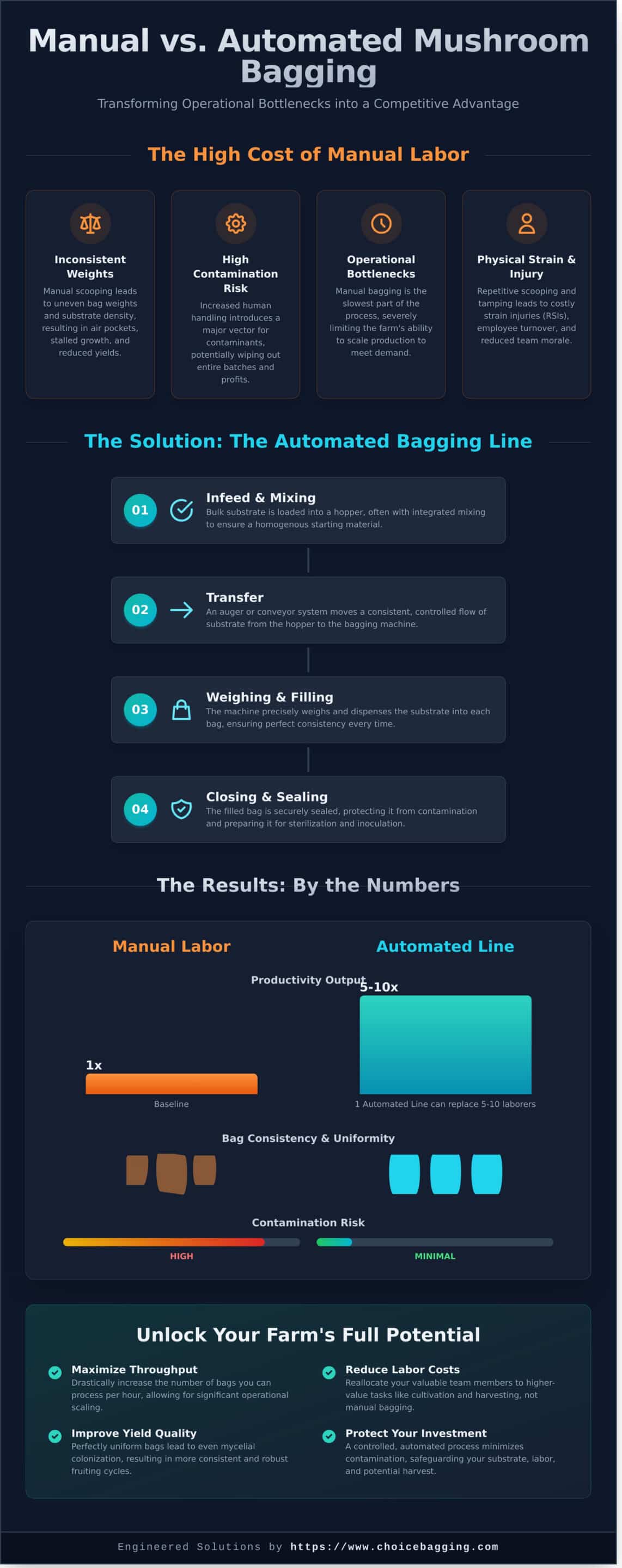
For decades, the foundation of commercial mushroom growing involved a highly manual, labor-intensive bagging process. Teams of workers would hand-scoop and weigh substrate, a method prone to significant bottlenecks. This traditional approach introduced critical inconsistencies in bag weight and density, increased the risk of contamination from human handling, and operated at speeds that severely limited a farm’s ability to scale. The entire system relied on manual precision, which is difficult to maintain over long shifts and directly impacts profitability.
To see how automation transforms this critical stage, watch the following demonstration of a complete system in operation:
Automation is the definitive solution to these challenges. A modern mushroom cultivation bag filling line bagging machine standardizes every step, from substrate mixing to final bagging, ensuring each bag is a perfect clone of the last. This level of control is fundamental to the principles of modern fungiculture, where predictable inputs lead to predictable, high-quality yields. This section will explore the transition from manual labor to automated efficiency, setting the stage to understand the components that make this performance possible.
Why Substrate Consistency is Critical for High Yields
Uniform substrate density is directly linked to the speed and health of mycelial growth. When every bag has the same compaction and moisture level, mycelium colonizes the substrate evenly, leading to consistent and robust fruiting cycles across the entire crop. Inconsistent manual packing often creates air pockets or dense clumps, which can stall growth, create anaerobic dead zones, or lead to contamination, ultimately reducing your total harvest weight and quality.
The True Cost of Manual Bagging
Relying on manual labor carries significant and often hidden costs that extend beyond hourly wages. When comparing the investment in a mushroom cultivation bag filling line bagging machine to ongoing manual expenses, the financial advantages of automation become clear. Consider these factors:
- Labor Inefficiency: A single automated line can often produce the same output as 5-10 manual laborers, drastically reducing payroll costs and dependency on a fluctuating workforce.
- Workplace Injuries: The repetitive motions of scooping and tamping substrate contribute to costly repetitive strain injuries (RSIs) and employee turnover.
- Contamination Losses: A single contaminated batch caused by human error can result in the loss of thousands of dollars in substrate, labor, and potential yield. Automation minimizes handling and seals bags in a controlled manner, protecting your investment.
By understanding these operational inefficiencies, it becomes clear how automation delivers not just speed, but a more reliable and profitable cultivation process. The following sections will break down the individual components of these systems.
Anatomy of a Mushroom Bag Filling Line: Key Equipment Components
An efficient mushroom bagging operation is more than a single machine; it’s a fully integrated system where each component performs a specific, critical task. Understanding this flow is essential for maximizing throughput and ensuring product consistency. A complete mushroom cultivation bag filling line bagging machine is a symphony of specialized equipment designed to move substrate from a bulk state into precisely weighed, sealed bags ready for sterilization and inoculation. The entire process is designed for reliability and repeatability.
The journey of the substrate can be visualized as a logical, sequential flow:
- Step 1: Infeed – Bulk substrate is loaded into a hopper.
- Step 2: Transfer – Conveyors move a consistent volume of substrate to the bagger.
- Step 3: Weighing & Filling – The bagging machine accurately weighs and dispenses the substrate into a bag.
- Step 4: Closing & Sealing – The filled bag is securely sealed to maintain sterility.
- Step 5: Outfeed – A final conveyor moves the finished bag to the next stage (e.g., sterilization).
This modular approach allows growers to scale their operations, starting with essential components and adding automation as production demands increase. Each piece of equipment is a building block for a high-performance system.
Material Handling: Hoppers and Conveyors
The process begins with a bulk hopper, which acts as a reservoir for your prepared substrate. From there, an auger or belt conveyor transports the material to the bagging machine. Consistent material flow is crucial for accurate weighing, and these conveyors are engineered to prevent bridging and ensure a steady supply. Handling supplemented sawdust, a common substrate detailed by Cornell University’s guide on the Mushroom Substrate Bagging Machine, requires equipment made from easy-to-clean materials like stainless steel to prevent contamination. The system is completed with reliable bag handling conveyors that move filled bags away, maintaining an uninterrupted workflow.
The Heart of the System: The Bagging Machine
At the center of the line is the bagging machine itself. For the damp, bulky nature of mushroom substrate, an open-mouth bagger provides the ideal combination of speed and precision. The operator places a bag onto the filling spout, where pneumatic clamps secure it firmly in place. The machine then dispenses substrate until a precise target weight, measured by integrated load cells, is reached. This accuracy is non-negotiable for consistent results. Our high-performance open mouth bagging machines are built with durability in mind, delivering the reliability needed for demanding production schedules.
Bag Sealing and Closing
Once filled, the bag must be sealed to protect the substrate from contaminants. For commercial operations, heat sealing is the industry standard, creating a strong, airtight closure. This is especially important for spawn bags that feature a filter patch for gas exchange, as the seal must be perfect around the patch. For smaller or start-up farms, manual methods like heavy-duty staplers or zip ties can be effective alternatives, though they are more labor-intensive. The chosen method must guarantee the integrity of the bag through sterilization and incubation.
How to Choose the Right Bagging Machine for Your Mushroom Substrate
Selecting the right equipment is a critical investment in your farm’s productivity and profitability. Not all industrial bagging machines are engineered to handle the unique challenges of mushroom substrate. The material’s high moisture content, variable density, and fibrous texture can easily jam or damage standard equipment, leading to costly downtime. A purpose-built mushroom cultivation bag filling line bagging machine is essential for consistent and reliable operation.
Matching Machine Type to Substrate
The physical properties of your substrate dictate the ideal machine design. Auger or vibratory feeders provide a consistent, reliable flow for uniform materials like sawdust-based substrates. In contrast, fibrous straw-based mixes are prone to bridging and clogging. For these, look for machines with specialized agitators or wider inlets to maintain steady material movement. A key design feature is the ability to adjust for moisture, as this directly impacts substrate flow and compaction. For large-scale operations, many growers first integrate durable bulk bag fillers to streamline the initial handling phase of the mushroom cultivation process before it reaches the bagging line.
Performance Metrics to Evaluate
When evaluating a bagging machine, focus on three core metrics that directly impact your farm’s efficiency and bottom line:
- Bags Per Minute (BPM): Your goal should be consistent throughput that aligns with your sterilizer capacity and workflow, not just a maximum speed rating.
- Weigh Accuracy: Precision is profit. Look for a machine that delivers consistent weights, typically within +/- 1-2%. Inaccurate fills waste expensive substrate and can negatively impact mushroom yield.
- Changeover Time: If you use multiple bag sizes or substrate recipes, assess how quickly the machine can be adjusted. Minimal downtime between batches is key to operational efficiency.
Construction and Durability
Mushroom growing environments are harsh, humid, and demand strict hygiene. Your bagging machine must be built to perform reliably in these conditions:
- Materials: Insist on stainless steel for all product contact points to prevent contamination and corrosion. This is non-negotiable for food-grade production.
- Robust Build: The frame and components should be heavy-duty and designed to withstand moisture and the rigors of daily operation without failure.
- Simple Design: Reliability often comes from simplicity. A machine with fewer moving parts typically requires less maintenance and offers greater uptime, providing a better return on your investment.
Before making a final decision, be prepared to ask a potential manufacturer targeted questions about feeder mechanisms, moisture handling, weigh accuracy, and construction materials. A trusted equipment partner will provide clear, confident answers that align with your farm’s operational goals.
Beyond the Machine: Critical Factors for a Successful Bagging Operation
Investing in a high-performance mushroom bagging machine is a critical first step, but true operational excellence depends on the entire system. The machine itself is the heart of your operation, yet its efficiency and longevity are directly tied to system integration, operator proficiency, and a commitment to upkeep. Viewing your equipment supplier as a long-term partner is essential for maximizing your return on investment and ensuring consistent, high-quality production for years to come.
A properly designed mushroom cultivation bag filling line bagging machine integrates seamlessly with your substrate mixing and conveyance systems, eliminating bottlenecks and optimizing workflow. When all components work in harmony, you achieve the dependable performance and high throughput necessary to scale your business confidently.
Calibration and Weighing Accuracy
Consistency is paramount in mushroom cultivation, and it starts with accurate substrate weights. Proper calibration of load cells ensures every bag receives the precise amount of material, leading to uniform colonization and predictable yields. Integrating a check weigher provides an additional layer of quality control, while maintaining detailed calibration logs demonstrates a commitment to process integrity and helps troubleshoot any inconsistencies.
Maintenance and Technical Support
Preventative maintenance is the most effective strategy for maximizing uptime. A simple, routine checklist can prevent the majority of common issues, ensuring your mushroom cultivation bag filling line bagging machine operates at peak performance. When complex issues do arise, having access to expert field service is crucial for minimizing costly downtime. A dependable partner provides not only the machine but also the support and parts access to keep you running.
- Daily Checks: Verify air pressure, inspect for loose fasteners, and ensure safety guards are secure.
- Weekly Checks: Clean and inspect belts, check spout clamps, and lubricate designated components per the manufacturer’s guide.
Safety and Ergonomics
A safe work environment is an efficient work environment. Standard safety features, including clearly marked emergency stops and comprehensive guarding, are non-negotiable. Automation dramatically reduces the physical strain associated with manual bagging, minimizing the risk of repetitive motion and lifting injuries. Maintaining a clean, organized workspace around the machine further enhances safety and allows operators to work more effectively.
For a partner dedicated to your operational success from machine selection to long-term support, explore our comprehensive solutions.
Why Partner with a US-Based Manufacturer for Your Bagging Line?
Selecting the right equipment for your mushroom farm is a critical business decision that extends far beyond the initial purchase price. While overseas marketplaces offer seemingly low-cost options, they often come with significant risks, including communication barriers, inconsistent quality, and non-existent post-sale support. Partnering with a US-based manufacturer is an investment in reliability, performance, and a long-term relationship built on shared success.
Consultative Approach and System Design
An American manufacturer acts as your partner, not just a vendor. You gain direct access to design engineers who understand the nuances of mushroom cultivation-from the specific density of your substrate to the desired flow of your production floor. We work with you to design a mushroom cultivation bag filling line bagging machine that is tailored to your farm’s unique layout and integrates seamlessly with your existing composters, conveyors, and sterilizers, ensuring a truly optimized solution.
Long-Term Reliability and Support
Investing in American-made equipment means investing in unwavering durability. Our machines are engineered with high-grade domestic steel and reliable components, built to withstand decades of demanding daily operation. When you need assistance, our support team is in your time zone and ready to help. This domestic partnership ensures that troubleshooting, service, and replacement parts are always accessible, minimizing downtime and protecting your productivity for years to come.
The difference between a simple transaction and a strategic partnership comes down to tangible value. When you choose a US-based manufacturer, you benefit from:
- Superior Construction: Equipment built with robust, high-quality materials for unmatched operational life.
- Domestic Parts Availability: Fast and reliable access to replacement parts, eliminating long international shipping delays.
- Direct Communication: Clear, direct access to the engineers and support specialists who know your machine inside and out.
- Accountability and Trust: The assurance that comes from working with an established company that stands behind its products.
Your operation’s efficiency and growth depend on equipment you can trust. By choosing an American partner, you secure more than just a piece of machinery; you gain a dedicated resource committed to the performance of your entire bagging system. Learn more about how a partnership with a trusted US manufacturer can provide the foundation for your farm’s success.
Partner with the Experts in Automated Mushroom Bagging
Transitioning from manual labor to an automated system is the definitive step toward boosting efficiency and scalability in your mushroom farm. Success depends not just on individual components, but on a holistic approach that considers your specific substrate, operational goals, and the reliability of your equipment. A high-performance mushroom cultivation bag filling line bagging machine is the core of this transformation, delivering the consistency and speed that manual processes cannot match.
Choosing the right partner is as critical as choosing the right machine. Since 1978, Choice Bagging Equipment has provided the robust, Made in the USA solutions that producers trust. We are more than a supplier-we are your partner in production efficiency, offering decades of manufacturing experience and dedicated domestic support to ensure your investment is a confident one.
Ready to build a system engineered for durability and peak performance? Contact our engineers to design your ideal mushroom bagging line. Take the next step toward achieving new levels of productivity and growth in your operation.
Frequently Asked Questions
What is the typical output of an automated mushroom bagging machine?
The output of an automated mushroom bagging machine is a key performance metric, typically ranging from 400 to 800 bags per hour. This rate depends on the specific model, bag size, substrate density, and overall line integration. Our machines are engineered for consistent, high-volume performance, ensuring your operation can meet demanding production schedules with unmatched reliability. We design for maximum efficiency, helping you achieve your desired throughput with confidence and precision.
Can one machine handle different types of mushroom substrates like sawdust and straw?
Yes, our high-quality bagging machines are designed with versatility to handle a wide range of mushroom substrates, from fine sawdust to coarse straw and compost blends. The key to this adaptability lies in the machine’s robust auger and agitation systems, which can be configured for different material flow characteristics. We partner with you to understand your specific substrate needs, ensuring your equipment is perfectly calibrated for optimal performance, reliability, and consistent bag density across all your batches.
How much space is required to install a complete mushroom bag filling line?
The space required for a complete mushroom cultivation bag filling line bagging machine depends on the system’s complexity and desired output. A standard automated line, including the bagger, infeed hopper, and takeaway conveyor, typically requires a footprint of approximately 200 to 400 square feet (18 to 37 square meters). We provide detailed layout consultations to ensure the system integrates seamlessly into your facility, maximizing workflow efficiency and operator safety within your available space.
What is the average cost of an automated mushroom bagging machine?
The cost of an automated mushroom bagging machine is an investment in long-term durability and efficiency. Prices can range from $20,000 for simpler, semi-automated models to over $100,000 for fully integrated, high-speed systems. The final cost is determined by factors like production capacity, level of automation, and custom features. We provide detailed, transparent quotes based on a thorough consultation to ensure you invest confidently in a solution tailored to your operational needs.
How do you clean and sterilize the bagging equipment between batches?
Proper cleaning and sterilization are critical for preventing contamination. Our equipment is designed with easy-to-access components to simplify this process. Between batches, operators should use compressed air to remove loose debris, followed by a thorough wipe-down of all substrate contact surfaces with an approved sanitizing agent. The robust, stainless steel construction of key components ensures they can withstand rigorous cleaning protocols, guaranteeing the integrity and safety of your cultivation process batch after batch.
What are the power and air requirements for these machines?
Our machines are built for industrial performance and have standard utility requirements. Most models operate on 240V or 480V 3-phase electrical power, with specific amperage varying by motor size. For pneumatic functions, a clean, dry compressed air supply of 80-100 PSI at 10-20 CFM is typically required. We provide a detailed utility specification sheet for every machine to ensure your facility is prepared for a smooth and efficient installation process.
Recent Comments