
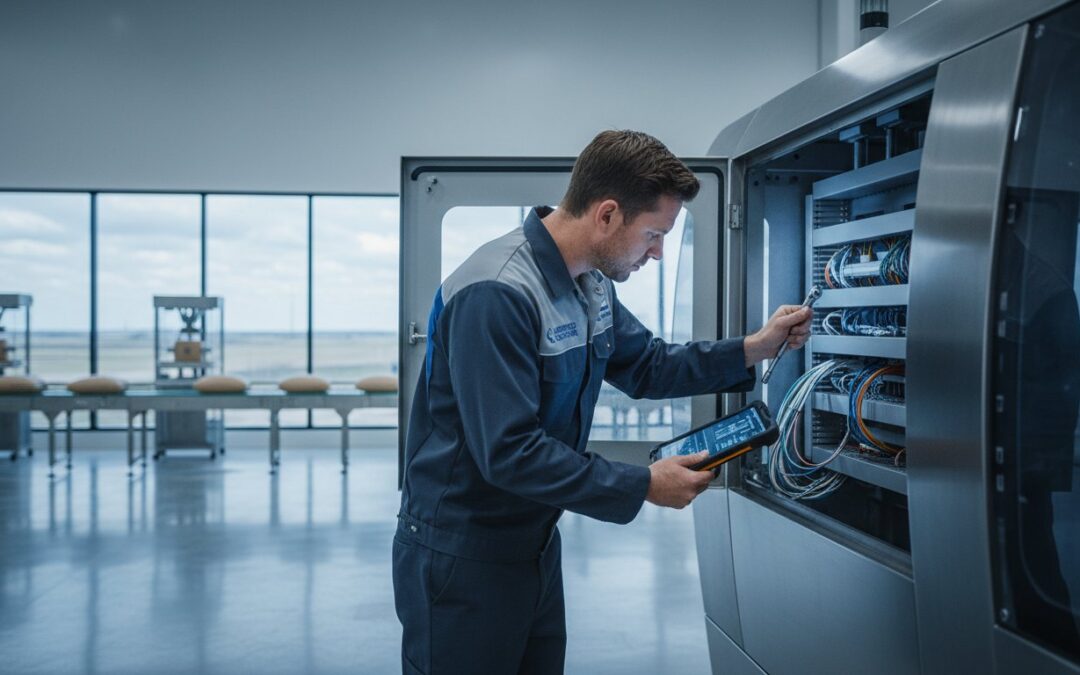
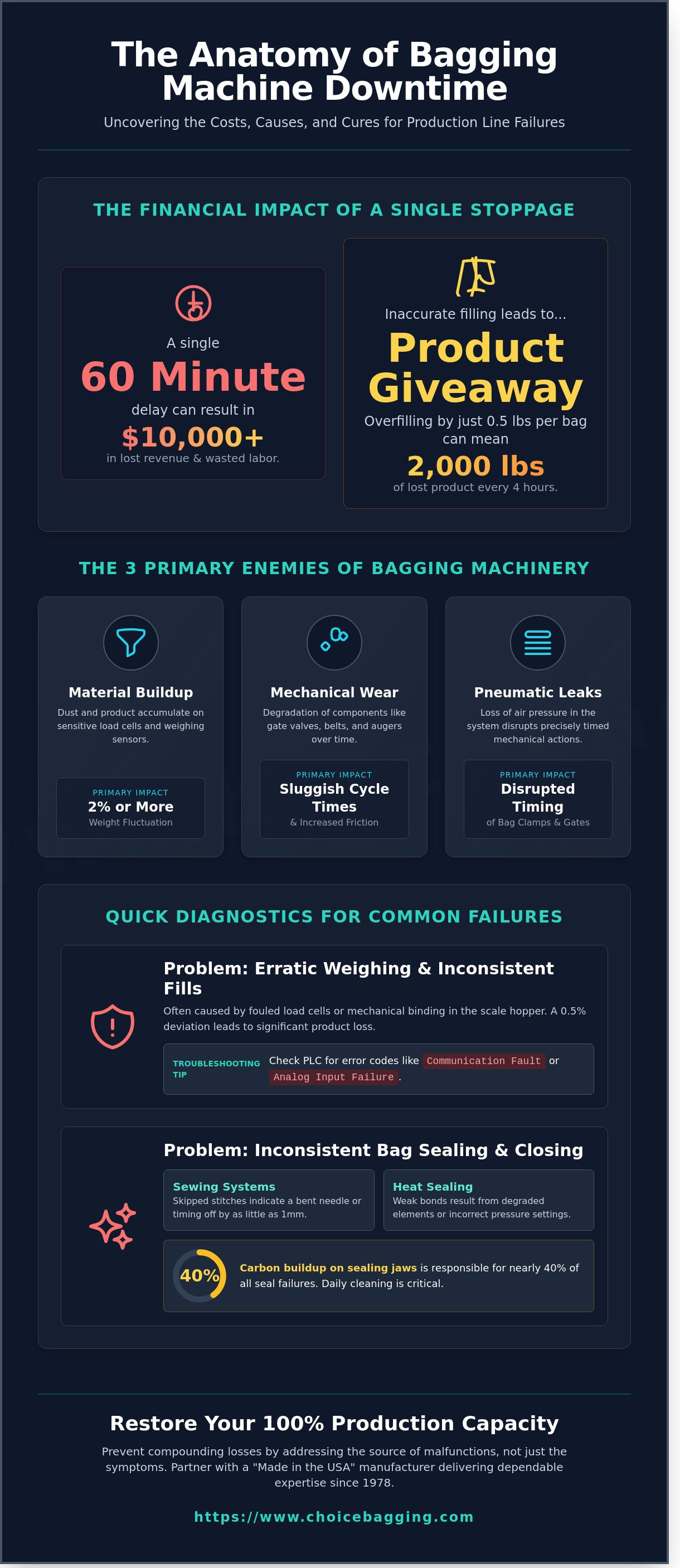
A single 60 minute delay on a high-volume production line can result in over $10,000 of lost revenue and wasted labor costs. You already know that when a scale drifts or a bagger jams, it isn’t just a technical glitch; it’s a direct threat to your bottom line. Mastering industrial bagging machine repair is the only way to prevent these losses from compounding and impacting your delivery schedule. Inaccurate bag weights and the struggle to find genuine OEM parts for machines built decades ago can stall your entire operation. Since 1978, we’ve helped operators overcome these hurdles with reliable technical support and field service.
This article provides the expert solutions you need to identify common failures before they cause a total shutdown. You’ll learn how to resolve equipment issues and implement a preventive maintenance schedule that ensures your production line runs at peak efficiency. Whether you’re troubleshooting an existing issue or using the Bagger Professor tool to evaluate your current setup, our goal is to restore your 100% production capacity. We’re here to be your long-term partner in performance, so contact us today to secure your facility’s reliability.
Key Takeaways
- Calculate the true financial impact of unplanned downtime and learn why precision system calibration is as vital as mechanical fixes.
- Master diagnostic troubleshooting for industrial bagging machine repair to quickly resolve erratic weighing and inconsistent bag sealing issues.
- Determine when to utilize in-house maintenance versus factory-trained field services to ensure seamless production line integration.
- Implement a structured preventive maintenance schedule with daily and monthly checklists to protect your equipment from abrasive material damage.
- Discover the advantage of partnering with a “Made in the USA” manufacturer that has delivered dependable engineering expertise since 1978.
Industrial Bagging Machine Repair: The High Cost of Unplanned Downtime
Proper industrial bagging machine repair involves more than just replacing a worn belt or tightening a bolt. It’s a comprehensive process that ensures system calibration and mechanical integrity work in harmony. Since 1978, Choice Bagging Equipment has served as a trusted partner for facilities that cannot afford to let their production lines sit idle. Whether you operate a Vertical form fill sealing machine or a heavy-duty valve bagger, maintaining peak performance is the difference between profit and loss. We build reliability into every service call to ensure your equipment stands the test of time.
For a high-volume facility, the “Downtime Calculator” reveals a harsh reality. A single hour of unplanned stoppage can cost between $1,200 and $5,000 in lost throughput and labor overhead. Quick fixes might get the line moving for ten minutes, but they often lead to recurring failures that multiply these costs over a 24-hour shift. Investing in professional industrial bagging machine repair prevents these compounding losses by addressing the source of the malfunction rather than just the symptoms.
To better understand the complexities of maintaining these systems, watch this helpful video on equipment maintenance:
Identifying the Root Causes of Equipment Failure
Reliability depends on addressing the three primary enemies of bagging machinery. First, material buildup on sensitive load cells or weighing sensors can cause weight fluctuations of 2% or more, leading to inconsistent fills. Second, mechanical wear in components like gate valves and augers leads to sluggish cycle times and increased friction. Finally, pneumatic system leaks often result in fluctuating air pressure, which disrupts the critical timing of bag clamps and discharge gates. Our team provides the parts and field service needed to eliminate these issues before they stop your line.
The Impact on Bag Weight Accuracy and Product Loss
A poorly maintained bagger is a direct financial drain on your operation. If your machine overfills every bag by just 0.5 pounds, and you process 500 bags per hour, you’re giving away 2,000 pounds of product every four hours. This “product giveaway” erodes profit margins at an alarming rate. Beyond the immediate cost, inaccurate weights create significant regulatory compliance risks with local and federal weights and measures authorities. Restoring machine precision through professional repair ensures every bag meets the exact target weight. If you’re unsure which machine fits your current material needs, use the Bagger Professor tool to find the right match for your application. For immediate technical support, contact us to discuss your repair needs.
Common Bagging Machine Failures & Troubleshooting Steps
Effective industrial bagging machine repair starts with a systematic diagnostic process. When you encounter erratic weighing or inconsistent fill levels, the culprit is often a fouled load cell or mechanical binding in the scale hopper. A 0.5% deviation in weight accuracy can lead to significant product loss over a single shift. Check your PLC for specific error codes like “Communication Fault” or “Analog Input Failure” to identify automation glitches before they halt production entirely. Most control system errors stem from loose wiring or dust ingress in the electrical cabinet.
Troubleshooting bag closing requires a different focus. For sewing systems, skipped stitches usually mean the needle is bent or the timing is off by as little as 1 millimeter. In heat sealing applications, inconsistent bonds often result from degraded heating elements or incorrect pressure settings. Clean the sealing jaws daily to prevent carbon buildup. This buildup is responsible for nearly 40% of seal failures in high-volume environments. If the seal looks weak, verify that the temperature hasn’t dropped below your material’s specific melting point.
Valve Bag Filler Specific Issues
In valve bag systems, material flow blockages often occur in the impeller or air packer delivery chamber. Inspect these components for wear every 500 operating hours to prevent “blow-by,” where product escapes the valve during the fill cycle. Maintaining your valve bag fillers involves checking the pinch valves and spout seals to ensure a dust-free operation. If you notice a drop in fill speed, it’s likely caused by a clogged vent line or a failing solenoid valve. Consistency here is key to keeping your facility clean and safe.
Open Mouth and Bulk Bag System Troubleshooting
Open mouth systems frequently face issues with bag-clamping mechanisms and spout misalignment. If the bag isn’t seated correctly, you’ll see spills and uneven fills. For larger operations, bulk bag fillers may experience hoist failures or vibratory deck issues that prevent material from settling. If your material is too difficult for your current setup, use the Bagger Professor tool to identify if the equipment is correctly matched to the material. This functional tool helps narrow down the right machine based on your specific product characteristics. For complex industrial bagging machine repair needs, you can contact our service team for expert assistance and parts.
Field Service vs. Mail-In Repair: Choosing Your Support Level
Reliability in any packaging facility starts with knowing when to handle a fix internally and when to call the experts. While your team can manage daily lubrication or belt tensioning, specialized parts and factory knowledge are required for precise industrial bagging machine repair. Using genuine OEM components ensures that a 20-year-old machine continues to meet its original cycle-per-minute specifications. Since 1978, our experience shows that off-brand components often fail within 6 months, leading to 15% higher long-term maintenance costs compared to genuine replacements.
Smaller, modular components don’t always require a technician visit. Mail-in repair options for sewing heads or heat sealers allow you to ship a single unit for factory refurbishment while your line continues to run with a spare. This approach reduces travel expenses and ensures your most delicate mechanisms receive a rebuild from specialists who handle these units daily. It’s a cost-effective way to maintain high performance without the overhead of a full service call.
When to Call for Field Service
Some issues extend beyond a single component. When a system-wide failure stops your entire packaging line, onsite field service is the most efficient path to restoration. Technicians handle safety-critical repairs like structural welding or complex 480V electrical troubleshooting that in-house teams may not be equipped for. Onsite support also allows for a full system audit. This ensures your baggers, conveyors, and palletizers work in perfect synchronization. If you aren’t sure which machine fits your current material needs during a rebuild, the Bagger Professor tool can help identify the correct equipment specifications for your application.
The Repair vs. Replace Decision
Deciding whether to invest in an old machine or purchase new equipment requires a calculated approach. If industrial bagging machine repair costs exceed 50% of the price of a new unit, it’s usually time to modernize. Legacy machines often become liabilities when proprietary boards or motors are no longer manufactured. For operations facing 48 hours or more of downtime during a major overhaul, our bagging equipment rental program provides a bridge to maintain 100% production capacity.
- Evaluate the age of the machine; equipment older than 15 years often lacks modern safety sensors.
- Assess bagging accuracy; modernizing components can improve precision by 0.5% per bag.
- Consider energy consumption; newer motors often reduce electrical overhead by 12% to 20%.
Don’t let aging equipment dictate your production schedule. Contact Us today to discuss whether a field service visit or a component rebuild is the right choice for your facility.
Establishing a Preventive Maintenance (PM) Schedule
The Daily Operator Checklist
Operators are the first line of defense. Every shift should begin with a 10 minute visual assessment to catch minor issues before they escalate. Consistent cleaning prevents material crusting, which can lead to a 15% decrease in filling accuracy over a single work week.
- Perform a visual inspection of air lines for leaks, seals for degradation, and bag clamps for proper tension.
- Test the emergency stop and safety interlock systems to confirm they’re 100% operational.
- Clean the bagging head thoroughly to prevent abrasive material buildup and product cross-contamination.
Advanced Monthly and Quarterly Maintenance
Moving beyond daily checks requires a deeper look at internal components. Dust and abrasive materials can cause 0.05 inches of wear on auger flights over six months if left uncleaned, leading to sluggish performance. Monthly deep cleanings of internal augers or impellers are vital for maintaining high flow rates.
Technical updates are equally important. You should verify firmware updates for automated controls to ensure the latest logic is applied to your bagging cycle. Additionally, schedule a professional assessment of robotic palletizing systems to verify that stacking patterns remain tight and stable.
If you need expert assistance setting up a comprehensive PM schedule for your facility, contact our service department today.
The Manufacturer’s Edge: Why Choice Bagging Equipment is Your Repair Partner
Expertise isn’t built overnight. Since 1978, we’ve focused on engineering bagging technology that stands the test of time. Choosing us as your partner for industrial bagging machine repair means you’re leveraging 46 years of domestic manufacturing experience. Every machine we build is “Made in the USA,” which ensures you receive dependable support without the logistical headaches of overseas shipping. We don’t just swap parts; we restore the engineering integrity of your entire system.
Our specialized Bagger-ER service provides an aggressive approach to emergency equipment restoration. When a critical failure stops your line, our team treats the situation with the urgency it deserves. We understand that every hour of downtime can cost a facility over $4,500 in lost productivity. Our goal is to return your equipment to factory specifications, often improving performance beyond its original state through modern component upgrades and precision calibration.
Comprehensive Support for the Entire Packaging Line
Effective repair requires a holistic view of your workflow. From initial fillers to final bag sealing, we understand how every component interacts. If your current fleet is aging, we offer buyback programs and a rotating inventory of refurbished equipment to help you manage capital expenses. If you’re looking to upgrade, our Bagger Professor tool helps you identify the right technical match for your specific material and bag type.
We go beyond simple mechanical fixes by providing expert consultation on production line integration. This ensures your industrial bagging machine repair yields a maximum ROI. We’ve seen 12% increases in throughput simply by adjusting how conveyors and sealers sync with the primary filler after a major service overhaul. Our team looks at the total system to prevent future bottlenecks and maximize your operational efficiency.
Get Your Production Line Back on Track
You’ll get direct access to the factory technicians who actually build this equipment. We maintain a deep inventory of critical parts at our domestic facility to ensure fast turnaround times. Don’t let a mechanical failure derail your delivery schedule. We’re ready to restore your efficiency and protect your bottom line. Contact us today to schedule your professional service or request a technical consultation.
Protect Your Production and Maximize Equipment Longevity
Every hour of unplanned downtime can cost a facility over $500 in lost revenue and missed shipping deadlines. Effective industrial bagging machine repair requires more than just a quick fix; it demands a partnership with experts who understand the mechanics of heavy-duty environments. Choice Bagging Equipment has provided these solutions since 1978, using factory-certified technicians to deliver the technical precision third-party shops simply lack. Our machines are proudly made in the USA, ensuring that every replacement part and service call meets the highest quality standards for reliability and performance.
If you’re planning for future growth while maintaining your current systems, our Bagger Professor tool helps you quickly identify the right equipment for your specific materials and bag types. Don’t let a minor mechanical failure turn into a major production bottleneck that halts your entire line. Invest in a preventive maintenance schedule today to keep your operations running at peak efficiency for decades to come. We’re ready to help you maintain a competitive edge and ensure your equipment stays as hardworking as your team.
Request Professional Repair Service or Parts Today
Frequently Asked Questions
How often should I calibrate the scales on my industrial bagging machine?
You should calibrate your scales every 3 to 6 months to maintain weight accuracy within 0.25% of your target. Facilities running 2,000 bags daily should perform these checks monthly to prevent product giveaway and ensure compliance with trade regulations. If your weight fluctuations exceed 0.5 pounds, it’s time for immediate industrial bagging machine repair or professional adjustment to protect your bottom line.
Can I use third-party parts for my bagging machine repair?
You can use third-party parts, but doing so often voids your warranty and can reduce the machine’s operational lifespan by 15%. We recommend using OEM components manufactured in the USA since 1978 to ensure 100% compatibility with your system. Precision-engineered parts maintain the 20-year durability our equipment is known for; using off-brand components leads to unexpected downtime and higher long-term maintenance costs.
What are the most common signs that a bagging head needs replacement?
Visible wear on the discharge spout or a 10% drop in filling speed indicates the bagging head is reaching its end of life. If you see consistent leaks or material buildup that cleaning doesn’t fix, the internal seals have likely failed. Most bagging heads require a full overhaul after 500,000 cycles to maintain peak performance. Don’t wait for a total failure; contact us at https://www.choicebagging.com/contact/ to discuss replacement options.
How long does a typical industrial bagging machine field service visit take?
Most field service visits for industrial bagging machine repair last between 4 and 8 hours. Complex system integrations or full scale recalibrations might extend to 2 business days depending on the scope of work. Our technicians arrive with 95% of the necessary parts to ensure your line’s back in operation quickly. We focus on getting your production back to its rated 12-bag-per-minute capacity without unnecessary delays.
Do you offer repair services for bagging equipment from other manufacturers?
Yes, we provide expert repair and technical support for most major brands of bagging equipment. Our team has serviced over 50 different makes of valve baggers and open-mouth fillers since our founding. We act as your long-term partner to keep your entire facility running, regardless of the original equipment manufacturer. If you’re unsure which machine fits your needs, use the Bagger Professor tool at https://www.choicebagging.com/bagger-professor-tool/ to identify the right technology for your material.
What is the “Bagger-ER” service and how does it help in an emergency?
Bagger-ER is our rapid-response emergency program that guarantees a technical consultation within 2 hours of your call. We provide 24/7 phone support and can often dispatch a technician to your site within 24 to 48 hours for critical failures. This service reduces emergency downtime by 40% compared to standard scheduling. It’s designed for facilities where an hour of lost production costs $5,000 or more in lost revenue.
Is it possible to upgrade an older manual bagger to an automated system?
You can upgrade most manual systems by adding robotic palletizers or automated bag placers to increase throughput by 300%. We’ve successfully retrofitted equipment built in the 1990s with modern PLC controls and touch-screen interfaces. This conversion typically pays for itself within 14 months through reduced labor costs and improved bagging precision. Reach out to us at https://www.choicebagging.com/contact/ to evaluate your current setup.
What should I do if my valve bag filler is creating excessive dust during operation?
Inspect the dust collection shroud and replace the inflatable spout seals if they’re more than 12 months old. Dust levels exceeding 10 milligrams per cubic meter often signal a leak in the venting system or a clogged filter. Ensuring a tight seal between the bag and the spout can reduce airborne particulates by 95%. Proper maintenance keeps your workspace clean and protects your operators from respiratory hazards.
Recent Comments