
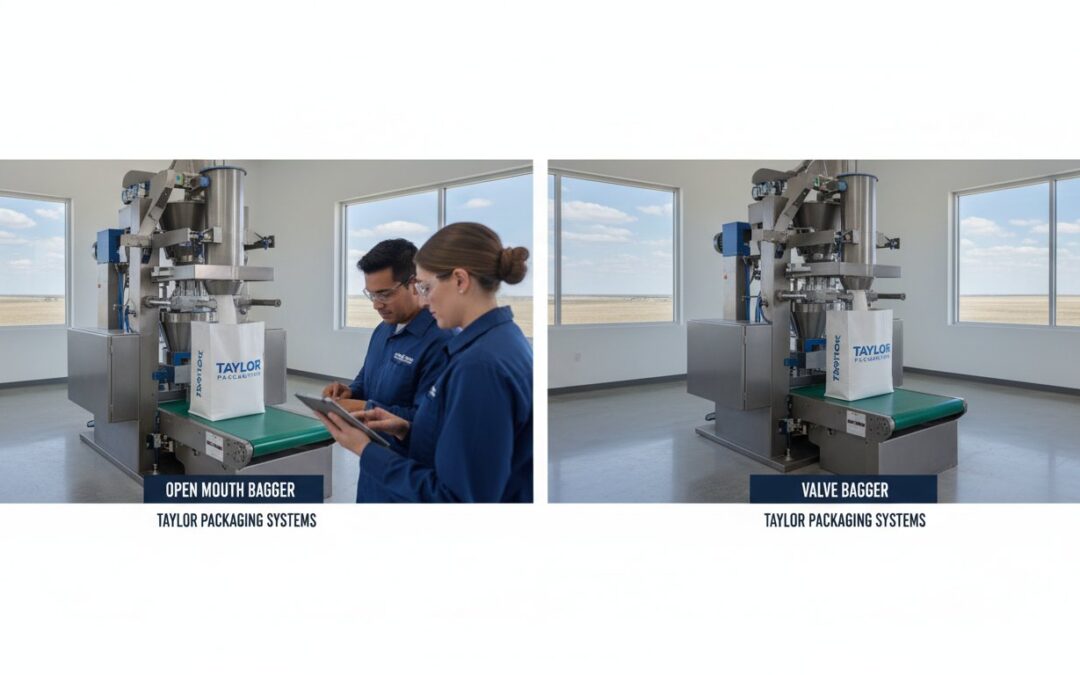
What if the primary bottleneck in your production line isn’t your staff’s speed, but the physical geometry of the bags you’ve chosen? Since 1978, we’ve seen how the wrong equipment choice can lead to 15% higher labor costs and excessive product giveaway. You’re likely already aware that dust control and weight accuracy are the two biggest factors affecting your daily profit margins. Deciding between an open mouth bagger vs valve bagger is a critical step that determines your facility’s long-term efficiency and operational cleanliness.
We’ll show you how to reduce airborne dust by up to 90% and achieve the throughput speeds necessary for seamless integration with robotic palletizers. This comparison provides the technical clarity you need to invest confidently in a solution built to last decades. You’ll finish this article with a clear understanding of which system will maximize your ROI and improve plant safety. For expert guidance on your next project, contact us to speak with a specialist today.
Key Takeaways
-
Understand the fundamental mechanical differences between top-filling systems and corner-valve spouts to determine the best fit for your facility’s layout.
-
Identify how product density and dust characteristics influence the open mouth bagger vs valve bagger selection to maintain plant cleanliness and operational efficiency.
-
Evaluate performance metrics like Bags Per Minute (BPM) and weight accuracy to minimize product giveaway and maximize your long-term ROI.
-
Discover how your bagging choice impacts downstream automation, from selecting the right bag sealing method to optimizing palletizing patterns.
-
Leverage our engineering expertise and the Bagger Professor tool to select a high-performance system built for decades of reliable service.
Table of Contents
-
Understanding the Mechanics: Open Mouth vs Valve Bagging Systems
-
Material Compatibility: Matching Your Product to the Right Bagger
-
Choosing Your Partner: The Choice Bagging Equipment Advantage
Understanding the Mechanics: Open Mouth vs Valve Bagging Systems
Industrial packaging technology has undergone a massive transformation since 1978. Choice Bagging Equipment has led this evolution by manufacturing machinery that prioritizes durability and precision. When you evaluate the open mouth bagger vs valve bagger, you’re choosing between two distinct mechanical delivery systems. Each method offers specific advantages for material flow, dust control, and labor efficiency. We build performance into every machine to ensure your investment lasts for decades.
The fundamental difference lies in the bag’s construction and how it accepts product. Open mouth systems fill into a wide-open top, while valve systems utilize a small corner spout. This mechanical distinction dictates how the material is metered and how the bag is ultimately sealed.
How Open Mouth Baggers Work
Open mouth systems are the standard for versatility in the 25-pound to 110-pound range. The process begins with a bag being hung on a specialized spout. Once the machine secures the bag, the product is delivered through one of three primary methods: gravity, belt, or screw feeders. Gravity feeders work best for free-flowing grains, while screw feeders handle difficult, non-free-flowing powders. After the fill cycle is complete, the bag is transferred to a separate station for bag sealing or sewing. These open mouth bagging machines are ideal for operations that frequently change bag sizes or product types.
How Valve Bag Fillers Operate
Valve baggers are engineered for high-speed applications where cleanliness is a priority. The bag is placed onto a horizontal spout, and the material is forced inside using internal pressure. Choice Bagging Equipment designs these machines as either air packers or impeller packers. Air packers use a fluidized bed to move granular materials, while impeller packers use a high-speed rotating blade to push dense powders into the bag. A significant advantage is the self-closing nature of the valve. As the bag fills, internal product pressure forces the internal sleeve shut. This eliminates the need for a separate sealing station, which reduces labor costs and increases throughput. For more information on these high-performance systems, you can contact us to speak with a technical expert.
Material Compatibility: Matching Your Product to the Right Bagger
Material density is the most critical variable in your equipment selection process. It dictates the physical size of the bag and the flow characteristics during the fill cycle. When you compare an open mouth bagger vs valve bagger, you’re essentially choosing a filling method based on how your product behaves under pressure. Since 1978, we’ve seen that misjudging bulk density leads to poor pallet stability and inefficient production speeds. A product with a density of 50 lbs/cu.ft. requires a different mechanical approach than one at 20 lbs/cu.ft. to ensure weight accuracy and bag integrity.
The "Dust Dilemma" is another vital consideration for plant safety and cleanliness. Valve bag systems offer a closed-loop environment that can reduce airborne dust by 92% compared to standard open systems. This is essential for hazardous chemicals or fine minerals. Product aeration also affects the final stack. Aerated powders behave like liquids during the fill, requiring specialized de-aeration or settling time to ensure the bag isn’t too "puffy" for the palletizer.
Best Materials for Open Mouth Systems
Large granules, pellets, and irregular shapes like lump charcoal or wood chips perform best in open mouth bagging machines. These products don’t flow well through the small intake of a valve bag. Open top bags allow for high-volume, low-density products that need extra room to settle before the bag is sealed. Food-grade products like grains and seeds also benefit from the sanitation standards of open mouth systems. The design allows for easier cleaning and inspection, ensuring 100% compliance with food safety regulations. Fragile materials like cereal flakes or specialized crackers also prefer the gravity-fed nature of open systems to prevent breakage during the fill.
Best Materials for Valve Bag Systems
Fine powders such as cement, pigments, and chemical additives are the primary candidates for valve bag fillers. Choosing between an open mouth bagger vs valve bagger often depends on whether your material is a fine powder or a large granule. These machines achieve high-density packing by forcing air out of the product during the fill cycle. This results in a dense, rectangular bag that stacks with 15% better stability than loosely filled open bags. For fluidizable powders that behave like liquids, valve baggers provide the necessary containment to prevent spills. If you’re dealing with abrasive minerals like silica or glass cullet, our equipment uses reinforced components to maintain 99% uptime even in harsh environments. You can contact our expert team to discuss your specific material characteristics today.

Operational Comparison: Speed, Cost, and Accuracy
Deciding between an open mouth bagger vs valve bagger requires a hard look at your production data. A valve bagger typically delivers 3 to 10 bags per minute per spout. In contrast, an automated open mouth system can exceed 20 bags per minute. If you’re running 24/7 operations, that speed difference impacts your bottom line immediately. Accuracy is another critical factor. We integrate advanced load cells into our designs to ensure weight accuracy within 0.25% to 0.5% of the total fill weight. This precision eliminates product giveaway, which can save a facility $15,000 to $50,000 annually depending on material value.
Labor and Throughput Efficiency
Manual bag placing is a bottleneck. An operator can typically hang 4 to 6 bags per minute. Switching to an automated bag placer increases this to 15 bags per minute or more. Valve baggers offer a self-sealing advantage because the internal sleeve closes via product pressure once the bag is removed. This eliminates the need for a secondary operator or a complex bag sealing line. Changeover times also vary. Modern valve baggers allow for product switches in under 15 minutes, whereas open mouth lines might require 30 minutes to adjust for different bag sizes and sealing heights.
Total Cost of Ownership (TCO)
You’ll need to weigh CAPEX against long-term OPEX. Open mouth bags are generally 10% to 20% cheaper than multi-wall paper valve bags because they don’t require internal valves. However, open mouth bagging machines often require higher initial investment for closing equipment like bag sewing machine systems. Consider these factors:
-
Maintenance: Valve baggers use pneumatic or screw-fed fillers with fewer moving parts than a high-speed open mouth carousel, resulting in lower annual maintenance costs.
-
Energy: A pneumatic valve filler requires a dedicated air supply of 80 to 100 PSI. Mechanical open mouth fillers rely more on gravity and electrical motors.
-
Durability: Machines built for heavy industrial use since 1978 often last 20 years or more with proper care.
To find the specific configuration for your facility, use the Bagger Professor tool to filter options by material density and bag type. This functional tool helps you narrow down the equipment that fits your footprint and budget. If you’re ready to discuss a specific project, contact us to speak with an applications engineer.
Closing and Downstream: Integration with Automation
The choice in the open mouth bagger vs valve bagger debate dictates your entire downstream configuration. It is a decision that extends far beyond the fill spout. Your bagging machine selection determines the footprint of your facility, the complexity of your conveyor layout, and the specific bag sealing technology required to maintain product integrity. We’ve seen that a mismatch between the filler and the closing system leads to 15% more downtime due to bag jams or improper seals.
Precision is mandatory. If your bagging machine fluctuates in fill accuracy by even 1%, the resulting variation in bag volume can disrupt automated stacking. A stack of 50 bags with slight overfills can result in a pallet that is three inches taller than planned, causing errors in robotic sensors. Planning for modular growth allows you to start with a manual closing station and transition to fully automated systems as your throughput increases from 5 bags per minute to over 15.
Sealing and Closing Technologies
Open mouth bags require a dedicated closing transition. Depending on your material, you might utilize industrial sewing for woven poly bags, heat sealing for plastic liners, or ultrasonic closing for high-fines powders. These systems must be perfectly synchronized with bag handling conveyors to prevent product settling or spilling before the seal is complete.
-
Internal Valves: These rely on the internal product pressure to force the valve shut, providing a cost-effective, high-speed solution for many minerals and chemicals.
-
External Valves: These offer a superior moisture barrier. They are often tucked or sealed after filling to ensure the product remains dry during long-term storage or export.
Optimizing for Robotic Palletizing
Valve bags typically provide a more stable, "brick-like" shape. This square profile is the gold standard for stability. When robotic palletizing systems pick up a valve bag, the flat surfaces allow for tighter nesting and higher stacking patterns. This reduces the risk of pallet lean, which is a leading cause of product damage during transit.
Open mouth bags often result in a "pillow" shape. While modern robotic grippers handle these easily, they require more sophisticated programming to ensure the stack remains level. We focus on ensuring the transition from the bagger to the palletizer is seamless, protecting your investment and your product. Since 1978, we’ve focused on building systems where every component works in harmony to maximize your daily output.
Request a custom downstream automation consultation
Choosing Your Partner: The Choice Bagging Equipment Advantage
Deciding between an open mouth bagger vs valve bagger isn’t just a technical choice; it’s a long-term investment in your facility’s uptime and profitability. At Choice Bagging Equipment, we’ve manufactured industrial solutions in the USA since 1978. This domestic focus isn’t about slogans; it’s about practical reliability. When a component wears out, you aren’t waiting weeks for parts to clear international customs. We maintain an extensive inventory of replacement parts ready for immediate shipment, often within 24 hours. This ensures your production remains consistent and your deadlines are met.
Our engineering-first approach means we prioritize production line integration from the start. We don’t just ship a crate and wish you luck. We build equipment to last decades, not years. It’s common to find CBE machines still in daily operation after 25 years of heavy industrial use. We achieve this durability by using heavy-duty steel and focusing on designs with minimal moving parts. This reduces wear and simplifies the maintenance your team needs to perform. We’re also your partner in navigating the complexity of industrial bagging, helping you avoid the 15% to 20% efficiency losses often caused by poorly matched equipment.
Expert Guidance and Support
Navigating the technical differences of an open mouth bagger vs valve bagger requires more than a spec sheet. With over 45 years of experience, we’ve solved material challenges for thousands of unique applications, from fine chemicals to abrasive aggregates. To help you narrow down the right machine for your specific material and bag type, you can use the Bagger Professor, a functional tool on our site designed to simplify your initial research. Once your equipment is installed, our field service and maintenance programs provide the expert support needed to prevent unplanned downtime and keep your line running at peak performance.
Ready to Optimize Your Production?
Every plant has a unique footprint and specific throughput goals. We provide customized consultations to ensure your new bagging machine fits perfectly into your existing workflow. Whether you need bag handling conveyors or a complete robotic palletizing system, we’re your long-term packaging partner. We take the complexity out of industrial bagging so you can focus on growing your business. Request a Quote for Your Bagging Project today to see how we can improve your efficiency and reliability.
Selecting the Right Technology for Your Facility
Choosing between an open mouth bagger vs valve bagger depends on your specific material density and dust control requirements. Open mouth systems provide unmatched versatility for various bag materials, while valve baggers deliver high-speed, clean filling for fine powders and granules. Since 1978, Choice Bagging Equipment has manufactured every machine in the USA, prioritizing durability and performance that stands up to decades of industrial use. We’ve built our reputation on providing equipment with minimal moving parts to ensure your production line doesn’t face unnecessary downtime.
We’re more than a supplier; we’re your long-term partner in operational success. It’s time to invest in a solution that provides the reliability your facility demands. Request a Custom Bagging Machine Quote today to see the Choice Bagging Equipment advantage firsthand. Your facility deserves a bagging system that works as hard as you do.
Frequently Asked Questions
Is a valve bagger faster than an open mouth bagger?
Valve baggers are typically faster in automated settings, achieving speeds up to 12 bags per minute per spout. This efficiency comes from the internal filling process that eliminates the need for manual or mechanical bag top manipulation. Open mouth systems often require additional time for bag positioning and sealing; this can reduce throughput by 20% in manual operations where speed is critical.
Which system is better for preventing dust in the warehouse?
The valve bagger is the superior choice for dust control because it uses an enclosed filling spout and a small bag opening. This design reduces dust emissions by up to 90% compared to open mouth systems. For operators handling fine powders, this containment ensures a cleaner workspace and reduces the risk of product loss by keeping the material inside the bag.
Can I use the same machine for both open mouth and valve bags?
You cannot use the same machine for both because the filling technology is fundamentally different. Valve baggers use a specialized spout to inject product into a small opening; whereas, open mouth systems require a wide opening for gravity or belt feeding. If you’re unsure which technology fits your product, the Bagger Professor tool helps you identify the correct equipment based on your specific material.
What is the price difference between open mouth and valve bags?
Valve bags generally cost 15% to 25% more than standard open mouth bags due to their complex internal sleeve construction. However, they eliminate the need for separate sewing or heat-sealing equipment, which can save a facility $10,000 to $50,000 in initial machinery costs. Deciding between an open mouth bagger vs valve bagger requires balancing these higher consumable costs against lower capital equipment investment for your facility.
Do valve bags require a separate sealing machine?
Most valve bags don’t require a separate sealing machine because the internal pressure of the product closes the valve automatically. This self-sealing feature simplifies the production line and reduces the number of moving parts. For applications requiring a sift-proof seal, you can add an ultrasonic sealer, but the standard design remains functional and secure without it for most industrial applications.
Which bagging system is better for high-density minerals?
Valve baggers are the preferred choice for high-density minerals like frac sand or cement. These machines use air or impeller force to pack material tightly, resulting in a 10% more compact bag than gravity-fed systems. This density allows for more stable stacking and maximizes shipping container space for heavy industrial loads, ensuring your product reaches its destination safely and efficiently.
How does bag type affect robotic palletizing efficiency?
Valve bags provide a consistent, rectangular shape that increases robotic palletizing efficiency by up to 30%. Their flat ends allow robots to stack them more securely, creating a stable load that’s less likely to shift during transit. Open mouth bags often have uneven tops, which can lead to pallet overhang and requires more complex programming for the robot to handle the variations.
What maintenance is required for a valve bag filler vs an open mouth system?
What about other types of ‘baggers’?
In the world of high-performance motorcycles, a ‘bagger’ refers to a touring bike equipped with saddlebags. While our expertise lies in industrial packaging machinery, companies like Fat Boy Design USA specialize in manufacturing custom parts for vintage Chopper components and Bagger racing for the motorcycle community.
Recent Comments