
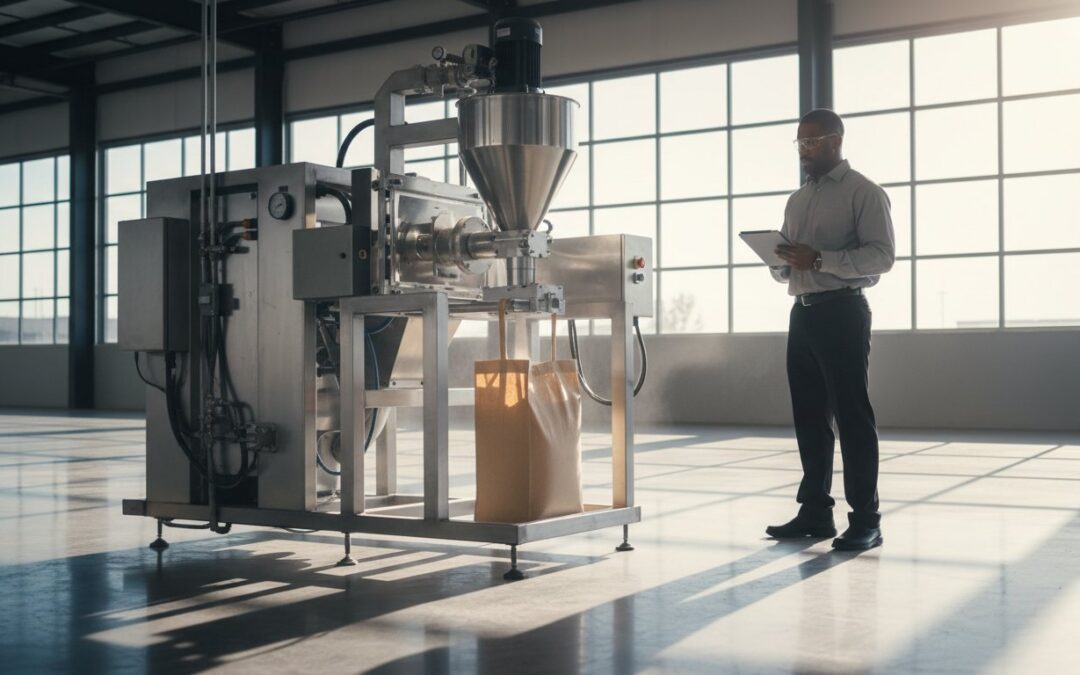
Inaccurate bag weights lead to costly product giveaway, while excessive dust creates operational and safety challenges. For production lines handling non-free-flowing powders and granules, these issues often result in slow throughput that directly impacts your bottom line. A high-performance pneumatic bagger system is engineered to solve these exact problems. Also known as air packers, these durable machines utilize air pressure to fluidize and move material, delivering unmatched speed and precision even with the most challenging products.
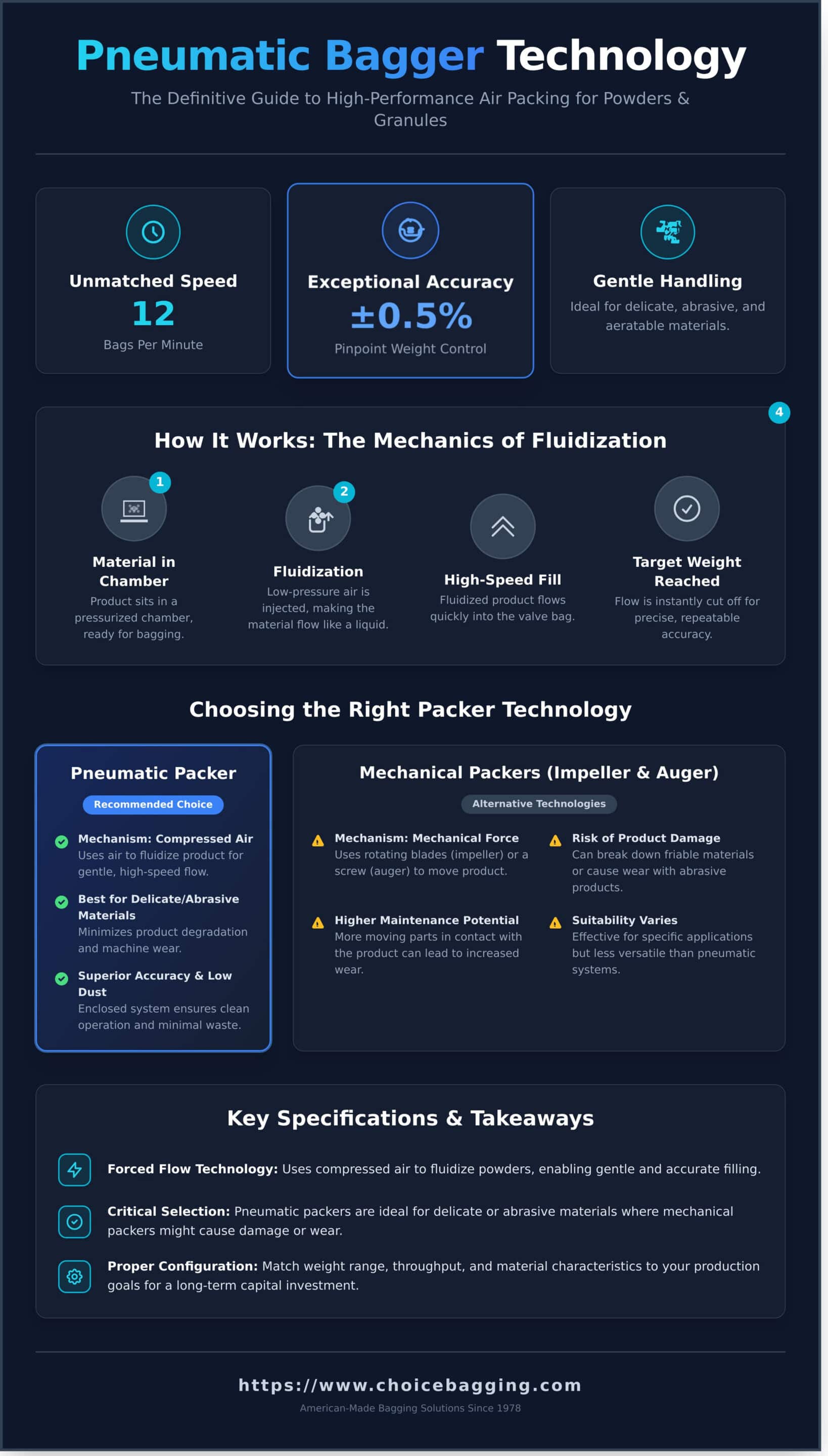
This definitive guide for 2026 provides the expert insights you need to optimize your bagging operation. We will explore the core principles of air packing technology, demonstrating how it achieves exceptional weight accuracy of +/- 0.5% at speeds of up to 12 bags per minute. You will learn the critical factors for selecting the right system for your specific application, ensuring you can invest confidently in a reliable, American-made solution built to perform for decades to come.
Key Takeaways
-
Learn how forced flow technology uses compressed air to fluidize powders, enabling gentle and accurate filling for delicate or abrasive materials.
-
Understand the critical differences between pneumatic, impeller, and auger packers to determine the ideal technology for your product type and speed requirements.
-
Identify the key specifications, from weight range to throughput, needed to properly configure a pneumatic bagger for your specific production goals.
-
Discover a proven framework for selecting the right machine, ensuring your equipment is a long-term capital investment that delivers unmatched reliability.
Table of Contents
-
What is a Pneumatic Bagger? Understanding Forced Flow Technology
-
Pneumatic vs. Impeller vs. Auger: Choosing the Right Valve Bag Packer
-
Key Specifications and Configuration Options for Your Production Line
-
Why Choice Bagging Equipment is Your Partner for Pneumatic Solutions
What is a Pneumatic Bagger? Understanding Forced Flow Technology
A pneumatic bagger, often called an air packer or forced flow packer, is a high-performance machine engineered to fill valve bags with dry, powdered, or granular materials. Instead of using mechanical force like augers or impellers, this technology leverages compressed air to fluidize the product. This process essentially turns the solid material into a fluid-like state, allowing it to flow quickly and gently into the bag.
This air-powered method is the ideal solution for handling delicate, abrasive, or aeratable materials that are easily damaged or cause excessive wear on mechanical systems. To see the power of pneumatics in action, watch the video below:
The entire operation relies on the proven principles of pneumatics, where pressurized gas generates force and motion. During the fill cycle, a gross weigh scale provides real-time feedback to the machine’s controller. Once the target weight is reached, the system instantly shuts off the product flow, ensuring exceptional accuracy and minimizing product giveaway. This precision makes the pneumatic bagger indispensable for industries handling high-value or strictly regulated products like Portland cement, mortar mixes, minerals, and other fine powders.
Common Industry Synonyms You Should Know
In the bagging industry, you will often hear this equipment referred to by several names. Understanding these synonyms helps clarify conversations with suppliers and operators:
-
Air Packers: The most common term, especially in the cement and mineral industries, directly referencing the use of compressed air.
-
Forced Flow Packers: This name highlights the pressure-driven method used to move material into the bag.
-
Valve Bag Air Packers: A more specific term that clarifies the type of bag-valve bags-required for this technology.
The Evolution of Bagging Since 1978
Since 1978, Choice Bagging Equipment has been at the forefront of refining air packer design for unmatched reliability and performance. We have driven the transition from cumbersome manual controls to sophisticated electronic weighing systems that deliver repeatable, pinpoint accuracy. Our commitment to durability is reflected in our engineering, and our "Made in the USA" promise ensures that every pneumatic component is built to withstand the most demanding industrial environments for decades of service.
The Mechanics of Fluidization: How Pneumatic Baggers Work
The high-speed efficiency of a pneumatic bagger is rooted in a simple yet powerful principle: fluidization. This process transforms dense, dry powders into a fluid-like state, allowing them to flow quickly and consistently into valve bags. The entire operation is engineered for performance, accuracy, and a clean production environment.
At the core of the machine is a pressurized product chamber. By maintaining a low-pressure differential between the chamber and the bag, the system creates the ideal conditions for material to flow. Air is then introduced through a fluidization manifold or plenum at the bottom of the chamber. This aerates the product, reducing friction between particles and giving it the characteristics of a liquid.
Once the material is fluidized, the fill cycle begins. An operator places a valve bag onto the filling spout, where it is securely clamped. The fluidized product then flows at high speed into the bag. To maintain a safe and clean workspace, an integrated dust hood captures any displaced particles during the filling and discharging process, ensuring minimal product waste and a healthier environment for your team.
The Step-by-Step Filling Process
Every cycle is a sequence of precisely controlled events designed for maximum efficiency and weight accuracy. This automated process minimizes operator intervention and guarantees reliable, repeatable results with every bag.
-
Bag Sensing: The cycle will not begin until the machine’s sensors confirm a bag is correctly placed on the spout, preventing spills and product loss.
-
Fluidization Phase: Low-pressure air is injected into the product chamber, aerating the material to initiate a high-volume flow into the bag.
-
Weight Monitoring: An integrated electronic scale or load cell continuously monitors the bag’s weight, automatically stopping the flow once the precise target weight is achieved.
Managing Air Alleviation and Purging
Achieving a perfect fill requires more than just moving product; it demands precise air management. Our systems are designed to handle this critical variable with unmatched control. Air alleviating spouts allow displaced air to vent from the bag as it fills, ensuring it is packed densely with product, not trapped air. For operations handling multiple products, fill tube purging cycles use compressed air to clean the spout between batches, preventing cross-contamination and protecting product purity.
Optimizing these systems by adjusting PSI (pounds per square inch) and CFM (cubic feet per minute) settings is critical for accommodating materials of different densities, from fine powders to granular products. This level of control ensures that every pneumatic bagger delivers consistent performance and accuracy. For expert guidance on configuring your equipment, contact our support team today .
Pneumatic vs. Impeller vs. Auger: Choosing the Right Valve Bag Packer
Selecting the correct valve bag packer is critical to achieving operational efficiency and protecting your product. The optimal choice depends entirely on material characteristics, desired throughput, and maintenance requirements. While each technology offers distinct advantages, understanding their core differences ensures you invest in a system built for performance and durability.
Here is a direct comparison of the key factors to consider:
-
Material Handling: A pneumatic bagger uses air to fluidize and convey material, making it an excellent choice for both fine powders and abrasive granules. This gentle process minimizes wear on machine components, unlike mechanical augers which can grind against harsh materials like sand and minerals. Fragile products also benefit from the low-impact air-flow system.
-
Speed and Throughput: For high-volume operations, pneumatic packers consistently lead in performance. Their simple, efficient fill cycle allows for higher bags-per-minute rates compared to many mechanical alternatives, boosting overall plant productivity.
-
Maintenance Considerations: The design philosophy behind air packers emphasizes reliability. With minimal moving parts in contact with the product, a pneumatic bagger requires less frequent maintenance and part replacement than auger systems, which rely on screws, bearings, and seals that are subject to wear.
-
Weight Accuracy: Modern valve bag packers deliver exceptional weight accuracy. Pneumatic systems provide precise control over product flow, with a clean cutoff that minimizes "product fall"-the extra material that drops into the bag after the fill signal stops. This ensures consistent bag weights and reduces product giveaway.
When to Choose a Pneumatic Bagger
A pneumatic packer is the superior choice for a wide range of dry, bulk solids. It provides unmatched performance for materials like cement, grout, flour, stucco, lime, and fine sand. Its ability to handle abrasive materials without significant wear makes it a more durable and cost-effective long-term solution than an auger packer in these applications. For a detailed look at our proven models, explore our complete line of Valve Bag Fillers.
When to Consider Alternative Technologies
While pneumatic technology is versatile, certain materials require a different approach. You should consider an alternative packer in these specific situations:
-
Impeller Packers: Best for high-density, fine powders that are difficult to aerate and require mechanical force to be densified or "packed" into the valve bag.
-
Auger Packers: Ideal for products that are extremely difficult to fluidize, such as oily substances, moist mixes, or fibrous materials that will not flow with air pressure alone.
-
Gravity Fillers: A simple and effective solution for free-flowing, granular, or pelletized materials (like seeds or plastic pellets) where the product flows easily into the bag without the need for air assistance.
Key Specifications and Configuration Options for Your Production Line
Selecting the right equipment is critical for achieving peak operational efficiency. A modern pneumatic bagger is a highly configurable machine designed to meet precise production demands. Key factors such as target weight, desired throughput, automation level, and material handling requirements all influence the final system design, ensuring you invest in a solution built for your specific application.
Our air packers are engineered for performance and reliability, accommodating a wide range of operational needs:
-
Weight Ranges: Standard systems accurately fill bags from 20 to 110 lbs (9 to 50 kg), providing consistency and minimizing product giveaway.
-
Throughput Targets: Depending on product characteristics and the level of automation, you can expect filling rates of 1 to 12 bags per minute per fill spout.
-
Automation Levels: Systems range from manual configurations, where an operator places each bag on the spout, to fully automated lines with robotic bag placers for continuous, high-speed operation.
-
Material-Specific Facings: For food-grade, pharmaceutical, or corrosive material applications, we utilize stainless steel contact surfaces and facings to ensure product purity and equipment longevity.
Essential Options for High-Performance Lines
To further enhance productivity and system flexibility, several key options can be integrated into your line. Automatic bag discharge systems seamlessly transfer filled bags onto a takeaway conveyor, reducing manual labor and cycle times. For facilities that handle multiple container types, the versatility of your equipment can be expanded with attachments for drum and pail filling. Furthermore, custom-designed fill spouts ensure a perfect, dust-tight fit for your specific bag valve size, improving both cleanliness and fill accuracy.
Integration with Downstream Equipment
A high-performance pneumatic bagger is the heart of a packaging line, but its full potential is realized through seamless integration with downstream equipment. Filled bags are typically moved via Bag Handling Conveyors to the next stage. For a completely automated end-of-line solution, these conveyors can feed directly into Robotic Palletizing Systems, which stack bags with precision for shipping. The final step is securing the bag, which can be accomplished with either heat-based Bag Sealing or industrial Bag Sewing systems. Contact our engineering team to design a system tailored to your goals.
Why Choice Bagging Equipment is Your Partner for Pneumatic Solutions
Selecting the right equipment is a critical decision that impacts your entire production line. At Choice Bagging Equipment, we are more than just a manufacturer; we are your long-term partner in packaging success. Our "Bagger Professor" approach ensures you get expert consultation to match the perfect pneumatic bagger to your unique material, preventing costly errors and maximizing efficiency from day one.
Our machines are engineered as a long-term capital investment, not a temporary fix. Built with high-quality components and robust designs, they are made to last for decades, delivering unmatched reliability and consistent performance. This commitment to durability means you invest confidently, knowing your equipment will support your growth for years to come.
We also understand that your needs extend beyond the initial purchase. We offer flexible acquisition options, including Bagging Equipment Rentals and certified used machinery, to fit your budget and operational requirements.
The Choice Advantage: Made in the USA
All our equipment is proudly engineered and manufactured in Texas, ensuring superior quality control and craftsmanship. This "Made in the USA" commitment reflects our dedication to building the most dependable machinery on the market. When you work with us, you gain a partner invested in your success. And when it’s time to upgrade, our Used Equipment Buyback program provides a seamless path forward.
Discover the difference a true equipment partner can make. To find the right pneumatic bagger solution for your application, contact our team of experts today .
Secure Your Production Future with the Right Pneumatic Bagger
As we’ve explored, understanding the principles of forced flow and fluidization is key to appreciating the efficiency of modern bagging technology. For fine, aeratable powders, the right pneumatic bagger delivers superior dust control and precision that other systems cannot match, making it a critical investment for optimizing your production line and protecting your bottom line.
Making that investment requires a partner with proven expertise. As a trusted manufacturer since 1978, Choice Bagging Equipment delivers American-made, built-to-last solutions engineered for decades of reliable performance. Our systems provide proven accuracy of +/- 0.5%, ensuring your operation runs with maximum efficiency and minimal product waste. We are more than a supplier; we are your partner in productivity.
Ready to enhance your packaging operation with unmatched accuracy and reliability? Take the next step toward a more productive future. Request a quote for your pneumatic bagging project today and let our experts design the ideal solution for your needs.
Frequently Asked Questions About Pneumatic Baggers
How accurate is a pneumatic bagger?
A properly calibrated pneumatic bagger delivers excellent weight accuracy, typically within a range of +/- 0.5% to 1%. This precision is achieved through integrated electronic load cell scales that control the fill cycle. The final accuracy depends on consistent material density and flowability. This level of control minimizes product giveaway, ensuring your packaging process is both efficient and profitable, reflecting our commitment to high-performance equipment.
What is the difference between an air packer and an impeller packer?
The primary difference lies in the material transfer method. An air packer uses pressurized air to fluidize and convey fine powders into a valve bag. In contrast, an impeller packer uses a high-speed, bladed wheel to mechanically propel material. Air packers excel with products like cement or fine flours, while impeller packers are better suited for denser, granular materials or food mixes that may not aerate well.
Can a pneumatic bagger handle food-grade products?
Yes, pneumatic baggers can be engineered for food-grade applications. These models are constructed using 304 stainless steel and other sanitary, non-corrosive materials for all product contact surfaces. They are designed for easy cleaning to meet stringent hygiene standards. Common applications include bagging flour, sugar, protein powders, and spice blends, ensuring both safety and product integrity from the start of your packaging line.
What air pressure (PSI) is required for a pneumatic bagger to operate?
Most pneumatic baggers operate efficiently using standard plant air, typically requiring a pressure of 80 to 100 PSI (Pounds per Square Inch). The exact air volume (CFM) and pressure needed can vary based on the specific model and the characteristics of the product being bagged. Always consult the machine’s technical specifications to ensure your compressed air system meets the operational requirements for optimal performance.
How many bags per minute can a pneumatic bagger fill?
A single-spout pneumatic bagger can typically fill between 3 to 8 bags per minute. The actual production rate depends heavily on the product’s flow characteristics, the bag size, and the operator’s proficiency. For operations requiring higher throughput, we offer multi-spout configurations that can significantly increase your packaging speed and overall line efficiency. Our team can help determine the ideal setup for your production goals.
What kind of maintenance does a pneumatic bagger require?
Our pneumatic baggers are engineered for reliability with minimal moving parts, which simplifies maintenance. Routine upkeep primarily involves inspecting wear parts like the rubber spout and seals, cleaning air filters, and ensuring the pressure chamber remains free of buildup. Following a simple preventative maintenance schedule ensures consistent performance, prevents unplanned downtime, and protects your investment for decades of dependable service.
Is a pneumatic bagger suitable for abrasive materials like sand or gravel?
While excellent for powders, a pneumatic bagger is generally not the ideal choice for highly abrasive materials like sand or gravel. The high-velocity airflow can cause accelerated wear on the filling spout and internal components. For these demanding applications, a more robust solution like an impeller packer or an auger bagger offers greater durability and a longer service life, ensuring maximum operational uptime and reliability.
Can I integrate an automatic bag placer with a pneumatic bagger?
Absolutely. Our pneumatic bagger systems are designed for seamless integration with automation technology, including automatic bag placers. Combining these systems creates a fully automated packaging line that enhances production speed, improves bagging consistency, and reduces manual labor costs. This allows your team to focus on other critical tasks while ensuring maximum line efficiency. Contact our experts to discuss a complete automation solution.
Recent Comments