
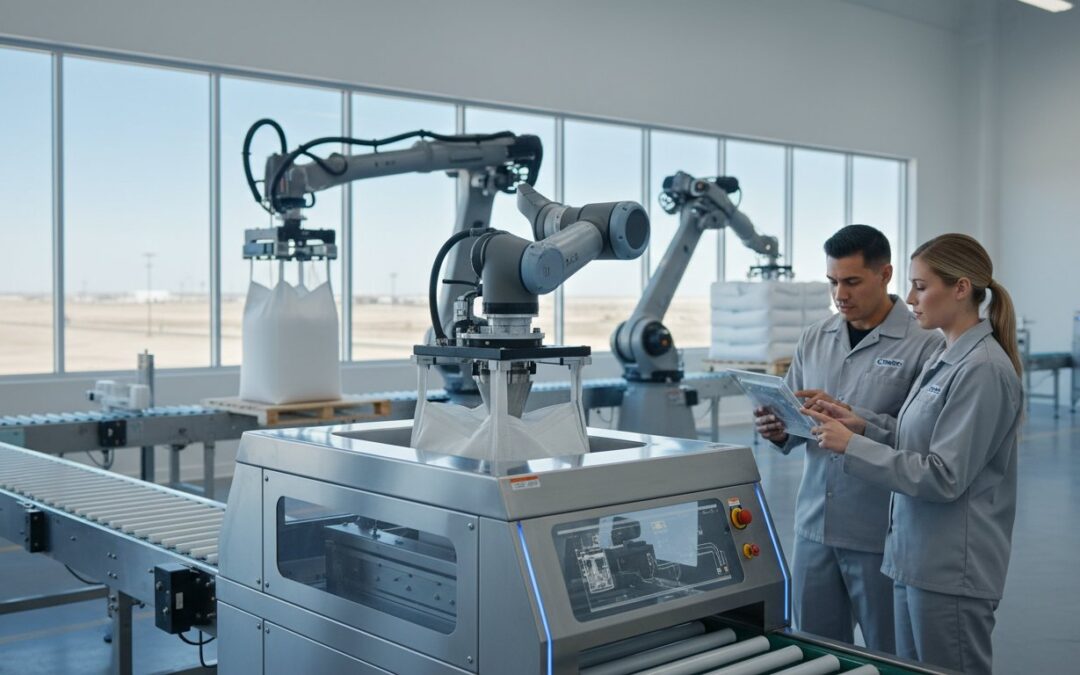
Inconsistent weights, high labor turnover, and persistent dust hazards on a manual bagging line directly erode your operational efficiency and profitability. The strategic move to an automatic bag filler presents a powerful solution, but selecting the right system is a critical investment that defines your production capacity for years to come. This decision demands expertise and a clear understanding of the technology available.
This definitive 2026 guide is engineered to provide that clarity. Here, you will master the complexities of automated bagging technology to increase throughput, reduce labor costs, and select the perfect filling system for your specific material. We will equip you with the knowledge to specify a high-performance machine that delivers consistent, high-speed production, ensures a dust-free operation, and is built to last for decades, not just years. Prepare to invest with confidence in the future of your packaging line.
Key Takeaways
-
Learn how the three primary industrial bag types-Valve, Open Mouth, and FIBC-directly influence the speed and automation level of your packaging line.
-
Discover why analyzing your material’s flow characteristics before selecting hardware is the most critical step to ensure system performance and ROI.
-
Understand that a high-performance automatic bag filler is only one part of the equation; true efficiency comes from integrating it with conveyors and palletizers.
-
Identify the key construction and support factors that separate a reliable, long-term investment from a machine that will require frequent maintenance.
Table of Contents
What is an Automatic Bag Filler and Why Automate in 2026?
An automatic bag filler is an integrated system designed to replace manual weighing and filling operations with a reliable, high-performance automated process. This technology represents a significant leap from semi-automatic systems, where an operator is still required to place bags and initiate the fill cycle. A fully automatic system handles everything from bag placement and filling to sealing and palletizing with minimal human intervention. For a foundational overview of the technology, it’s helpful to understand what an automatic bag filler is in the broader context of industrial packaging machinery. This transition is no longer a luxury; it is a strategic necessity.
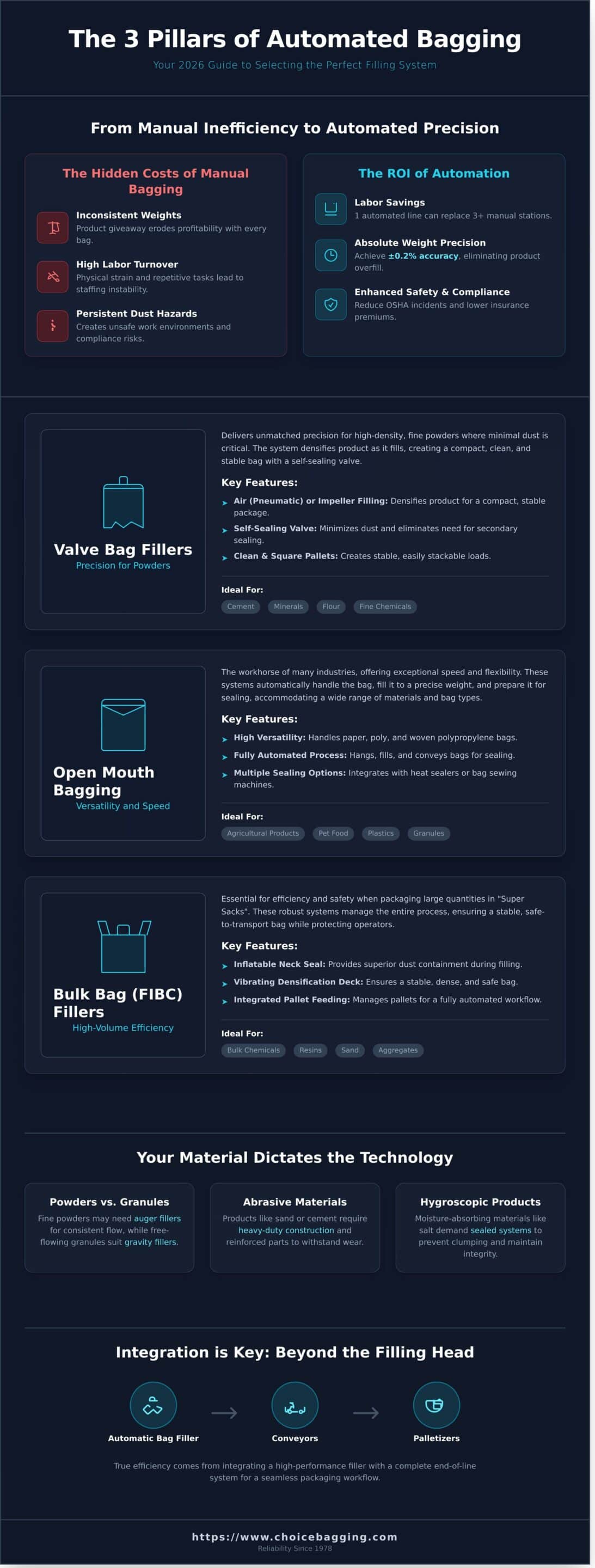
As we look toward 2026, the industrial labor market continues to tighten, making manual bagging an increasingly unreliable and costly strategy. Companies face challenges with labor availability, rising wages, and the physical strain placed on employees. Automating your bagging line directly addresses these issues by delivering unmatched operational consistency. The key benefits are immediate and impactful: absolute weight precision prevents product giveaway, effective dust mitigation creates a safer and cleaner work environment, and the elimination of repetitive manual tasks significantly reduces operator fatigue and risk of injury.
The ROI of Switching to Automatic Filling
Investing in automation delivers a clear and measurable return. Consider the direct impact on your bottom line:
-
Labor Savings: A single automated line can often perform the work of three or more manual bagging stations, reallocating valuable human resources to higher-level tasks.
-
Material Savings: Achieving weight accuracy of ±0.2% eliminates costly product overfill. Over a year, this precision can translate into thousands of dollars in reclaimed revenue.
-
Safety and Compliance: Automation drastically reduces OSHA-reportable incidents linked to repetitive motion and heavy lifting, lowering insurance premiums and fostering a safer workplace.
Common Industrial Materials and Their Challenges
The effectiveness of an automatic bag filler depends on its design matching your product’s characteristics. Different materials present unique challenges that demand specialized engineering:
-
Powders vs. Granules: Fine powders may require auger fillers to ensure consistent flow, while free-flowing granules are better suited for gravity or vibratory fillers.
-
Abrasive Materials: Products like sand or cement demand heavy-duty construction and reinforced contact parts to withstand wear and ensure long-term durability.
-
Hygroscopic Products: Materials that absorb moisture, such as salt or certain chemicals, require sealed systems to prevent clumping and maintain product integrity during the fill cycle.
The Three Pillars of Industrial Automatic Bagging Systems
Selecting the right automatic bag filler is a strategic decision built on three core bagging formats: Valve, Open Mouth, and Bulk Bag (FIBC). Your choice of bag directly dictates the required machinery, the potential for automation, and the overall speed and footprint of your packaging line. Matching your production volume and product characteristics to the correct system is the first step toward achieving peak operational efficiency and reliability.
Valve Bag Fillers: Precision for Powders
For high-density, fine powders where minimal dust is critical, valve bag fillers deliver unmatched precision. Using either air (pneumatic) or an impeller, these systems densify the product as it fills the bag, resulting in a compact, stable package. The bag’s small valve opening is self-sealing, creating the clean, square pallets essential for industries like cement, minerals, flour, and fine chemical manufacturing.
Open Mouth Bagging: Versatility and Speed
The workhorse of many industries, open mouth bagging machines offer exceptional versatility and speed. These systems handle a wide range of bag materials-including paper, poly, and woven polypropylene-by automatically hanging the bag, filling it to a precise weight, and conveying it for sealing. For agricultural products, a durable bag sewing machine is often preferred over heat sealing for its robust and breathable closure.
Bulk Bag (FIBC) Fillers: High-Volume Efficiency
When packaging large quantities, automating the "Super Sack" process with dedicated bulk bag fillers is essential for both efficiency and safety. These robust systems manage everything from pallet feeding to weight-integrated filling. Key features like inflatable neck seals contain dust, while vibrating densification decks ensure a stable, safe-to-transport bag. This level of automation prevents bag collapse and operator injury, ensuring operations adhere to rigorous automation standards for dependable performance.
Selecting the Right Technology: The Choice Bagging Approach
Investing in an automatic bag filler is more than a hardware purchase; it’s a strategic decision that impacts your entire production line. The Choice Bagging approach reverses the typical selection process. Instead of starting with a machine, we begin with a comprehensive analysis of your product’s unique characteristics-its flow, density, and fragility. This ensures the technology you choose is engineered to handle your material with maximum efficiency and accuracy.
Understanding how a product behaves is the first and most critical step. Whether it flows freely like sand or requires mechanical assistance like a fine powder, its properties dictate the core technology of your bagging system: the feeder.
Feeder Types: The Heart of the Machine
The feeder mechanism is responsible for moving your product into the bag consistently. Selecting the wrong type leads to inaccurate weights, product damage, and costly downtime. Each design serves a specific purpose:
-
Gravity Feeders: The simplest and most reliable solution for free-flowing, granular materials such as seeds, plastic pellets, or corn. With minimal moving parts, they offer a low-maintenance option for the right application.
-
Auger/Screw Feeders: Engineered for non-free-flowing powders and sluggish materials like flour, spices, or cement mixes. The auger actively drives the product forward, providing precise control over cohesive materials.
-
Belt Feeders: Designed to protect product integrity. A belt feeder gently conveys fragile or irregular-shaped items like pet food, snack mixes, or wood chips, preventing the degradation and breakage common with other methods.
Gross Weigh vs. Net Weigh Logic
After establishing proper material flow, the next critical component is the weighing system. Your required bagging speed directly determines whether a Gross Weigh or Net Weigh system is the right fit. The difference lies in when the product is weighed.
-
Gross Weigh: The product is weighed directly inside the bag as it is being filled. This is a cost-effective and dependable solution for lower-speed operations where precision is important but throughput is not the primary driver.
-
Net Weigh: The product is pre-weighed in a separate hopper above the bag clamp. While one precisely weighed batch is dispensed, the next is simultaneously being prepared, enabling significantly faster cycle times.
For operations requiring more than 12 bags per minute, a Net Weigh system is the superior choice for maximizing throughput and accuracy.
Finally, the Choice Bagging methodology accounts for your facility’s physical footprint. We can recommend a modular automatic bag filler for flexible integration into tight spaces or a monolithic design for simplified, all-in-one installation, ensuring your new equipment is an asset, not an obstacle.
System Integration: Beyond the Filling Head
Investing in a high-speed automatic bag filler is an excellent first step, but its true performance is only realized when the entire end-of-line process is optimized. A filler is only as good as the system surrounding it; bottlenecks downstream from the filling head can easily negate any gains in speed and accuracy. To achieve maximum throughput, you must create a seamless, automated workflow that moves a filled bag to a securely wrapped pallet with minimal human intervention.
The journey from filler to pallet begins with reliable conveyance. Specialized bag handling conveyors are engineered to transport filled bags gently and efficiently, maintaining proper orientation and preparing them for the next stage. This crucial step prevents jams and ensures that each bag arrives at the closing and palletizing stations perfectly positioned, safeguarding the integrity of your product and the efficiency of your line.
Robotic Palletizing: The Ultimate Productivity Booster
To keep pace with a modern automatic bag filler, manual stacking is no longer viable. While conventional palletizers are effective, robotic palletizing systems offer unmatched flexibility. A single robotic arm can service multiple bagging lines, execute complex and varied stacking patterns, and adapt to product changes on the fly. Their compact footprint often allows for integration into existing plant layouts where larger, fixed systems would not fit, eliminating the final manual bottleneck with precision and reliability.
Bag Closing and Sealing Automation
A properly closed bag protects your product and represents your brand. Automated bag top reformers create a perfect, straight top edge, enabling a flawless close every time. The choice between heat bag sealing for moisture-sensitive products and sewing for materials requiring breathability can be fully automated. For sewing applications, simple preventive maintenance-like daily oiling and regular needle changes on high-speed heads-is essential to prevent costly production line downtime.
A fully integrated packaging line transforms individual machines into a powerful, cohesive system. By viewing your operation holistically, you can unlock new levels of efficiency and maximize the return on your equipment investment. As your partner in packaging automation, we can help you design a complete solution that delivers dependable performance from start to finish. Contact us today to discuss your system integration needs.
The Choice Bagging Difference: Reliability Since 1978
Selecting the right equipment is a long-term investment in your operational efficiency. At Choice Bagging Equipment, we don’t just sell machines; we build partnerships grounded in unmatched durability and performance. Our ‘Built to Last’ philosophy is evident in every piece of equipment we manufacture. By using heavy-gauge American steel and engineering designs with minimal moving parts, we deliver systems that withstand the harshest industrial environments, reduce maintenance, and maximize uptime.
This commitment to quality is reinforced by our proud "Made in the USA" standard. Domestic manufacturing gives us complete control over the engineering and construction process, ensuring every machine meets our rigorous standards. More importantly, it means our customers benefit from readily available parts and responsive, factory-direct support. We partner with you for the long haul, from the initial consultation and custom design to installation and ongoing field service.
Legacy of Performance
With over 45 years of experience, our designs are refined by decades of real-world application. This deep industry knowledge led to the creation of our exclusive Bagger Professor search tool, which simplifies the complex process of identifying the perfect system for your product. Our legacy is not just in our history, but in the machines still operating today-some of which were built in the 1980s and continue to provide reliable service, a true testament to our engineering.
Support and Sustainability
An off-the-shelf automatic bag filler often fails because it isn’t designed for your specific needs. We specialize in custom solutions, and our commitment doesn’t end after the sale. Our comprehensive parts and service department ensures your equipment never becomes an ‘orphan’ part, protecting your investment for decades. As your business grows, our upgrade programs provide a clear path to scale from manual or semi-automated systems to a fully integrated, high-speed bagging line.
Invest confidently in a solution engineered for performance and longevity. Contact an expert today to design your custom bagging solution.
Partner with Proven Expertise for Your Packaging Future
As we look toward 2026, it’s clear that optimizing your industrial packaging is no longer an option-it’s a necessity for growth and efficiency. A successful strategy goes beyond simply purchasing a new machine; it requires a deep understanding of system integration, future-proofing your technology, and selecting the right partners. A high-performance automatic bag filler is the core of this upgrade, but its true value is unlocked when it functions flawlessly within a complete, well-designed system.
This is where experience and commitment to quality make the difference. At Choice Bagging Equipment, we have been engineering and manufacturing reliable, high-performance bagging solutions since 1978. All our equipment is proudly Made in the USA and built to provide decades of dependable service. We are more than a supplier; we are your partner in productivity, offering our expert ‘Bagger Professor’ consultation with every project to ensure a perfect fit for your operation.
Invest confidently in the efficiency and durability of your packaging line. Contact us to design your custom bagging system and take the definitive step toward a more profitable future.
Frequently Asked Questions
How much does an automatic bag filling machine cost?
The cost of an automatic bag filler varies significantly based on factors like speed, accuracy requirements, construction materials, and the level of automation. A basic gross weigh filler will have a lower entry point than a high-speed, custom-engineered net weigh system. We view each machine as a long-term investment in your operational efficiency. Contact our team for a detailed consultation and quote tailored to your specific production goals and return on investment criteria.
Can one bag filler handle different bag sizes and materials?
Yes, our bagging systems are engineered for operational flexibility. A single machine is typically designed to handle a specific range of bag widths, lengths, and materials, from poly to paper to poly-woven. Changeovers between different sizes within that range are designed to be efficient, minimizing downtime. During our consultation process, we partner with you to define the full scope of your needs to ensure the final equipment provides the versatility your operation demands.
What is the difference between a gross weigh and net weigh filler?
The key difference is where the product is weighed. A gross weigh filler weighs the product inside the bag as it is being filled. A net weigh filler weighs the product in a separate weigh hopper above the bag before discharging the pre-weighed batch into the bag. Net weigh systems offer superior speed and accuracy, making them the preferred choice for high-volume production lines where performance and precision are critical to profitability.
How many bags per minute can an automatic filler achieve?
Production rates depend directly on the type of filler, product characteristics, and bag size. A semi-automatic gross weigh filler may achieve 5-8 bags per minute, while a fully automated net weigh system can consistently reach speeds of 20-25 bags per minute or more. We engineer each system to meet specific performance benchmarks, ensuring you achieve the throughput necessary to meet your production targets with unmatched reliability and accuracy.
What kind of maintenance is required for an automated bagging line?
Our machines are built for durability with minimal moving parts to reduce maintenance requirements. A typical preventative maintenance schedule includes daily visual inspections, checking air pressure, and routine cleaning. Periodic lubrication of key components is also recommended. We provide comprehensive documentation and support to ensure your team can easily maintain the equipment for decades of reliable performance, maximizing your uptime and protecting your investment.
Can I automate the bagging of abrasive or corrosive materials?
Absolutely. We have extensive experience engineering bagging solutions for challenging products. For abrasive or corrosive materials, we utilize robust construction materials such as 304 or 316 stainless steel for all contact surfaces. Specialized coatings and heavy-duty components are also used to resist wear and prevent corrosion. This ensures the long-term durability and accuracy of the equipment, even in the most demanding production environments.
Do I need a robotic palletizer to make an automatic filler worth the investment?
No, a robotic palletizer is not a prerequisite. An automatic bag filler delivers a significant return on investment on its own by drastically increasing bagging speed, improving weight accuracy, and reducing labor costs. While a robotic palletizer is an excellent next step to fully automate your end-of-line process, many companies achieve their primary efficiency goals by first upgrading their filling and bagging equipment. It allows for a phased approach to full automation.
What is the typical lead time for a custom-built bagging system?
Lead times vary based on the complexity of the system and our current production schedule. Generally, you can expect a lead time of 12 to 20 weeks from final design approval to delivery. This timeframe allows our engineers and technicians to meticulously build, program, and test your equipment. We are committed to delivering a high-performance system that is proven to meet your operational requirements right from the start.
Recent Comments