
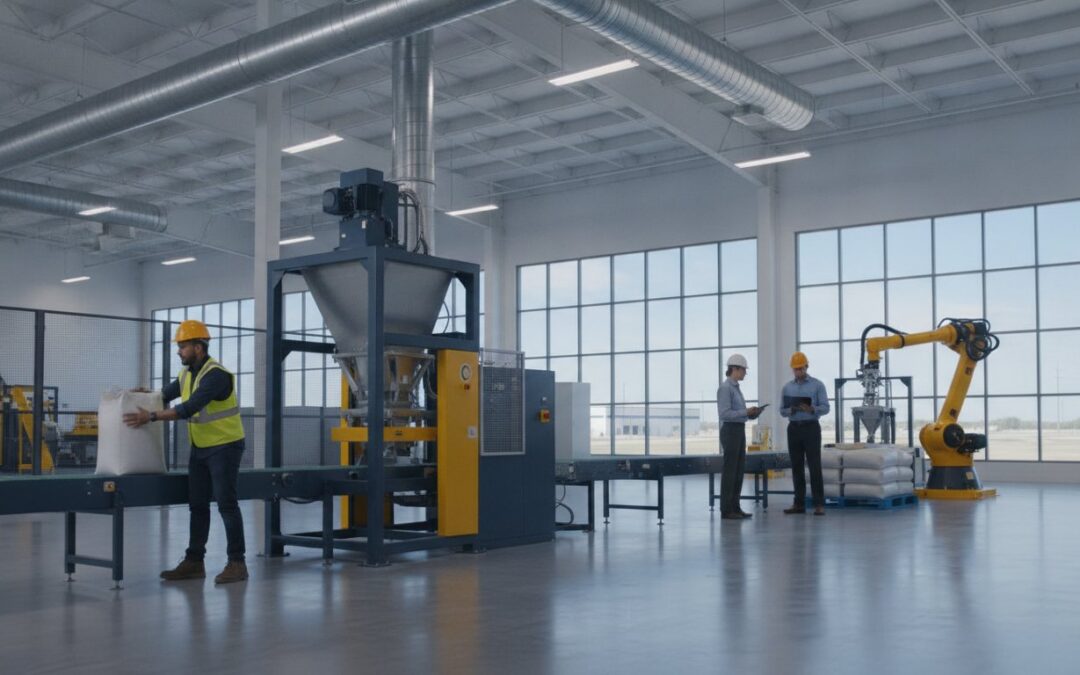
What if your initial investment in bagging equipment didn’t have a three-year expiration date? Many manufacturers hesitate to automate because they fear spending significant capital on a system that might become obsolete as soon as production volumes increase. This concern is valid, especially when considering the high upfront costs of full robotic integration and the technical complexity of modern production. However, modular bagging systems provide a strategic way to bypass this risk. These systems allow you to start with essential components and add advanced features as your demand grows, ensuring your initial hardware remains a core part of your operation for decades.
We recognize that the shift toward full automation can feel like a daunting financial leap. You’re likely looking for a way to scale without the headache of sourcing parts for imported, rigid machinery or worrying about compliance with the EU Machinery Regulation. This guide will show you how to implement a “crawl-walk-run” automation strategy that protects your capital while preparing you for future growth. You’ll learn how to scale from manual filling to full robotic integration using durable hardware that serves your facility for 20 years or more.
Key Takeaways
- Learn how interchangeable units create a “plug-and-play” production environment that eliminates the need for total equipment replacement as your business grows.
- Discover why modular bagging systems provide a superior Total Cost of Ownership by allowing you to add automation modules only when your production volume justifies the expense.
- Identify the essential components of an integrated line, from the central filling “head” to advanced robotic palletizing modules.
- Master a 5-step framework for planning your facility’s expansion based on specific material characteristics and bag types.
- Understand the operational advantages of durable, US-made hardware designed to support your production goals for 20 years or more.
What are Modular Bagging Systems?
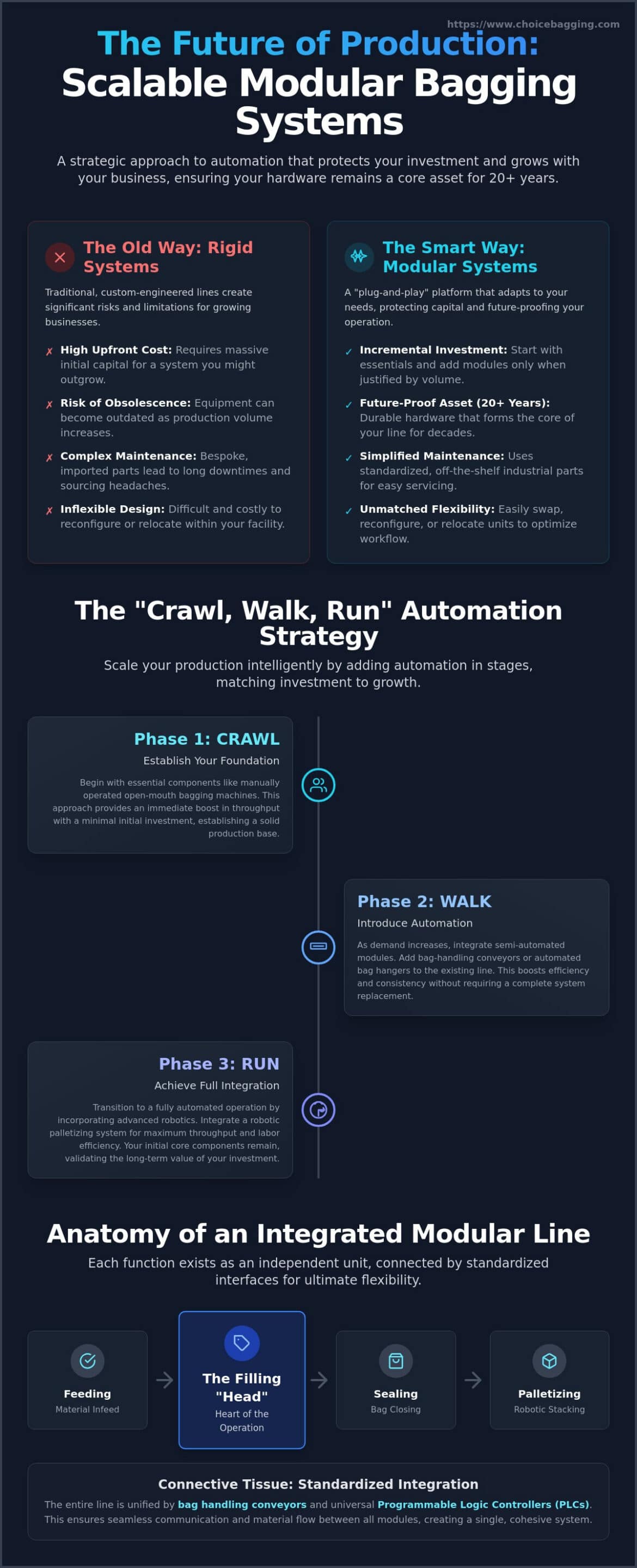
Industrial growth often outpaces static equipment. Traditional, custom-built bagging lines are frequently designed for a single purpose with no room for expansion. In contrast, modular bagging systems are decentralized assemblies where each function, from feeding to palletizing, exists as an independent unit. These systems represent a specialized category within the broader world of Packaging machinery, designed specifically for manufacturers who prioritize long-term scalability. By utilizing standardized interfaces, you can swap a manual filling station for a fully automated one without restructuring your entire floor plan.
The “plug-and-play” nature of these systems means that electrical and pneumatic connections are standardized across the line. You aren’t just buying a machine; you’re investing in a flexible platform. This architecture allows you to future-proof your facility, ensuring that the equipment you buy today won’t be obsolete when your production volume triples. It turns a rigid production line into a living asset that evolves with your business goals.
To visualize how these components integrate into a high-performance production environment, watch this modular system in action:
The Core Philosophy of Modular Design
Standardized frames and interfaces are the foundation of modularity. Each module is built to a specific footprint with universal mounting points. This allows a facility to start with a basic setup, such as open mouth bagging machines operated manually, and later bolt on automated bag hangers or conveyors. The communication between these units is typically handled by universal Programmable Logic Controllers (PLCs). Using a common language like Allen-Bradley or Siemens ensures that new modules “talk” to existing ones without expensive software rewrites.
This approach significantly reduces the “all-or-nothing” risk associated with major capital expenditures. Instead of committing your entire budget to a fully robotic line that you might not need for two years, you can allocate funds incrementally. You gain the immediate benefits of improved throughput while keeping your capital liquid for other operational needs. It’s a secure investment strategy that replaces guesswork with verified, stage-by-stage growth.
Modular vs. Custom-Engineered Lines
Custom-engineered lines often come with long lead times and “black box” technical hurdles. Because every part is bespoke, finding replacements for imported or specialized components can take weeks. Modular systems solve this by using standardized, high-quality industrial parts. Maintenance becomes straightforward because your team is dealing with familiar mechanical layouts and off-the-shelf components. This simplicity ensures your line stays operational for 20 years or more, rather than becoming a liability once the original manufacturer stops supporting a custom build.
Relocating or reconfiguring your floor plan is also much simpler with modular hardware. If you need to move your robotic palletizing systems to a different area of the plant, you can disconnect the module and move it without tearing apart the entire line. This flexibility is a massive advantage for growing facilities that frequently reorganize to optimize workflow. You’re in control of your space and your schedule, not restricted by the physical limitations of a monolithic machine.
Key Components of an Integrated Modular Line
The operational efficiency of modular bagging systems depends on the precision of four primary stages: feeding, filling, sealing, and palletizing. While the filling unit serves as the heart of the operation, the entire line is unified by bag handling conveyors. These conveyors act as the connective tissue, ensuring that filled bags move with consistent timing and orientation toward finishing stations. This modular approach allows a facility to handle multiple bag types, such as transitioning between valve and open mouth formats by simply swapping or adding a specific filling module to the existing line.
Designing an integrated line requires a focus on how these modules interact. Because each unit is built on a standardized frame, you can reorganize the sequence or add inspection modules like check-weighers or metal detectors without a total system overhaul. This flexibility turns your production floor into a dynamic environment that responds to market shifts rather than being restricted by fixed, custom-built hardware.
Filling Stations: The Foundational Module
The filler is the foundational module where material characteristics dictate the hardware choice. For fine powders or granular materials that require dust-free operation, valve bag fillers use internal pressure or augers to pack product into specialized bags with internal sleeves. If your product line is diverse, open mouth baggers offer the versatility to handle various materials and bag sizes in a single station. For heavy industrial output, bulk bag fillers provide the necessary scale for high-volume loads. Each of these units can be integrated into the same control network, allowing for a unified operator interface across the entire facility.
Downstream Modules: Sealing and Finishing
Once filled, bags move to downstream modules for final processing. Protecting product integrity is the primary role of bag sealing systems, which apply heat or ultrasonic welds to prevent leaks and contamination. For paper or woven poly bags, bag sewing machines provide a durable mechanical closure that withstands the rigors of shipping. The advantage of modularity lies in the upgrade path. You might start with a manual closing station and later introduce an automated sealing module as throughput demands increase. This transition occurs with minimal downtime because the mechanical and electrical interfaces are already established. If you’re unsure which modules fit your current floor plan, our team can help you evaluate your production requirements to ensure a secure long-term investment.
Why Modularity is the Smartest Industrial Investment
Choosing a bagging line is a high-stakes capital decision. While a custom-built, fixed system might meet your current specifications, it often becomes a liability when your production requirements change. Modular bagging systems offer a superior Total Cost of Ownership (TCO) because they eliminate the “scrap and replace” cycle. Instead of purchasing an entirely new line every five years, you simply upgrade or add modules. This capital protection ensures that your initial investment remains productive for decades, providing a much higher return on assets than rigid, monolithic alternatives.
The “Crawl-Walk-Run” strategy is the most effective way to manage industrial growth. You don’t have to commit to full automation on day one. You can start with a dependable manual filler and add automated conveyors, sealers, and stackers as your revenue justifies the expenditure. This incremental approach preserves cash flow and reduces the technical risk associated with complex system startups. Because the interfaces are standardized, adding a new unit is a predictable mechanical task rather than an expensive engineering project.
Scalability: From Manual to Robotic
As your volume increases, labor costs and physical strain on employees become significant bottlenecks. A modular setup allows you to integrate a robotic bag palletizer into your existing line without relocating your filling station. This single upgrade can drastically reduce manual handling and increase your hourly output. It also gives you the flexibility to react to market shifts. If a major client suddenly requires a different bag size or material, you can swap out a specific module to accommodate the request rather than redesigning your entire facility’s workflow.
Maintenance and Parts Availability
Custom-engineered machines often rely on proprietary parts that are difficult to source, especially if the original manufacturer is overseas. Modular units prioritize mechanical simplicity and the use of “off-the-shelf” industrial components. If a motor or sensor fails, you can typically find a replacement locally, which keeps your downtime to a minimum. This design philosophy also allows for targeted servicing. You can perform maintenance on a downstream sealing module while the rest of the line remains ready for operation. You aren’t forced to shut down your entire facility for a minor repair in one section. This level of operational resilience is what separates a secure investment from a risky one.
Planning Your Scalable Bagging Operation
Success in industrial automation isn’t about buying the most expensive machine available today. It’s about designing a path that grows with your business. Implementing modular bagging systems effectively requires a clear roadmap to ensure your facility remains compliant with evolving standards, such as the EU Machinery Regulation (2023/1230), which becomes mandatory in January 2027. This planning phase prevents the common mistake of purchasing equipment that works for your current volume but lacks the interfaces for future robotic integration.
Follow this 5-step framework to design a line that lasts:
- Step 1: Define material and bag types. Document the flowability of your product and whether you’ll use valve, open mouth, or bulk bags.
- Step 2: Project your 5-year growth. The automated bagging solutions market is projected to grow at a CAGR of 7.6% through 2035, and your “modular ceiling” should account for similar internal volume increases.
- Step 3: Evaluate floor space. Identify physical constraints and utility access points that might limit where you can place future modules.
- Step 4: Select a core filling technology. Invest in a high-quality anchor, such as a valve bag filler, which serves as the foundation for the entire line.
- Step 5: Partner with a long-term collaborator. Choose a manufacturer that provides comprehensive field service and support to ensure your hardware remains operational for 20 years or more.
Assessing Current Volume vs. Future Growth
Identifying the exact moment to automate is a financial calculation. Manual processes typically become a bottleneck when labor costs per bag exceed the amortized monthly cost of an automated module. If your team is struggling to keep up with peak seasonal demand, it’s a clear signal to add conveyors or automated bag hangers. Throughput capacity is the primary metric used to determine exactly when a manual station should be replaced by an automated module. By monitoring this metric, you can make procurement decisions based on verified data rather than speculation.
Space Planning and Footprint Considerations
Modular hardware is designed for spatial flexibility. If your facility has a narrow footprint, these systems can be configured in L-shapes or U-shapes to maximize every square foot of available floor space. It’s vital to plan for utilities like compressed air and electrical drops well before you need them. Modern regulations also place a greater emphasis on cybersecurity in automated lines, so your space planning should include secure access points for networked modules. Leaving room for the next module today ensures that your facility won’t require a costly renovation when you’re ready for full robotic palletizing. If you’re ready to evaluate your facility’s potential, contact our engineering team to design your custom upgrade path.
Choice Bagging Equipment: Your Partner in Scalable Automation
Choice Bagging Equipment has maintained a legacy of mechanical excellence since 1978. We don’t view our clients as one-off transactions; we view them as long-term collaborators in industrial success. Our hardware is engineered for a 20-year lifespan, ensuring your investment remains a stable asset in your facility. For businesses hesitant to commit large capital upfront, our bagging equipment rental program offers a secure, low-risk way to integrate modular bagging systems into your current workflow. This allows you to test the efficiency of our modules before deciding on a permanent purchase, providing a verified path to growth.
Our commitment to durability is reinforced by our manufacturing origin. All our hardware is built in Taylor, Texas, which offers a distinct advantage over international competitors. While imported systems might offer specialized designs, they often carry the risk of long lead times for replacement components and technical support. A collaborative partnership with a US-based manufacturer ensures that your operation remains resilient against supply chain disruptions and technical hurdles.
US-Made Reliability and Expert Support
The domestic presence of our parts department is a critical advantage for our partners. Having expert support in the same time zone means your downtime is measured in hours, not weeks. Our engineering team provides comprehensive production line integration support, helping you bridge the gap between your existing manual setup and your future automation goals. We also assist customers in transitioning from used equipment to new modular units, ensuring that every hardware upgrade is both financially responsible and technically sound. This focus on mechanical simplicity and standardized interfaces makes the path to full automation predictable and manageable.
Ready to Scale Your Production?
Scalability is a strategic choice that requires foresight and dependable hardware. Investing in modular bagging systems that grow with your volume protects your capital and prepares your facility for the market demands of the next decade. Don’t let rigid, non-upgradable equipment limit your growth potential. Our engineers are ready to discuss your specific material characteristics, bag types, and floor plan requirements to create a customized “crawl-walk-run” strategy. This approach ensures your facility stays efficient today while remaining ready for tomorrow’s robotic integration. Contact Choice Bagging Equipment to design your modular system and secure your production’s future.
Building a Scalable Foundation for Industrial Growth
Industrial automation doesn’t have to be an all-or-nothing financial risk. By investing in modular bagging systems, you’ve established a production environment that adapts to your growth rather than restricting it. You now understand how to move from manual filling to full robotic integration through a manageable “crawl-walk-run” strategy. This approach secures your initial capital and ensures your facility remains compliant with modern safety and cybersecurity standards. It’s a method that prioritizes operational flexibility and long-term mechanical resilience.
Choice Bagging Equipment has been manufacturing durable bagging solutions since 1978. Our US-based engineering team provides the field support and integration expertise needed to keep your line operational for 20 years or more. Whether you’re entering the market through our low-risk rental program or utilizing our buyback options to upgrade an existing line, we’re your partner in long-term operational excellence. We focus on mechanical simplicity so your team can maintain peak output with minimal technical hurdles.
Request a Quote for Your Modular Bagging Project today to begin designing a system that evolves with your business. We look forward to helping you build a more resilient and productive facility.
Frequently Asked Questions
What is the difference between a modular and a custom bagging system?
A modular system consists of standardized, interchangeable units, while a custom system is a bespoke machine built for one specific task. Modular designs allow you to replace or upgrade individual sections without rebuilding the entire line. This flexibility reduces long-term costs and prevents equipment obsolescence as your production needs evolve. Custom systems often rely on proprietary parts that are difficult to source, whereas modular units use standardized industrial components.
Can I integrate a modular filler with my existing conveyors?
You can typically integrate modular bagging systems with your existing conveyor infrastructure. These units are designed with universal electrical and mechanical interfaces to ensure compatibility across different hardware generations. Our engineering team evaluates your current conveyor height, belt speed, and weight capacity to ensure a seamless transition. This capability allows you to modernize your filling process while retaining the value of your previous material handling investments.
How much space do I need for a fully automated modular bagging line?
The required footprint depends on your specific configuration, but modularity allows for spatial efficiency. A standalone filling module might require as little as 100 square feet, while a fully automated line with palletizing can span several thousand square feet. Because these modules are independent, they can be arranged in L-shaped or U-shaped configurations to fit within tight facility constraints or around existing structural pillars.
What industries benefit most from modular bagging systems?
Industries that process bulk solids, powders, and granular materials benefit most from these systems. This includes sectors like agriculture for seed and grain, chemical manufacturing for resins, and the minerals industry for sand or cement. Any operation that anticipates volume growth over the next five to ten years should prioritize modularity to ensure their equipment can scale alongside their market demand.
Is it possible to start with a manual bagging machine and automate it later?
It’s entirely possible and recommended to start with a manual filler and add automation modules as your budget allows. This “crawl-walk-run” approach lets you stabilize your process before committing to the capital expense of robotic bag hangers or palletizers. Because the core filling unit is built on a modular frame, adding automated components later doesn’t require expensive mechanical modifications or a total system overhaul.
How long does it typically take to install a new bagging module?
Installing a single bagging module typically takes between one and three days. Since the units are pre-assembled and tested at our Taylor, Texas facility, the on-site process focuses on mechanical alignment and electrical integration. This standardized approach significantly reduces the downtime compared to custom-engineered lines, which often require weeks of on-site fabrication and complex software debugging before becoming fully operational.
What kind of maintenance do modular bagging systems require?
Modular systems require standard industrial maintenance, such as routine lubrication, sensor calibration, and belt inspections. Because these systems use off-the-shelf components, your internal maintenance team can usually perform repairs without specialized training from the manufacturer. This design philosophy ensures that a minor failure in one section, like a sealer, doesn’t necessitate a complete factory shutdown for an extended period.
Can a modular system handle different types of bags, like valve and open-mouth?
Yes, a modular system can handle diverse bag types, including valve and open-mouth formats. You can achieve this by swapping the filling head or by integrating separate filling modules into the same production line. This versatility is essential for manufacturers who serve multiple markets with different packaging requirements, allowing them to pivot their production without investing in entirely separate bagging facilities.
Recent Comments